Try GOLD - Free
SECRETS OF A RADICAL DUKE
The Atlantic
|November 2025
How a lost copy of the Declaration unlocked a historical mystery
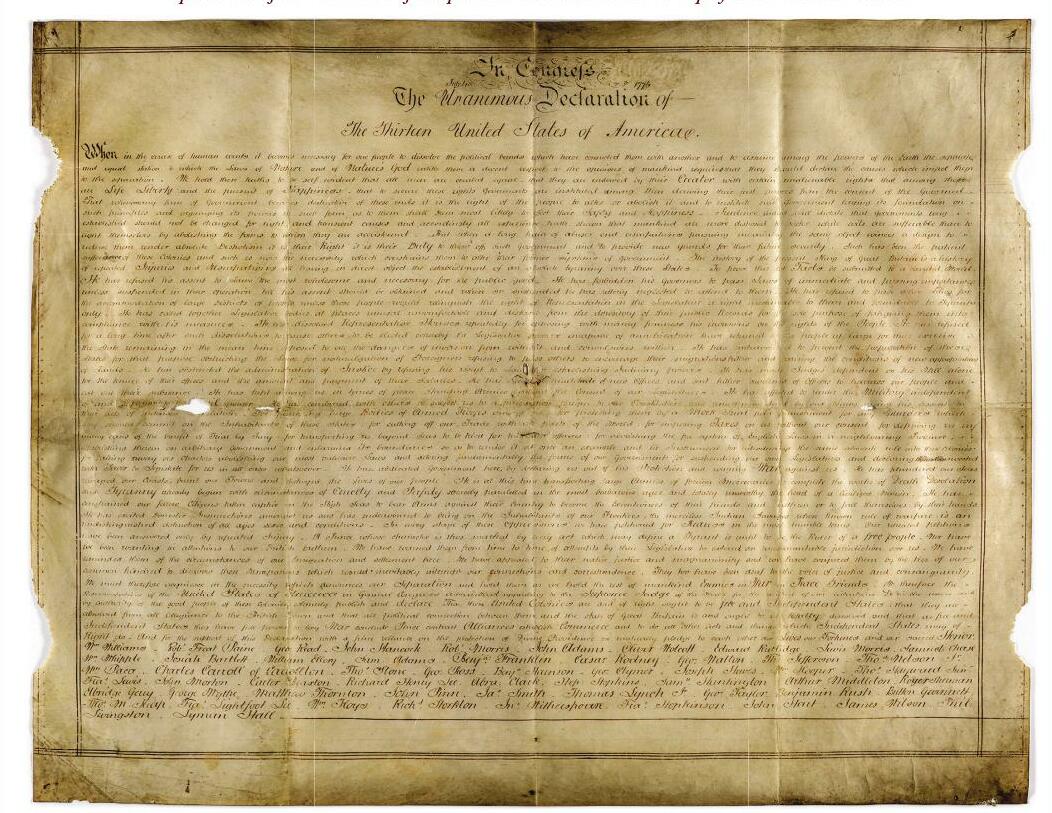
The Sussex Declaration, discovered in the West Sussex Record Office in Chichester in 2015-the only known large-scale parchment of the Declaration of Independence other than the one on display at the National Archives
IN THE SUMMER of 2016, my family flew ahead of me to England for a vacation. Their taxi driver from the airport to London was chatty, and somehow the conversation drifted to the fact that he was from Lewes, in Sussex. This led to a bit of trivia about his hometown that the driver thought would be of interest to visitors from America: Thomas Paine, the Englishman turned American whose Common Sense would become the best-selling political pamphlet of the 18th century—and tilt America toward independence—had lived in Lewes for six years, working as a tax collector. When my husband relayed this to me by phone that evening, I sat up. I hadn't known that detail of Paine’s biography but immediately saw its possible relevance to a historical puzzle I was trying to solve.
The research team I directed at Harvard had just made a startling discovery.
As part of a project to find all copies of the Declaration of Independence produced between 1776 and 1826, we had stumbled on something special the previous year in the small West Sussex Record Office, in Chichester. Among its holdings was a large-scale ceremonial parchment of the Declaration of Independence. Prior to this find, it had been thought that a single large-scale parchment existed: the one tourists can see protectively encased at the National Archives, in Washington, D.C. Although the Sussex Declaration, as it is now called, has the names of the signatories written out in a single clerk's hand, rather than with actual signatures, and is engrossed on sheepskin rather than the more expensive calfskin, it is otherwise as grand and impressive as the parchment in Washington. The unanswered question was how it had found its way to West Sussex.
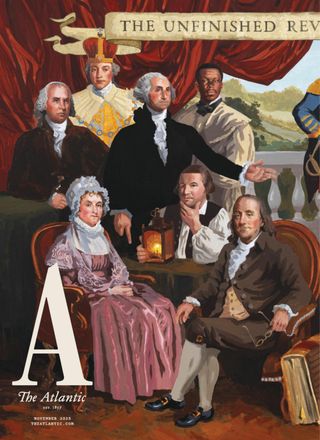

This story is from the November 2025 edition of The Atlantic.
Subscribe to Magzter GOLD to access thousands of curated premium stories, and 10,000+ magazines and newspapers.
Already a subscriber? Sign In
MORE STORIES FROM The Atlantic
The Atlantic
What Dante Is Trying to Tell Us
A colloquial translation of Paradiso might make people actually read it.

10 mins
February 2026

The Atlantic
Sense of an Ending
Julian Barnes says goodbye to the novel
9 mins
February 2026

The Atlantic
IS THIS WHAT PATRIOTISM LOOKS LIKE?
Why an ex—police officer assaulted a fellow cop on January 6
37 mins
February 2026
The Atlantic
THE PURGED
DONALD TRUMP'S DESTRUCTION OF THE CIVIL SERVICE IS A TRAGEDY NOT JUST FOR THE ROUGHLY 300,000 WORKERS WHO HAVE BEEN DISCARDED, BUT FOR AN ENTIRE NATION.
8 mins
February 2026

The Atlantic
GROUNDED
THE SPACE PROGRAM ENNOBLED AMERICAN CULTURE AND ADVANCED AMERICAN SCIENCE. DONALD TRUMP HAS CHOSEN TO END THAT ERA OF AMBITION.
17 mins
February 2026
The Atlantic
The New History of Fighting Slavery
What we learn by tracing rebellions from Africa to the Americas
10 mins
February 2026

The Atlantic
MICAELA WHITE
By the beginning of 2025, there was a famine in Sudan, which meant that it was only a matter of time before the U.S.government dispatched Micaela White to the scene. She was America's fixer of choice.
2 mins
February 2026
The Atlantic
WHAT JEFFREY EPSTEIN DIDN'T UNDERSTAND ABOUT LOLITA
Everything.
5 mins
February 2026
The Atlantic
Who Gets to Be Indian- And Who Decides?
The very American story of Chief Buffalo Child Long Lance
22 mins
February 2026

The Atlantic
I'm Not From the Government but I'm Here to Help
The Trump administration is trying to eliminate federal services? Fine. I'll do everything myself.
24 mins
February 2026
Listen
Translate
Change font size