Try GOLD - Free
Whose Liberation is it Anyway?
Outlook
|March 21, 2026
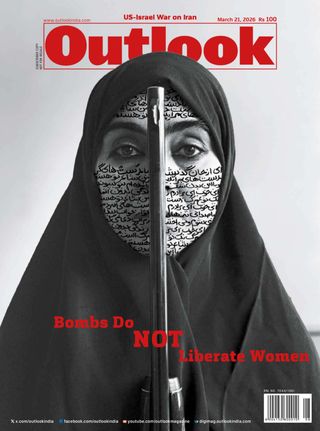
For decades, US foreign policy has adopted the pattern of 'selective liberation'-the deployment of human rights language when aligned with US strategic interests and its relative absence when it conflicts with them
IS A SENIOR CORRESPONDENT AT OUTLOOK.
SHE COVERS GOVERNANCE, HEALTH, GENDER AND CONFLICT, WITH A STRONG EMPHASIS ON LIVED REALITIES BEHIND POLICY DEBATES
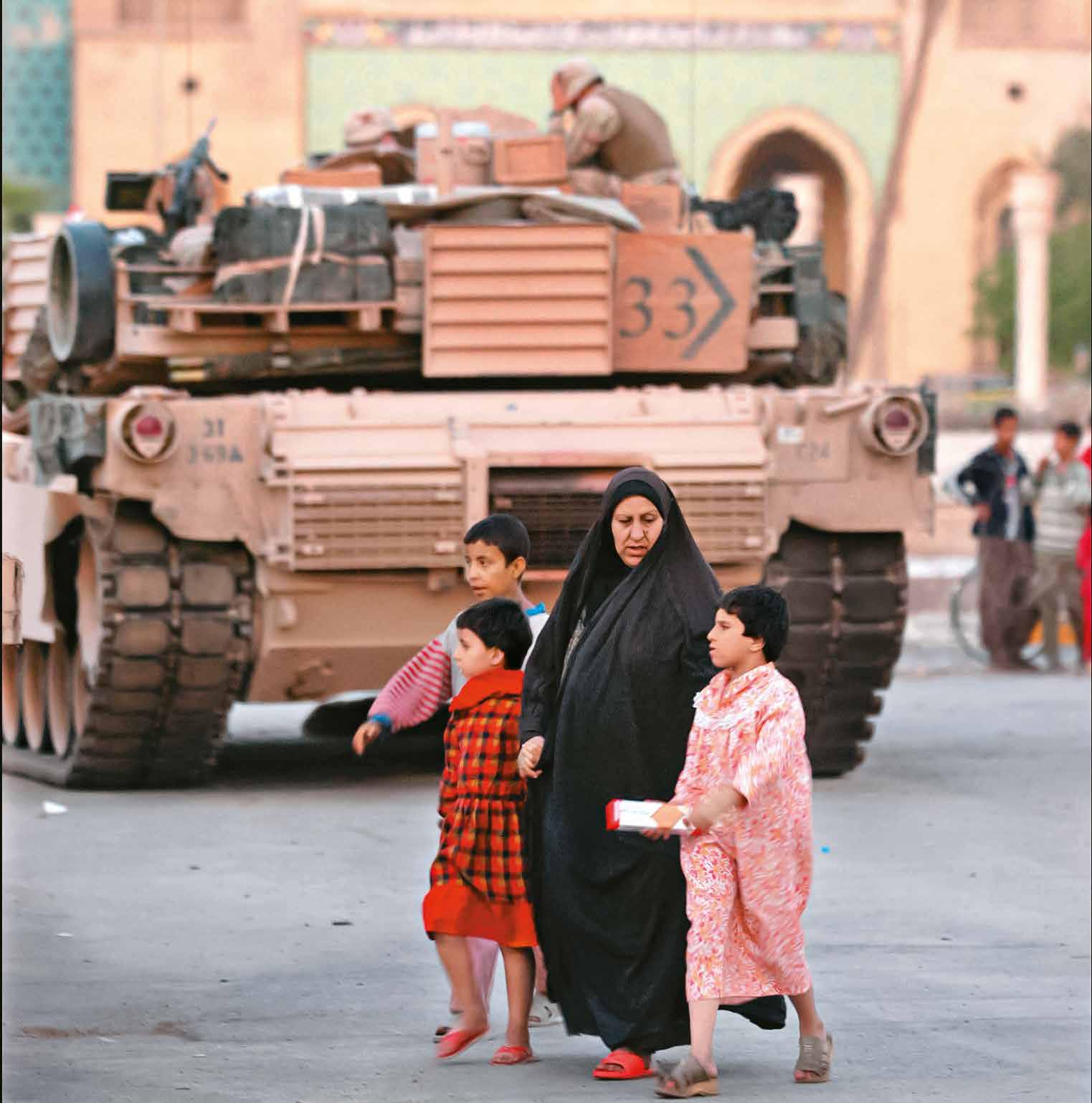
On March 19, 2003, as American forces crossed into Iraq, President George W. Bush addressed the world from the White House.
“The people of the United States and our friends and allies will not live at the mercy of an outlaw regime that threatens the peace with weapons of mass murder. We will pass along to our children all the freedoms we enjoy, and chief among them is freedom from fear,” he said.
Within weeks, Baghdad fell. Statues of Saddam Hussein were pulled down in scenes broadcast globally as visual shorthand for liberation. But by the end of that year, Iraq had descended into insurgency.
For decades, the United States has framed key foreign interventions as missions of liberation, to free people from dictatorship, terrorism or repression. From Baghdad to Kabul, American leaders have spoken of democracy, women's rights and human dignity. Yet in other conflicts, particularly Palestine, Washington’s posture has been markedly different, relying on strategic alliances or limited military engagement without invoking the same liberation rhetoric.
Critics call this pattern 'selective liberation': the deployment of human rights language when aligned with US strategic interests and its relative absence when it conflicts with them.
The idea resurfaced sharply on February 28, 2026, when a joint US-Israeli military campaign struck targets across Iran. Within hours, Iranian state media confirmed that Supreme Leader Ali Khamenei had been killed in the strikes.

This story is from the March 21, 2026 edition of Outlook.
Subscribe to Magzter GOLD to access thousands of curated premium stories, and 10,000+ magazines and newspapers.
Already a subscriber? Sign In
MORE STORIES FROM Outlook
Outlook
The Obituary that Took Me 30 Years to Write
When most of us were clueless about our ambitions in life, my classmate and best friend Samaresh Maitra announced, one hot day in April, that he wanted to become a goonda (gangsta) when he grew up.

3 mins
April 21, 2026

Outlook
Policing the Self
A democratic law on transgender rights would begin by trusting the person- recognising self-identification without bureaucratic mediation
7 mins
April 21, 2026

Outlook
Whatever Happened to the Voice of America?
War, once the defining moral crisis of American youth, no longer commands the same fire
6 mins
April 21, 2026

Outlook
Welfare Against Democracy
Among the four states where the election process has begun, three—Kerala, Tamil Nadu and West Bengal—present a striking picture of defiance; defiance directed at the style of politics associated with the Union government.
17 mins
April 21, 2026
Outlook
Why This War?
Failure to stop the war will hurt not only the region, but the entire global economy
6 mins
April 21, 2026

Outlook
Assam is a Place for All
It was as much a political signal as a warning, as Assam Chief Minister Himanta Biswa Sarma recently said that if the Bharatiya Janata Party (BJP) returns to power, his government will “break the backbone” of “Miyas”.
5 mins
April 21, 2026

Outlook
Bullets in Persepolis
The deep-seated love of Iranians for their land and cultural roots is what remains at stake in a war where the aggressors threaten to eradicate an entire civilisation
8 mins
April 21, 2026

Outlook
Why the Elite Hate Freebies
The deeper question to ask is not whether India can afford welfare but what happens without it
6 mins
April 21, 2026
Outlook
Machinery Vs. Maths
As more than 27 lakh people have their democratic rights suspended, Amit Shah's 'Mission Bengal' aims to bulldoze all equations, but they may still have to fight the maths
7 mins
April 21, 2026
Outlook
War From an Ocean Away
In the many endings that I picture, my mother and Ali end up stranded on roads, separated in different cities, looking for their belongings in the rubble, or chewing some meagre bread to quell their hunger
6 mins
April 21, 2026
Listen
Translate
Change font size