
Mit Magzter GOLD unbegrenztes Potenzial nutzen
Erhalten Sie unbegrenzten Zugriff auf über 9.000 Zeitschriften, Zeitungen und Premium-Artikel für nur
Versuchen GOLD - Frei
Whose Liberation is it Anyway?
Outlook
|March 21, 2026
For decades, US foreign policy has adopted the pattern of 'selective liberation'-the deployment of human rights language when aligned with US strategic interests and its relative absence when it conflicts with them
IS A SENIOR CORRESPONDENT AT OUTLOOK.
SHE COVERS GOVERNANCE, HEALTH, GENDER AND CONFLICT, WITH A STRONG EMPHASIS ON LIVED REALITIES BEHIND POLICY DEBATES
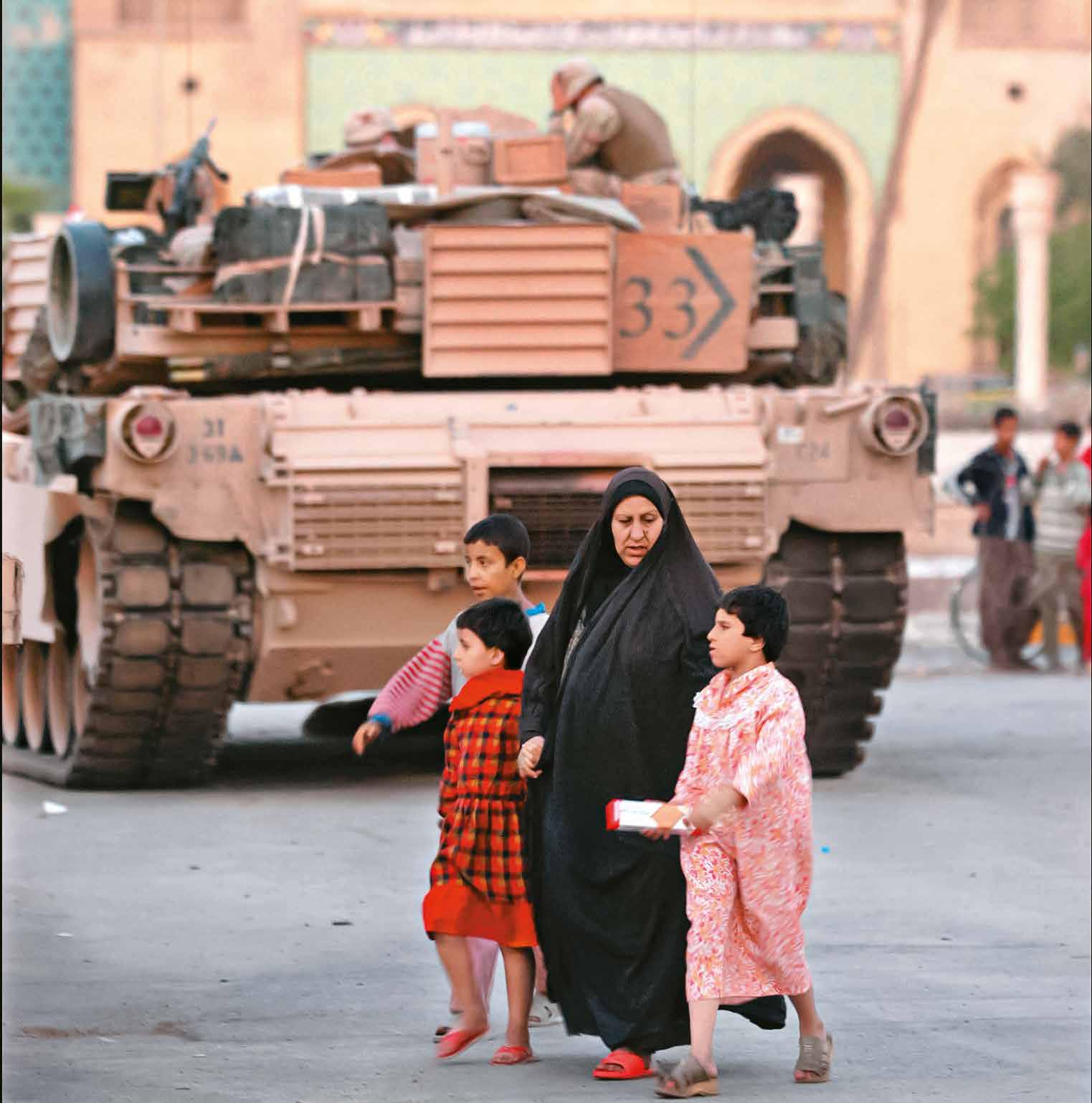
On March 19, 2003, as American forces crossed into Iraq, President George W. Bush addressed the world from the White House.
“The people of the United States and our friends and allies will not live at the mercy of an outlaw regime that threatens the peace with weapons of mass murder. We will pass along to our children all the freedoms we enjoy, and chief among them is freedom from fear,” he said.
Within weeks, Baghdad fell. Statues of Saddam Hussein were pulled down in scenes broadcast globally as visual shorthand for liberation. But by the end of that year, Iraq had descended into insurgency.
For decades, the United States has framed key foreign interventions as missions of liberation, to free people from dictatorship, terrorism or repression. From Baghdad to Kabul, American leaders have spoken of democracy, women's rights and human dignity. Yet in other conflicts, particularly Palestine, Washington’s posture has been markedly different, relying on strategic alliances or limited military engagement without invoking the same liberation rhetoric.
Critics call this pattern 'selective liberation': the deployment of human rights language when aligned with US strategic interests and its relative absence when it conflicts with them.
The idea resurfaced sharply on February 28, 2026, when a joint US-Israeli military campaign struck targets across Iran. Within hours, Iranian state media confirmed that Supreme Leader Ali Khamenei had been killed in the strikes.
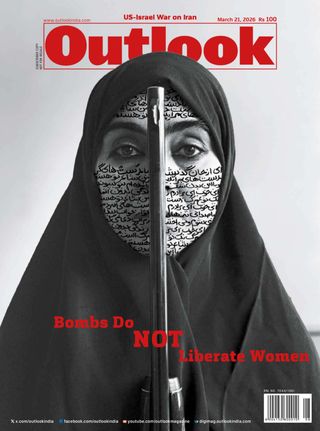

Diese Geschichte stammt aus der March 21, 2026-Ausgabe von Outlook.
Abonnieren Sie Magzter GOLD, um auf Tausende kuratierter Premium-Geschichten und über 9.000 Zeitschriften und Zeitungen zuzugreifen.
Sie sind bereits Abonnent? Anmelden
WEITERE GESCHICHTEN VON Outlook
Outlook
Turbulence in Tehran
To ignore or lampoon the attempts in Iran against the rule of clerics shrinks the space for the anti-imperialist Left to challenge other political ideologies, such as Hindutva

5 mins
March 21, 2026
Outlook
Not in Our Name
HE should have first corrected his own vices and then given us advice”.
3 mins
March 21, 2026
Outlook
Epic Faux Pas
For Iran, survival is victory. The martyrdom of Khamenei has had a rallying effect, and its strategy is built on domestic civil-military endurance and regional-global deterrence
6 mins
March 21, 2026

Outlook
'Winter Will One Day be Past'
This book is a true testament of friendship and an act of solidarity
4 mins
March 21, 2026
Outlook
‘Nolite Te Bastardes Carborundorum (Don't let the bastards grind you down)
\"There is more than one kind of freedom,\" said Aunt Lydia. \"Freedom to and freedom from.
4 mins
March 21, 2026

Outlook
Zan. Zendegi. Azadi
Are Trump and Netanyahu really interested in liberating Iranian women through this war?
5 mins
March 21, 2026

Outlook
Bruno ki Betiyaan
Whether future regimes sustain, reshape, or compete with Bihar's maternal welfare architecture will determine how deeply Nitish Kumar's political legacy shapes the state's democratic future
4 mins
March 21, 2026
Outlook
Capitalism Redux
The Global South must learn from the West Asian crisis that the persistence of neoliberalism alongside hyper-nationalism leads to brutality and genocidal war
4 mins
March 21, 2026
Outlook
The JNU Files
The immediate backdrop to the recent showdown at Jawaharlal Nehru University lay in earlier tensions
7 mins
March 21, 2026

Outlook
What is Trump's Endgame?
The Iran war looks like a high-stakes attempt by the US and Israel to reshape the balance of power in West Asia
6 mins
March 21, 2026
Listen
Translate
Change font size