
Go Unlimited with Magzter GOLD
Get unlimited access to 10,000+ magazines, newspapers and Premium stories for just
Try GOLD - Free
March of Movements
Outlook
|December 11, 2025
How have the Dravidian movement, the Dalit movement led by Ambedkar and his successors, the Communist movement, and the Hindutva movement articulated by the RSS and the BJP each engaged with caste?
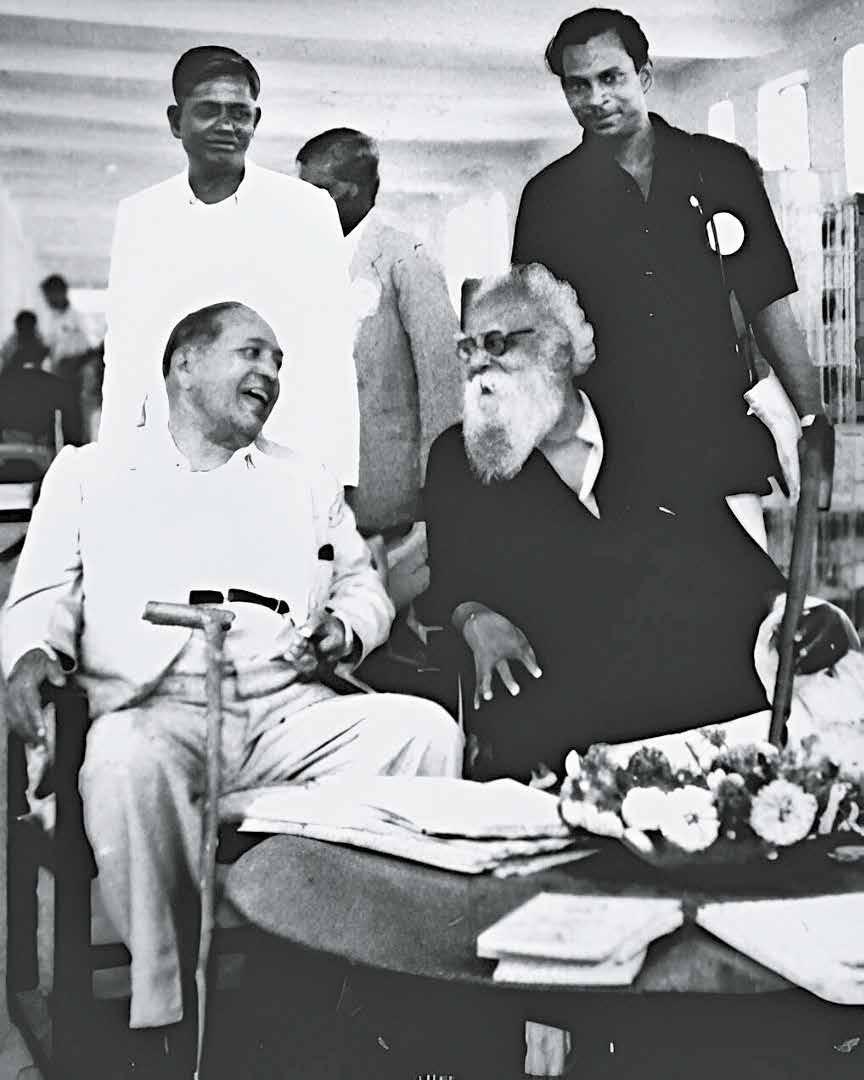
CASTE in modern India operates simultaneously as a structure of inequality, a means of political mobilisation, and an idiom for ideological projects of social order—deeply entwined with the country’s power structure.
Although it appears to draw from Hindu scriptures and pre-modern social organisation, its transformation into a political instrument is largely a product of colonial modernity and democratic politics.
The colonial encounter—through the census, ethnographic surveys, and administrative classifications—crystallised fluid social hierarchies into rigid and enumerated categories, rendering caste both more visible and politically consequential. After independence, the framing of the Constitution, the adoption of representative democracy, and the extension of universal suffrage further reconstituted caste: from a system of social hierarchy into a resource for electoral mobilisation and a language of rights-based claims.
Four major political currents—the Dravidian movement in South India, the Dalit movement led by Ambedkar and his successors, the Communist movement inspired by Marxism, and the Hindutva movement articulated by the Rashtriya Swayamsevak Sangh (RSS) and the Bharatiya Janata Party (BJP)—have each engaged with caste. While the first three sought to transcend or dismantle caste within their respective ideological frameworks, each was constrained by its own theoretical and political limits. Hindutva, by contrast, re-legitimised hierarchy under the guise of cultural nationalism, portraying caste as a form of organic and harmonious differentiation.
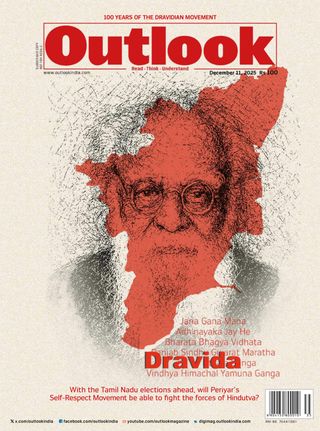

This story is from the December 11, 2025 edition of Outlook.
Subscribe to Magzter GOLD to access thousands of curated premium stories, and 10,000+ magazines and newspapers.
Already a subscriber? Sign In
MORE STORIES FROM Outlook
Outlook
Joy Words Club
Lit fests are defined by their audience. Organisers, speakers, curators are all replaceable but not the readers, not the audience

4 mins
February 01, 2026

Outlook
The Sting of the Bar
India today has more than 4.3 lakh undertrial prisoners. A significant number of them are linked to political cases
8 mins
February 01, 2026
Outlook
The Dispossessed
The systematic creation of criminal and security legislations view Adivasis as an inherently suspect class of criminals and terrorists
8 mins
February 01, 2026

Outlook
The Hypocrisy of Liberals
Favour of the self-proclaimed 'liberals' is lost the minute religion intervenes
5 mins
February 01, 2026
Outlook
Inside the Phansi Yard
Death row intensifies the structured brutalities of the penal system and reminds us why the struggle against the death penalty must also include the fact of prison violence
9 mins
February 01, 2026
Outlook
The Detention Legacy
Since Independence, a number of laws have been enacted that allow preventive detention which have been widely used by all regimes against their political opponents
7 mins
February 01, 2026
Outlook
“This Could Happen to You
The Bhima Koregaon case is not only about those who were imprisoned. It is also about the fate of democracy itself
8 mins
February 01, 2026

Outlook
"I Remember Swinging Between Hope and Despair"
HOPE and despair are basic human emotions and I believe that all human beings, now and then, swing between these two ends of the spectrum in life.
2 mins
February 01, 2026

Outlook
Think Ink
In 2026-the 'year of analog'-how will our relationship with literary festivals evolve?
6 mins
February 01, 2026

Outlook
Who Stole My Youth?
A Delhi district court granted Mohammad Iqbal bail in the riots case within three months. On March 18, 2025, he was discharged in the Babbu murder case, even as the riots trial continues
6 mins
February 01, 2026
Listen
Translate
Change font size