Denemek ALTIN - Özgür
March of Movements
Outlook
|December 11, 2025
How have the Dravidian movement, the Dalit movement led by Ambedkar and his successors, the Communist movement, and the Hindutva movement articulated by the RSS and the BJP each engaged with caste?
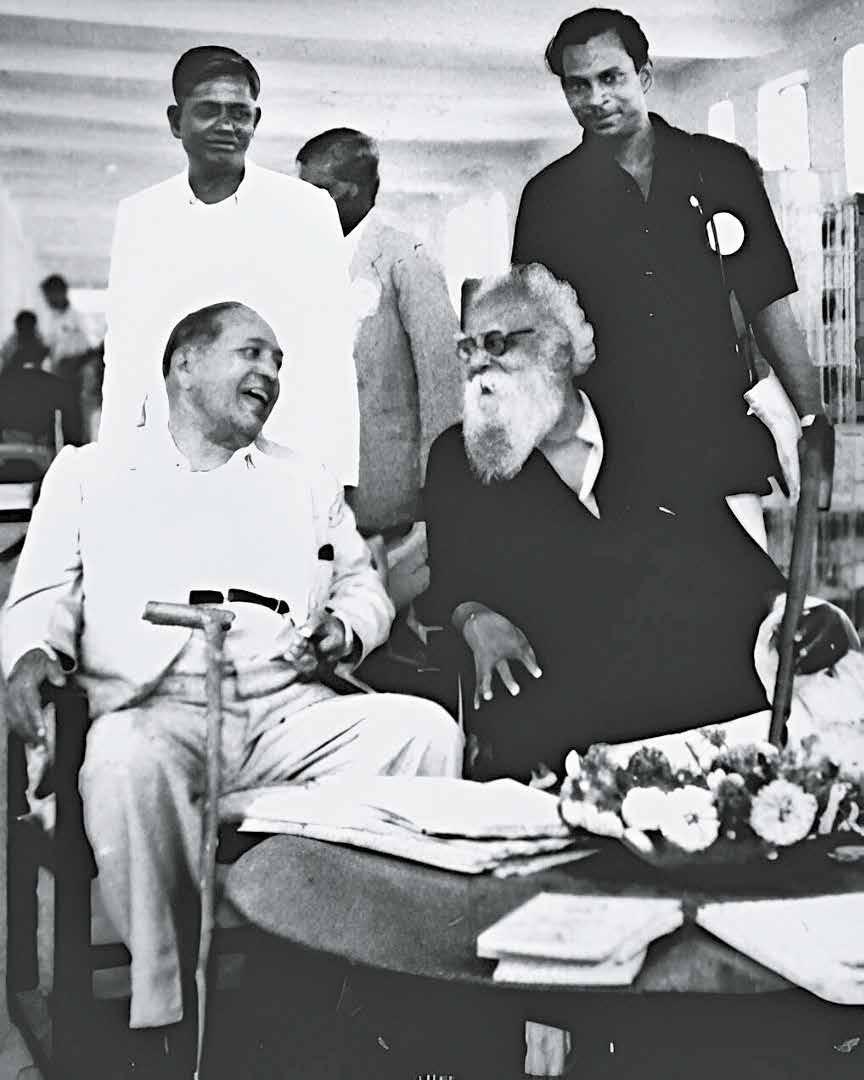
CASTE in modern India operates simultaneously as a structure of inequality, a means of political mobilisation, and an idiom for ideological projects of social order—deeply entwined with the country’s power structure.
Although it appears to draw from Hindu scriptures and pre-modern social organisation, its transformation into a political instrument is largely a product of colonial modernity and democratic politics.
The colonial encounter—through the census, ethnographic surveys, and administrative classifications—crystallised fluid social hierarchies into rigid and enumerated categories, rendering caste both more visible and politically consequential. After independence, the framing of the Constitution, the adoption of representative democracy, and the extension of universal suffrage further reconstituted caste: from a system of social hierarchy into a resource for electoral mobilisation and a language of rights-based claims.
Four major political currents—the Dravidian movement in South India, the Dalit movement led by Ambedkar and his successors, the Communist movement inspired by Marxism, and the Hindutva movement articulated by the Rashtriya Swayamsevak Sangh (RSS) and the Bharatiya Janata Party (BJP)—have each engaged with caste. While the first three sought to transcend or dismantle caste within their respective ideological frameworks, each was constrained by its own theoretical and political limits. Hindutva, by contrast, re-legitimised hierarchy under the guise of cultural nationalism, portraying caste as a form of organic and harmonious differentiation.
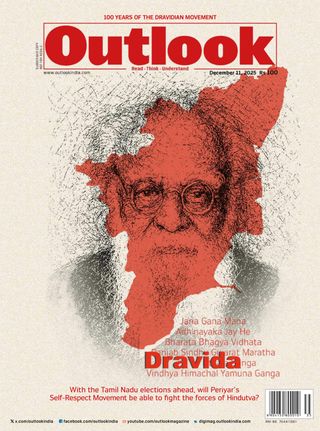

Bu hikaye Outlook dergisinin December 11, 2025 baskısından alınmıştır.
Binlerce özenle seçilmiş premium hikayeye ve 9.000'den fazla dergi ve gazeteye erişmek için Magzter GOLD'a abone olun.
Zaten abone misiniz? Oturum aç
Outlook'den DAHA FAZLA HİKAYE

Outlook
The Spectacle of the Woman Accused
Media narratives—especially when women are involved—can end up amplifying suspicion and weaponising gender

7 mins
March 11, 2026

Outlook
The Stink of Epstein
Why are the rich and powerful of the world scared of what lies buried in the Jeffrey Epstein files?
6 mins
March 11, 2026

Outlook
Passing the Watermelon
Narendra Modi's presence in Israel is being read not just as a bilateral engagement, but as an endorsement of Israeli action in Gaza and the West Bank
5 mins
March 11, 2026

Outlook
For Phoolan, Who Wasn't a Devi
“Whether or not it is the Truth is no longer relevant. The point is that it will, (if it hasn’t already) - become the Truth. Phoolan Devi, the woman has ceased to be important. (Yes of course she exists. She has eyes, ears, limbs, hair etc. Even an address now) But she is suffering from a case of Legenditis. She’s only a version of herself. There are other versions of her that are jostling for attention. Particularly Shekhar Kapur’s “Truthful” one, which we are currently being bludgeoned into believing.”–Arundhati Roy in ‘The Great Indian Rape-Trick I’, on the film Bandit Queen by Shekhar Kapur based on Phoolan, whom he never met because he didn’t think he needed to meet her. The film was based on journalist Mala Sen’s book India’s Bandit Queen: The True Story of Phoolan Devi.
5 mins
March 11, 2026

Outlook
The Chic Cartel
Women are not just victims or side characters in recent crime-and-power OTT dramas. They are complex forces-capable of empathy, strategy and ruthlessness-whose narratives demand both recognition and reckoning
5 mins
March 11, 2026

Outlook
The Hierarchy of Sympathy
In crimes against women, justice is shaped not only in courtrooms but in newsrooms where narrative determines whose suffering becomes national conscience and whose fades into procedural silence
5 mins
March 11, 2026

Outlook
Dasyu Sundari
Media accounts simultaneously cast her as victim and avenger, until a life shaped by caste violence and gendered oppression was repackaged into a consumable myth of dishonour and revenge
8 mins
March 11, 2026

Outlook
Prince Pervert
Are rumours of the death of the rule of law vastly exaggerated?
4 mins
March 11, 2026
Outlook
Together, Apart
Poonam Saxena's translations of Mannu Bhandari and Rajendra Yadav's memoirs present a portrait of the trailblazing Hindi writer-couple's marriage and of newly independent India
3 mins
March 11, 2026

Outlook
The Great Indian Rape Trick'
The trope of transforming sexual violence against women into a springboard for rage that can only be channelled through counter-violence has long served as a popular framework in cinema, both globally and in India
6 mins
March 11, 2026
Listen
Translate
Change font size