
Go Unlimited with Magzter GOLD
Get unlimited access to 10,000+ magazines, newspapers and Premium stories for just
Bhutto's Nehru Story
Outlook
|December 01, 2024
Nehru's principle of "compromise and argument" remains the only workable formula for South Asian leaders

SIXTY years ago, Zulfikar Ali Bhutto, one of South Asia’s most brilliantly devilish minds, penned an assessment of Jawaharlal Nehru. Titled ‘India after Nehru’, Bhutto had the document confidentially printed at the State Bank of Pakistan Press, Karachi. Only 500 copies were made. Since Bhutto was a minister at the time in Field Marshal Ayub Khan’s government and what he had to say about India’s first prime minister was not quite palatable to the Pakistani establishment, he found himself constrained to withdraw as many copies as could be retrieved. However, the very efficient Indian diplomats in Karachi had managed to secure a copy, and a copy of that copy somehow found its way into the Haksar Papers.
This 60-year-old assessment, made by India’s most trenchant critic, makes rewarding reading, particularly in the current season of demonising Nehru. Bhutto’s is a masterly overview of India’s struggles as an independent nation-state and Nehru’s role and contribution in imposing a governing order in a land, which for centuries had succumbed to the outsiders’ armies and firmans (orders). Bhutto’s unsentimentally prescient judgement reads:
“...The myth and image of Nehru were greater than the man. Although he committed aggression, alienated his neighbours, suppressed his opponents, made mock convenience of his ethics, he was Nehru the redeemer of 400 million people, a valiant fighter who led his people to freedom and, for the first time in 600 years, gave them a place in the sun.”
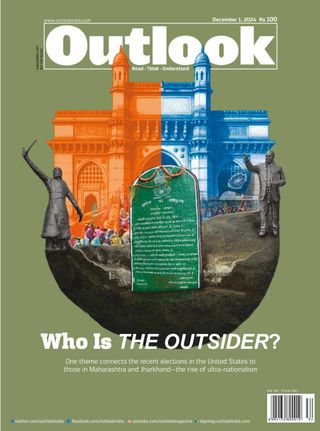

This story is from the December 01, 2024 edition of Outlook.
Subscribe to Magzter GOLD to access thousands of curated premium stories, and 10,000+ magazines and newspapers.
Already a subscriber? Sign In
MORE STORIES FROM Outlook

Outlook
The Big Blind Spot
Caste boundaries still shape social relations in Tamil Nadu-a state long rooted in self-respect politics

8 mins
December 11, 2025

Outlook
Jat Yamla Pagla Deewana
Dharmendra's tenderness revealed itself without any threats to his masculinity. He adapted himself throughout his 65-year-long career as both a product and creature of the times he lived through
5 mins
December 11, 2025

Outlook
Fairytale of a Fallow Land
Hope Bihar can once again be that impossibly noisy village in Phanishwar Nath Renu's Parti Parikatha-divided, yes, but still capable of insisting that rights are not favours and development is more than a slogan shouted from a stage
14 mins
December 11, 2025

Outlook
The Lesser Daughters of the Goddess
The Dravidian movement waged an ideological war against the devadasi system. As former devadasis lead a new wave of resistance, the practice is quietly sustained by caste, poverty, superstition and inherited ritual
2 mins
December 11, 2025

Outlook
The Meaning of Mariadhai
After a hundred years, what has happened to the idea of self-respect in contemporary Tamil society?
5 mins
December 11, 2025

Outlook
When the State is the Killer
The war on drugs continues to be a war on the poor
5 mins
December 11, 2025

Outlook
We Are Intellectuals
A senior law officer argued in the Supreme Court that \"intellectuals\" could be more dangerous than \"ground-level terrorists\"
5 mins
December 11, 2025

Outlook
An Equal Stage
The Dravidian Movement used novels, plays, films and even politics to spread its ideology
12 mins
December 11, 2025
Outlook
The Dignity in Self-Respect
How Periyar and the Self-Respect Movement took shape in Tamil Nadu and why the state has done better than the rest of the country on many social, civil and public parameters
5 mins
December 11, 2025

Outlook
When Sukumaar Met Elakkiya
Self-respect marriage remains a force of socio-political change even a century later
7 mins
December 11, 2025
Listen
Translate
Change font size