Try GOLD - Free
Weltschmerz and the World
Philosophy Now
|August/September 2025
Ian James Kidd takes a realistic and global view of the history of pessimism.
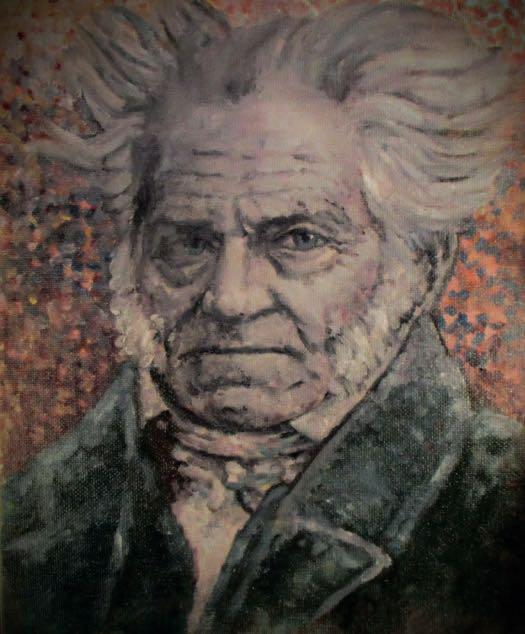
The most famous pessimist in the history of philosophy is surely Arthur Schopenhauer (1788-1860).
In his most important work, The World as Will and Representation (1818) he describes our existence as 'a mistake' and 'the worst of all possible worlds', explaining that, except in occasional moments of artistic delight, humans are trapped in an endless painful cycle of desire, frustration, and boredom. For Schopenhauer, “pain, not pleasure, is the positive thing, pleasure being merely its absence” and life, if properly understood, “ought to disgust us”. Alongside suffering and distraction, our overall moral condition is also terrible: other than a few 'beautiful souls', people are dominated by “vices, failings... of all sorts”, and the social world is a “den of thieves”. Suicide is morally ruled out, so our only path to redemption is to try, however futilely, to transcend the will that relentlessly drives all things. True to his pessimism, though, this transcendence is confined by Schopenhauer to an elite group – to 'saints and geniuses' - condemning the rest of us to the hell of human existence. While Schopenhauer is the most famous pessimist, he was not the only pessimist in nineteenth century Germany, nor was he considered the most important at the time. Excellent recent studies of the history of pessimism - such as Frederick Beiser’s Weltschmerz ('World-pain', 2016) - challenge the Schopenhauer-centred picture, reminding us of other, now-forgotten figures.
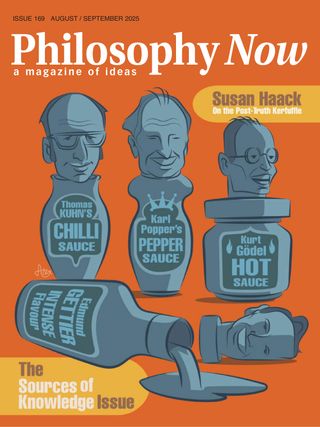

This story is from the August/September 2025 edition of Philosophy Now.
Subscribe to Magzter GOLD to access thousands of curated premium stories, and 10,000+ magazines and newspapers.
Already a subscriber? Sign In
MORE STORIES FROM Philosophy Now

Philosophy Now
Nosferatu
Stefan Bolea considers two very different artistic approaches to love and death.

6 mins
April/May 2025

Philosophy Now
Heidegger's Ghost
Raymond Tallis wonders where Heidegger's body went when he was philosophising.
7 mins
April/May 2025

Philosophy Now
Is Comedy Good For Us?
Damaris Stock has a laugh with Plato and friends.
10 mins
April/May 2025

Philosophy Now
In Defense of Idleness
Wendell O'Brien says, 'Just Don't Do It'.
10 mins
April/May 2025

Philosophy Now
Leaving Nothing to Chance by Carl Knight
LEAVING NOTHING TO Chance (2025) by Carl Knight, is an informed, proficient and lucid defence of luck egalitarianism.
3 mins
April/May 2025

Philosophy Now
Star Maker by Olaf Stapledon
THE 1937 SCIENCE FICTION novel Star Maker was written by philosophy professor Olaf Stapledon in the dark days as Europe awaited the onslaught of Nazi Germany. This casts a shadow over the whole book.
6 mins
April/May 2025
Philosophy Now
Love & Emptiness in the Sufi Tradition
Medha Ninad Tambe meditates on Rumi, love and self-negation.
7 mins
April/May 2025

Philosophy Now
The Hedgehog's Dilemma: A Metaphor About the Challenges of Human Intimacy
Krishna Chaubey explains Arthur Schopenhauer's poignant thought experiment.
4 mins
April/May 2025

Philosophy Now
The Mirror & the Flame
Rebwar Fatah imagines Attar's & Hegel's shared path.
4 mins
April/May 2025
Philosophy Now
Free and Equal by Daniel Chandler
DANIEL CHANDLER, AN economist and philosopher based at the London School of Economics, begins Free and Equal: What Would a Fair Society Look Like? (2023) by asking an intriguing question. How is it, he wonders, that the most influential political philosopher of the last century has had almost no practical impact on politics or policy? The philosopher in question is John Rawls, whose magnum opus was A Theory of Justice (1971).
5 mins
April/May 2025
Listen
Translate
Change font size