
Mit Magzter GOLD unbegrenztes Potenzial nutzen
Erhalten Sie unbegrenzten Zugriff auf über 9.000 Zeitschriften, Zeitungen und Premium-Artikel für nur
Versuchen GOLD - Frei
Weltschmerz and the World
Philosophy Now
|August/September 2025
Ian James Kidd takes a realistic and global view of the history of pessimism.
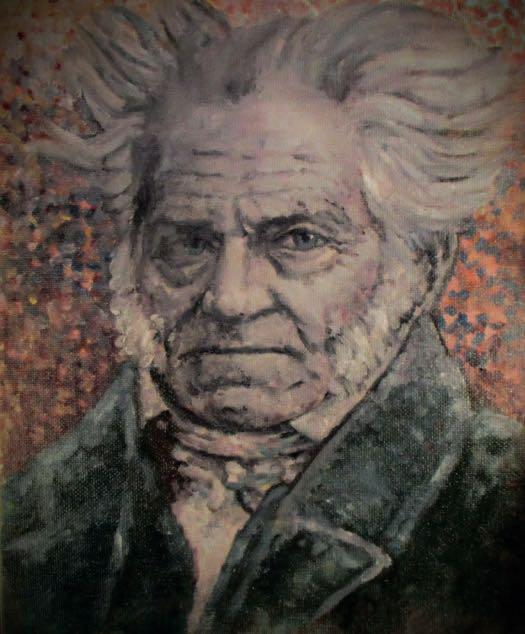
The most famous pessimist in the history of philosophy is surely Arthur Schopenhauer (1788-1860).
In his most important work, The World as Will and Representation (1818) he describes our existence as 'a mistake' and 'the worst of all possible worlds', explaining that, except in occasional moments of artistic delight, humans are trapped in an endless painful cycle of desire, frustration, and boredom. For Schopenhauer, “pain, not pleasure, is the positive thing, pleasure being merely its absence” and life, if properly understood, “ought to disgust us”. Alongside suffering and distraction, our overall moral condition is also terrible: other than a few 'beautiful souls', people are dominated by “vices, failings... of all sorts”, and the social world is a “den of thieves”. Suicide is morally ruled out, so our only path to redemption is to try, however futilely, to transcend the will that relentlessly drives all things. True to his pessimism, though, this transcendence is confined by Schopenhauer to an elite group – to 'saints and geniuses' - condemning the rest of us to the hell of human existence. While Schopenhauer is the most famous pessimist, he was not the only pessimist in nineteenth century Germany, nor was he considered the most important at the time. Excellent recent studies of the history of pessimism - such as Frederick Beiser’s Weltschmerz ('World-pain', 2016) - challenge the Schopenhauer-centred picture, reminding us of other, now-forgotten figures.

Diese Geschichte stammt aus der August/September 2025-Ausgabe von Philosophy Now.
Abonnieren Sie Magzter GOLD, um auf Tausende kuratierter Premium-Geschichten und über 9.000 Zeitschriften und Zeitungen zuzugreifen.
Sie sind bereits Abonnent? Anmelden
WEITERE GESCHICHTEN VON Philosophy Now

Philosophy Now
Star Trek: Enterprise
Sofia Villaweaver asks, what kind of future do we want — Gene Roddenberry's, or Friedrich Nietzsche's?

7 mins
June/July 2026

Philosophy Now
The Delphic Injunctions
Massimo Pigliucci philosophises about prophetic principles.
4 mins
June/July 2026

Philosophy Now
What’s the Value of Mountaineering?
Suleyman Moollan wonders why people climb mountains.
8 mins
June/July 2026

Philosophy Now
Death as Life’s Picture Frame
Joshua Clements puts us in the picture.
10 mins
June/July 2026
Philosophy Now
Philosophers on Butterflies
Summer is upon those of us in the northern hemisphere. That invites reflection.
2 mins
June/July 2026
Philosophy Now
Margalit & Limits to Political Compromise
Laure Gillot-Assayag reflects on the political philosophy of Avishai Margalit.
12 mins
June/July 2026

Philosophy Now
Making Omelettes & A Future Like Ours
Jimmy Alfonso Licon wonders what's wrong with killing — first chickens, then humans.
5 mins
June/July 2026

Philosophy Now
Breakfast with Habermas
Matt Qvortrup recalls chat over coffee and scrambled eggs with a champion of reasoned debate.
5 mins
June/July 2026

Philosophy Now
Who Wants to Live Forever?
Dan Pollen weighs up the pros and cons of indefinitely extended life.
10 mins
June/July 2026

Philosophy Now
Carl Schmitt (1888-1985)
Marco Pandolfini on the ideas of a highly contentious legal theorist.
9 mins
June/July 2026
Listen
Translate
Change font size