Try GOLD - Free
The Lottery' & Locke's Politics
Philosophy Now
|April/May 2022
John P. Irish considers through an infamous lottery.

On June 26 1948 Shirley Jackson (1916-65) published what may be the most infamous short story in American literature. Called ‘The Lottery’, it was featured in The New Yorker, and at the time became one of the most controversial pieces ever printed, resulting in the magazine receiving more hate mail and subscription non-renewals than anything else up to that point in its history. Even Jackson’s mother shared her dislike for the story with her daughter, claiming that the younger generation was too obsessed with violence.
The story is about a fictional small town in America which conducts an annual ritual known as ‘the lottery’, whose purpose is to choose a human sacrifice to be stoned to death to ensure the community’s well-being and continued prosperity. I have used the story many times in my American Studies classes – I typically use it as a way of introducing post-WWII American society – but it only recently struck me that this story can also be used to teach certain aspects of Locke’s social contract theory, as found in his Two Treatises of Government.
John Locke (1632-1704) was an English philosopher and physician, and is considered to be one of the most influential thinkers of the Enlightenment. In fact, in 1689 he published two classic works which have each had a profound effect on the history of philosophy: An Essay Concerning Human Understanding, which outlined his empiricist philosophy, and Two Treatises of Government, which outlined his political theory. The
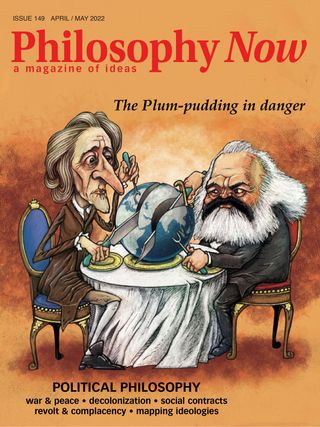

This story is from the April/May 2022 edition of Philosophy Now.
Subscribe to Magzter GOLD to access thousands of curated premium stories, and 10,000+ magazines and newspapers.
Already a subscriber? Sign In
MORE STORIES FROM Philosophy Now

Philosophy Now
Nosferatu
Stefan Bolea considers two very different artistic approaches to love and death.

6 mins
April/May 2025

Philosophy Now
Heidegger's Ghost
Raymond Tallis wonders where Heidegger's body went when he was philosophising.
7 mins
April/May 2025

Philosophy Now
Is Comedy Good For Us?
Damaris Stock has a laugh with Plato and friends.
10 mins
April/May 2025
Philosophy Now
In Defense of Idleness
Wendell O'Brien says, 'Just Don't Do It'.
10 mins
April/May 2025

Philosophy Now
Leaving Nothing to Chance by Carl Knight
LEAVING NOTHING TO Chance (2025) by Carl Knight, is an informed, proficient and lucid defence of luck egalitarianism.
3 mins
April/May 2025

Philosophy Now
Star Maker by Olaf Stapledon
THE 1937 SCIENCE FICTION novel Star Maker was written by philosophy professor Olaf Stapledon in the dark days as Europe awaited the onslaught of Nazi Germany. This casts a shadow over the whole book.
6 mins
April/May 2025
Philosophy Now
Love & Emptiness in the Sufi Tradition
Medha Ninad Tambe meditates on Rumi, love and self-negation.
7 mins
April/May 2025

Philosophy Now
The Hedgehog's Dilemma: A Metaphor About the Challenges of Human Intimacy
Krishna Chaubey explains Arthur Schopenhauer's poignant thought experiment.
4 mins
April/May 2025
Philosophy Now
The Mirror & the Flame
Rebwar Fatah imagines Attar's & Hegel's shared path.
4 mins
April/May 2025
Philosophy Now
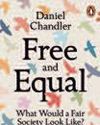
Free and Equal by Daniel Chandler
DANIEL CHANDLER, AN economist and philosopher based at the London School of Economics, begins Free and Equal: What Would a Fair Society Look Like? (2023) by asking an intriguing question. How is it, he wonders, that the most influential political philosopher of the last century has had almost no practical impact on politics or policy? The philosopher in question is John Rawls, whose magnum opus was A Theory of Justice (1971).
5 mins
April/May 2025
Translate
Change font size