
मैगज़्टर गोल्ड के साथ असीमित हो जाओ
10,000 से अधिक पत्रिकाओं, समाचार पत्रों और प्रीमियम कहानियों तक असीमित पहुंच प्राप्त करें सिर्फ
कोशिश गोल्ड - मुक्त
The Lottery' & Locke's Politics
Philosophy Now
|April/May 2022
John P. Irish considers through an infamous lottery.

On June 26 1948 Shirley Jackson (1916-65) published what may be the most infamous short story in American literature. Called ‘The Lottery’, it was featured in The New Yorker, and at the time became one of the most controversial pieces ever printed, resulting in the magazine receiving more hate mail and subscription non-renewals than anything else up to that point in its history. Even Jackson’s mother shared her dislike for the story with her daughter, claiming that the younger generation was too obsessed with violence.
The story is about a fictional small town in America which conducts an annual ritual known as ‘the lottery’, whose purpose is to choose a human sacrifice to be stoned to death to ensure the community’s well-being and continued prosperity. I have used the story many times in my American Studies classes – I typically use it as a way of introducing post-WWII American society – but it only recently struck me that this story can also be used to teach certain aspects of Locke’s social contract theory, as found in his Two Treatises of Government.
John Locke (1632-1704) was an English philosopher and physician, and is considered to be one of the most influential thinkers of the Enlightenment. In fact, in 1689 he published two classic works which have each had a profound effect on the history of philosophy: An Essay Concerning Human Understanding, which outlined his empiricist philosophy, and Two Treatises of Government, which outlined his political theory. The
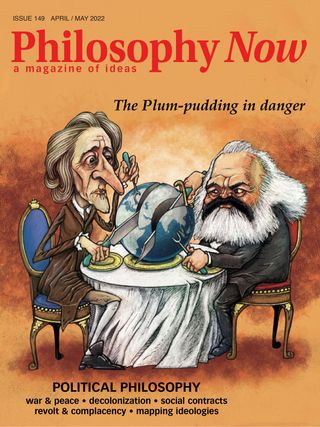

यह कहानी Philosophy Now के April/May 2022 संस्करण से ली गई है।
हजारों चुनिंदा प्रीमियम कहानियों और 10,000 से अधिक पत्रिकाओं और समाचार पत्रों तक पहुंचने के लिए मैगज़्टर गोल्ड की सदस्यता लें।
क्या आप पहले से ही ग्राहक हैं? साइन इन करें
Philosophy Now से और कहानियाँ

Philosophy Now
Star Trek: Enterprise
Sofia Villaweaver asks, what kind of future do we want — Gene Roddenberry's, or Friedrich Nietzsche's?

7 mins
June/July 2026
Philosophy Now
The Delphic Injunctions
Massimo Pigliucci philosophises about prophetic principles.
4 mins
June/July 2026

Philosophy Now
What’s the Value of Mountaineering?
Suleyman Moollan wonders why people climb mountains.
8 mins
June/July 2026

Philosophy Now
Death as Life’s Picture Frame
Joshua Clements puts us in the picture.
10 mins
June/July 2026
Philosophy Now
Philosophers on Butterflies
Summer is upon those of us in the northern hemisphere. That invites reflection.
2 mins
June/July 2026
Philosophy Now
Margalit & Limits to Political Compromise
Laure Gillot-Assayag reflects on the political philosophy of Avishai Margalit.
12 mins
June/July 2026

Philosophy Now
Making Omelettes & A Future Like Ours
Jimmy Alfonso Licon wonders what's wrong with killing — first chickens, then humans.
5 mins
June/July 2026

Philosophy Now
Breakfast with Habermas
Matt Qvortrup recalls chat over coffee and scrambled eggs with a champion of reasoned debate.
5 mins
June/July 2026

Philosophy Now
Who Wants to Live Forever?
Dan Pollen weighs up the pros and cons of indefinitely extended life.
10 mins
June/July 2026

Philosophy Now
Carl Schmitt (1888-1985)
Marco Pandolfini on the ideas of a highly contentious legal theorist.
9 mins
June/July 2026
Translate
Change font size