
Go Unlimited with Magzter GOLD
Get unlimited access to 10,000+ magazines, newspapers and Premium stories for just
ON LOCATION SEASONAL WORLDS
BBC Wildlife
|March 2022
Climate change is already affecting the planet’s plants and seasons. Rosie Thomas was able to witness some of those changes first-hand during the filming of her episode.

What’s the theme of this episode?
We look at the planet’s temperate zones and how we’re in a world of constant change. For plants, this means getting your timing right and using small windows of opportunity. We also look at the incredible lengths plants go to in order to succeed.
Any filming firsts?
Yes! One is Ceratocaryum seeds being dispersed by dung beetles. Ceratocaryum is a tall, grass-like plant found in the coastal fynbos (shrubland) of South Africa. Its seeds sit in cups and the plant flips them out when dung beetles are most active.
The seeds mimic the dung of the eland and bontebok antelopes, on which the beetles lay their eggs. Duped, the beetles roll the seeds away and bury them at just the right depth for germination. They’re completely conned by the plant, and it’s very comical seeing them so taken in.

We also filmed a ‘frost flower’ for the first time. Sudden cold snaps at the onset of winter can cause the air temperature to drop below freezing at night, but the soil is still warm enough for a plant to function. Its sap freezes above ground, forcing its stems to rupture. Water drawn out of these cracks then freezes into beautiful formations. We managed to film a frost flower on a Verbesina plant in Missouri. Conditions were only right on one morning, and the formation melted just after sunrise, so we were lucky.
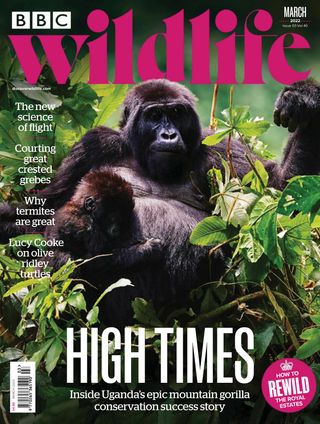

This story is from the March 2022 edition of BBC Wildlife.
Subscribe to Magzter GOLD to access thousands of curated premium stories, and 10,000+ magazines and newspapers.
Already a subscriber? Sign In
MORE STORIES FROM BBC Wildlife
BBC Wildlife
"I was terrified the elephant would ram us"
African elephant in Kenya

2 mins
January 2026
BBC Wildlife
ALL YOU EVER NEEDED TO KNOW ABOUT THE Fennec fox
THE FENNEC FOX IS THE SMALLEST fox in the world, with a body length that can be as little as 24cm.
3 mins
January 2026
BBC Wildlife
INTO THE PLASTISPHERE
A unique synthetic ecosystem is evolving in our oceans – welcome to the plastisphere
7 mins
January 2026
BBC Wildlife
“More than half of all animal life exists in a parasitic relationship, and all life lives in symbiosis”
Our survival depends on species evolving to live together - but some relationships take dark turns
7 mins
January 2026
BBC Wildlife
Are animals able to dream?
SLEEP IS A MYSTERIOUS THING. FOR A long time, we weren't sure why we do it.
1 mins
January 2026
BBC Wildlife
Does a cuckoo know it's a cuckoo?
ABSURD LITTLE BIRDS ACROSS THE world lay their eggs in the nests of other species, leaving the hapless parents to raise a changeling at the expense of their own offspring.
2 mins
January 2026
BBC Wildlife
Orcas killing young sharks
Juvenile great whites are easy prey for orca pod
1 mins
January 2026
BBC Wildlife
Ocean goes on tour
Acclaimed film touring the UK, backed by live orchestra and choir
1 min
January 2026
BBC Wildlife
Feisty bats hunt like lions
Winged mammals use a 'hang and wait' strategy to take down large prey
1 mins
January 2026
BBC Wildlife
SNAP-CHAT
Richard Birchett on magical merlins, wily coyotes and charging deer
2 mins
January 2026
Translate
Change font size