कोशिश गोल्ड - मुक्त
ON LOCATION SEASONAL WORLDS
BBC Wildlife
|March 2022
Climate change is already affecting the planet’s plants and seasons. Rosie Thomas was able to witness some of those changes first-hand during the filming of her episode.

What’s the theme of this episode?
We look at the planet’s temperate zones and how we’re in a world of constant change. For plants, this means getting your timing right and using small windows of opportunity. We also look at the incredible lengths plants go to in order to succeed.
Any filming firsts?
Yes! One is Ceratocaryum seeds being dispersed by dung beetles. Ceratocaryum is a tall, grass-like plant found in the coastal fynbos (shrubland) of South Africa. Its seeds sit in cups and the plant flips them out when dung beetles are most active.
The seeds mimic the dung of the eland and bontebok antelopes, on which the beetles lay their eggs. Duped, the beetles roll the seeds away and bury them at just the right depth for germination. They’re completely conned by the plant, and it’s very comical seeing them so taken in.

We also filmed a ‘frost flower’ for the first time. Sudden cold snaps at the onset of winter can cause the air temperature to drop below freezing at night, but the soil is still warm enough for a plant to function. Its sap freezes above ground, forcing its stems to rupture. Water drawn out of these cracks then freezes into beautiful formations. We managed to film a frost flower on a Verbesina plant in Missouri. Conditions were only right on one morning, and the formation melted just after sunrise, so we were lucky.
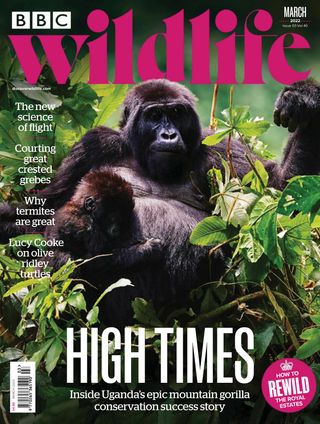

यह कहानी BBC Wildlife के March 2022 संस्करण से ली गई है।
हजारों चुनिंदा प्रीमियम कहानियों और 10,000 से अधिक पत्रिकाओं और समाचार पत्रों तक पहुंचने के लिए मैगज़्टर गोल्ड की सदस्यता लें।
क्या आप पहले से ही ग्राहक हैं? साइन इन करें
BBC Wildlife से और कहानियाँ
BBC Wildlife
“Our canoe was nearly sunk by a hippo”
Hippos in Niger

3 mins
March 2026

BBC Wildlife
Why does Australia have such weird animals?
AUSTRALIA IS A LONG WAY FROM anywhere and has been for a very long time. The landmass definitively separated from the supercontinent of Gondwana around 40 million years ago and, since then, has existed - as a big blob in the middle of an even bigger ocean - in glorious geographical isolation.
2 mins
March 2026
BBC Wildlife
Which country has the fewest native animals?
AT AROUND 61KM² SAN MARINO, IN Europe, is one of the world's smallest countries. Entirely landlocked, it is surrounded by Italy.
1 min
March 2026

BBC Wildlife
Why do some species sunbathe?
RING-TAILED LEMURS ARE FAMED FOR their 'sun-worshipping' posture, legs and arms outstretched to reveal their pale bellies. Like humans, they do it to save energy and boost health. Sunlight is necessary to many bodily processes. As a source of vitamin D it's required to maintain bone and muscle health. It is also related to the production of serotonin, the chemical that regulates mood, sleep and stress response.
1 mins
March 2026
BBC Wildlife
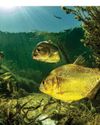
ALL YOU EVER NEEDED TO KNOW ABOUT THE Piranha
PIRANHAS HAVE A REPUTATION as some of the most dangerous freshwater hunters: terrifying predators capable of devouring a large mammal in mere minutes.
3 mins
March 2026
BBC Wildlife
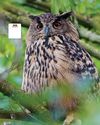
EAGLES LANDING
Eagle owls were once heavily persecuted. But thanks to a new initiative, these magnificent birds are reclaiming a wetland home
7 mins
March 2026
BBC Wildlife
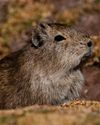
Do wild guinea pigs exist?
GUINEA PIGS, WHICH ARE NOT pigs and not from Guinea, are domesticated rodents that do not exist in the wild.
1 min
March 2026
BBC Wildlife
SNAP-CHAT: THE INSIDE WORLD OF WILDLIFE PHOTOGRAPHY
Boris Belchev on birds, batteries and battling bears with pop music
3 mins
March 2026
BBC Wildlife
Does anything live in the Bermuda Triangle?
THE BERMUDA TRIANGLE, IN THE NORTH Atlantic Ocean, has become infamous for the planes and ships that are said to have vanished without a trace while travelling through the area.
1 min
March 2026
BBC Wildlife
Do animals have different blood types?
HUMANS HAVE FOUR MAIN BLOOD GROUPS: A, B, AB and O.
1 min
March 2026
Translate
Change font size