Science
How It Works UK
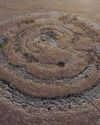
The 'Stonehenge' in the Golan Heights may not be an astronomical observatory TOM METCALFE
An ancient and enigmatic stone circle in the Middle East may not be a prehistoric astronomical observatory after all.
2 min |
Issue 200
How It Works UK
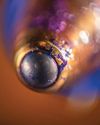
INSIDE A BALLPOINT PEN
Discover the mechanism that gives this everyday item the power to write
1 min |
Issue 200

How It Works UK
WHAT ARE HEADACHES?
From shooting sensations to dull aches, we explore the many causes of pain around the brain
5 min |
Issue 200

How It Works UK
IS THIS THE HUMAN OF TOMORROW?
HOW WIRES AND CIRCUITS ARE MINGLING WITH BLOOD VESSELS AND NERVES TO CHANGE THE COURSE OF HUMAN EVOLUTION
8 min |
Issue 200
How It Works UK
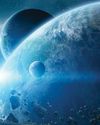
THE HUNT FOR FARAWAY MOONS
Astronomers are looking for moons outside our Solar System that may have even more chance of hosting life than the planets they're orbiting
8 min |
Issue 200

How It Works UK
HOW THATCHED ROOFS ARE BUILT
Learn all about this historic building method that masterfully tops roofs with layers of dry vegetation
2 min |
Issue 200

How It Works UK
PREDICTING THE WEATHER
To take an umbrella or not? How we get those all-important forecasts
2 min |
Issue 200
How It Works UK
WHY WE HAVE DAYLIGHT SAVINGS
When did some countries start adding and subtracting an hour to their clocks?
1 min |
Issue 200
How It Works UK
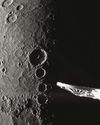
NEW IMAGES SHED LIGHT ON MERCURY'S NORTH POLE
New photos of Mercury's mysterious north pole reveal a glimpse of the permanently dark, frigid craters that may hold ice dozens of metres thick, even though Mercury is the closest planet to the Sun.
1 min |
Issue 200
How It Works UK
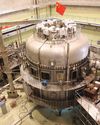
China's 'artificial Sun' shatters a nuclear fusion record
China's reactor has broken its own world record for maintaining superhot plasma, marking another milestone in the long road towards near-limitless clean energy.
2 min |
Issue 200
How It Works UK
The 'Stonehenge' in the Golan Heights may not be an astronomical observatory
An ancient and enigmatic stone circle in the Middle East may not be a prehistoric astronomical observatory after all.
2 min |
Issue 200
How It Works UK
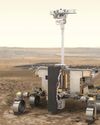
THE ESA PLANS TO LAUNCH AN ADVANCED MARS LANDER IN 2035
The European Space Agency (ESA) wants to develop key technologies for a Mars surface lander by the mid-2030s.
1 min |
Issue 200
How It Works UK
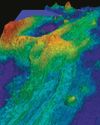
An undersea volcano off the Oregon coast could erupt this year
An undersea volcano off Oregon's coast will probably erupt in 2025. The volcano, known as Axial, is a seamount 300 miles west of Cannon Beach, Oregon.
2 min |
Issue 200
How It Works UK
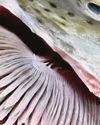
Did our outer ears come from ancient fish gills?
Human outer ears may have evolved from the gills of prehistoric fish. Gene-editing experiments indicate that cartilage in fish gills migrated into the ear canal millions of years ago during the course of our evolution.
2 min |
Issue 200

How It Works UK
The speed limit of human thought is ridiculously low
How fast do humans think? It's slower than you might expect.The peripheral nervous system, the network of nerves that delivers information between the brain and the body, takes in environmental information at over a billion bits per second, a speed comparable to a lightning-fast internet connection.
2 min |
Issue 200
How It Works UK
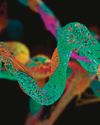
A new database reveals how DNA mutations trigger genetic diseases
Scientists have created a mega-database revealing how half a million different DNA mutations generate errors in proteins in humans.
2 min |
Issue 200

How It Works UK
The skull of Cleopatra's sister' actually belongs to an 11-year-old boy
A skull long assumed to be from Arsinoë IV, Cleopatra’s half sister, is actually from an adolescent boy who had a genetic disorder.
2 min |
Issue 200
How It Works UK
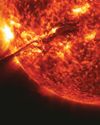
Invisible 'flickering' on the Sun could predict dangerous solar flares
Shining loops of plasma on the surface of the Sun 'flicker' hours before they unleash potentially dangerous solar flares.
2 min |
Issue 200
How It Works UK
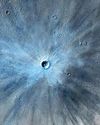
INCREDIBLE SOLAR SYSTEM CRATERS
Why these spectacular craters carved out by past impact events are among the most widespread and distinctive geological features in the Solar System
7 min |
Issue 198

How It Works UK
HOW NORTH AMERICA'S GREAT LAKES FORMED
The world's largest freshwater system comprises five immense interconnected lakes, carved into Earth by glaciers
5 min |
Issue 198
How It Works UK
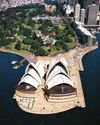
BUILDING THE WORLD'S DEEPEST CAR PARK
Australia's most famous landmark is often marvelled at from ground level, but its innovative spiral substructure is a hidden gem
2 min |
Issue 198
How It Works UK
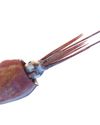
FINDING THE COLOSSAL SQUID
This elusive creature spawned a legend of a deep-sea monster that endured for centuries
2 min |
Issue 198
How It Works UK
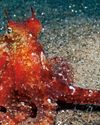
Octopuses burn more calories changing colour than you do on a 23 minute run
For octopuses, changing colour burns about as many calories as a human on a 23-minute run. Octopuses are masters of disguise, changing colour at the drop of a hat to startle predators and hide from prey.
2 min |
Issue 198
How It Works UK
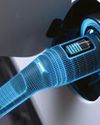
The world's first silicon-anode battery could revolutionise electronic vehicles
A ceramic battery manufacturer has unveiled a solid-state battery concept that can be charged from 5 to 60 per cent capacity in just five minutes, giving future electric vehicles (EVS) a 186-mile range in the time it takes to order a coffee.
1 min |
Issue 198

How It Works UK
New technology gives AI the power to feel surfaces
Scientists have given artificial intelligence (AI) the capacity to 'feel' surfaces for the first time, opening up a new dimension for deploying the technology in the real world.
1 min |
Issue 198
How It Works UK
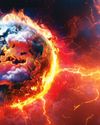
Visit Plane Earth 2125
How might our world have transformed under the strain of climate change 100 years from now?
4 min |
Issue 198

How It Works UK
The world's largest organism may have been growing for 80,000 years
Pando, an enormous quaking aspen that spans more than 40 hectares in Utah, is not only one of the largest known organisms on Earth, it's also one of the oldest.
2 min |
Issue 198
How It Works UK
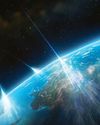
Scientists detect the most powerful cosmic rays ever
Scientists have detected the most energetic cosmic rays ever discovered, and they're being produced by mysterious sources relatively close to Earth.
2 min |
Issue 198

How It Works UK
Mountain lions in Los Angeles are becoming nocturnal
Mountain lions are prowling Greater Los Angeles at night to avoid humans exercising on their mountains.
2 min |
Issue 198

How It Works UK
THE POWER OF WATER
We're hooked on fossil fuels. But hydroelectric power is becoming an increasingly important replacement for coal and oil
4 min |