Science
How It Works UK
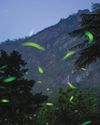
Spiders keep fireflies as glowing prisoners that draw more prey to their webs
Nocturnal spiders have been filmed capturing fireflies and keeping them in their webs to attract more prey, even intermittently checking on them over the course of an hour.
1 min |
Issue 208
How It Works UK
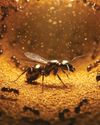
ANIMAL LEADERS
From top-dog wolves and wise elder elephants to insect royalty and sex-changing fish, animal alphas take many fascinating forms
2 min |
Issue 208

How It Works UK
INSIDE YOUR PC
Take a look inside a modern desktop computer to see how PCs have evolved over the years
2 min |
Issue 208

How It Works UK
CAN EXERCISE REDUCE STRESS?
Why moving about more can make you feel calmer and think clearer
2 min |
Issue 208
How It Works UK
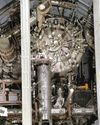
NEXT-GENERATION NUCLEAR REACTOR
Could molten thorium be the future of nuclear power?
2 min |
Issue 208
How It Works UK
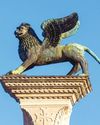
The iconic winged lion statue in Venice may be from China's Tang dynasty
A bronze statue of a winged lion that has long graced the centre of Piazza San Marco in Venice is from a faraway land, according to a new study.
2 min |
Issue 208
How It Works UK
HOW TO BE A GHOST HUNTER
We delve into the science and psychology behind the paranormal to ask... do ghosts exist?
3 min |
Issue 208

How It Works UK
HOW HAIR GROWS
Dear HIW. Would my hair grow longer without cutting it for a year or by getting small bits cut off regularly? Does this help it grow quicker?
1 min |
Issue 208

How It Works UK
DO YOU BELIEVE IN GHOSTS?
REAL GHOST STORIES FROM THE HOST AND CREATOR OF BBC'S UNCANNY
4 min |
Issue 208
How It Works UK
'Queen of icebergs' A23a is no longer the world's biggest
An iceberg that was once the size of Rhode Island and the biggest in the world has lost about 80 per cent of its mass since May, scientists at the British Antarctic Survey (BAS) report.
2 min |
Issue 208
How It Works UK
HOW THE FIRST TV SIGNAL WAS TRANSMITTED
A century ago, John Logie Baird demonstrated a working television transmission
1 min |
Issue 208
How It Works UK
INSIDE TRUMP'S 'PALACE IN THE SKY'
This luxurious intercontinental jumbo jet will be the US president's new Air Force One
3 min |
Issue 206
How It Works UK
Why are we still sending probes to Mars?
Mars is perhaps the most interesting, and certainly the most Earth-like world in the Solar System, and there's a huge amount still to find out about it.
1 min |
Issue 206
How It Works UK
BURMESE PYTHONS HAVE CELLS THAT HELP THEM DIGEST ENTIRE SKELETONS
Researchers found that specialised cells in Burmese pythons' intestinal lining process calcium from the bones of their meals. This helps explain how these predators digest whole prey.
1 min |
Issue 206
How It Works UK
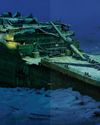
DISCOVERING THE TITANIC
Finding the remains of this iconic liner on the seabed was no easy feat, but after more than seven decades the wreckage revealed itself
6 min |
Issue 206
How It Works UK
Melting glaciers could trigger volcanic eruptions around the globe
Melting glaciers could make volcanic eruptions more explosive and frequent, worsening climate change in the process, scientists have warned. Hundreds of volcanoes in Antarctica, Russia, New Zealand and North America rest beneath glaciers. But as the planet warms and these ice sheets melt and retreat, these volcanoes are likely to become more active, according to the authors of a new study analysing the activity of six volcanoes in southern Chile during the last ice age. “Glaciers tend to suppress the volume of eruptions from the volcanoes beneath them. But as glaciers retreat due to climate change, our findings suggest these volcanoes go on to erupt more frequently and more explosively,” said Pablo Moreno Yaeger, a graduate student at the University of Wisconsin-Madison.
2 min |
Issue 206
How It Works UK
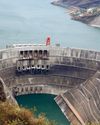
The world's dams hold so much water they've shifted Earth's poles
The construction of thousands of dams since 1835 has caused Earth's poles to wobble, new research suggests. Scientists found that large dams hold so much water, they redistribute mass around the globe, shifting the position of Earth's crust relative to the mantle, the planet's middle layer. Earth's mantle is gooey, and the crust forms a solid shell that can slide around on top of it. Weight on the crust that causes it to shift relative to the mantle also shifts the location of Earth's poles. \"Any movement of mass within the Earth or on its surface changes the orientation of the rotation axis relative to the crust, a process termed true polar wander,\" researchers wrote in the journal Geophysical Research Letters.
2 min |
Issue 206
How It Works UK
WHY WE STUDY SPACE DUST
Long ignored by scientists, cosmic dust is becoming an increasingly important field of study
2 min |
Issue 206
How It Works UK
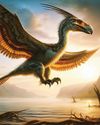
HOW DINOSAURS BECAME BIRDS
Dinosaurs were prehistoric egg-laying reptiles that went extinct millions of years ago, but their survivors still live among us
5 min |
Issue 206

How It Works UK
WHY ARE SMOKE DETECTORS RADIOACTIVE?
These devices use a radioactive element to help sniff out smoke and alert you to a potential fire
2 min |
Issue 206
How It Works UK
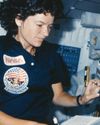
SALLY RIDE MEMORABILIA COLLECTION SELLS FOR OVER £100,000
A set of memorabilia chronicling Sally Ride’s pioneering path to space just fetched a pretty penny at auction.
1 min |
Issue 206
How It Works UK
WHAT CAUSES POWER CUTS?
A series of unfortunate events can plunge our homes into total darkness
1 min |
Issue 206

How It Works UK
Severed bow of US warship finally found in the South Pacific
The bow section of the US warship USS New Orleans, which was blown off by a Japanese torpedo in 1942, has been located near the island of Guadalcanal in the South Pacific. Although the ship survived the attack, more than 180 of the crew on board the heavy cruiser were killed when one of the ship's magazines of ammunition was hit by a torpedo and detonated, tearing off the front of the vessel.
1 min |
Issue 206
How It Works UK
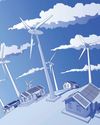
BACKYARD POWER STATIONS
With growing demand and dwindling resources, there's only one direction fuel bills are going. But soon we could have power stations in our gardens
4 min |
Issue 206
How It Works UK
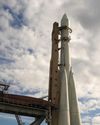
WORLD'S BIGGEST SPACE AGENCIES
Between their rivalries and collaborations, how have the world's top national space agencies contributed to our knowledge of the cosmos?
7 min |
Issue 206
How It Works UK
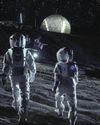
SOUTH KOREA WANTS TO BUILD A MOON BASE BY 2045
South Korea's space ambitions keep growing. The nation wants to build a Moon base by 2045, The Korea Times reported on 17 July, citing a long-term exploration road map that the Korea AeroSpace Administration (KASA) laid out that same day.
1 min |
Issue 206
How It Works UK
ENERGY EXPLAINED
It's one of the most basic concepts in physics, governing the behaviour of everything from subatomic particles to galaxies
1 min |
Issue 206

How It Works UK
NEANDERTHAL INVENTIONS
These caveman creations kept our ancient hunter-gatherer relatives alive
4 min |
Issue 206
How It Works UK
First-ever evidence of stellar 'double detonation' captured
For the first time, astronomers have captured stunning visual evidence of a star double-detonating itself to death. The twin eruption was discovered by scientists studying two concentric rings of calcium that surround SNR 0509-67.5, a remnant of a star that met its explosive demise in a type la supernova centuries ago. And the discovery isn’t just a pretty picture. The researchers who made it say that much of our knowledge of how the universe expands — a major controversy in cosmology — depends on reliably measuring this type of supernova, which is also the primary source of iron throughout the cosmos. For these reasons, “the explosions of white dwarfs play a crucial role in astronomy,” said Priyam Das, a graduate student at the University of New South Wales Canberra in Australia. “Yet despite their importance, the longstanding puzzle of the exact mechanism triggering their explosion remains unsolved.”
1 min |
Issue 206
How It Works UK
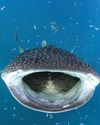
TRACKING SEA MONSTERS
How a NASA star-mapping tool is being put to a new use - following the largest fish in the sea, whale sharks
5 min |