Versuchen GOLD - Frei
DISCOVERING THE TITANIC
How It Works UK
|Issue 206
Finding the remains of this iconic liner on the seabed was no easy feat, but after more than seven decades the wreckage revealed itself
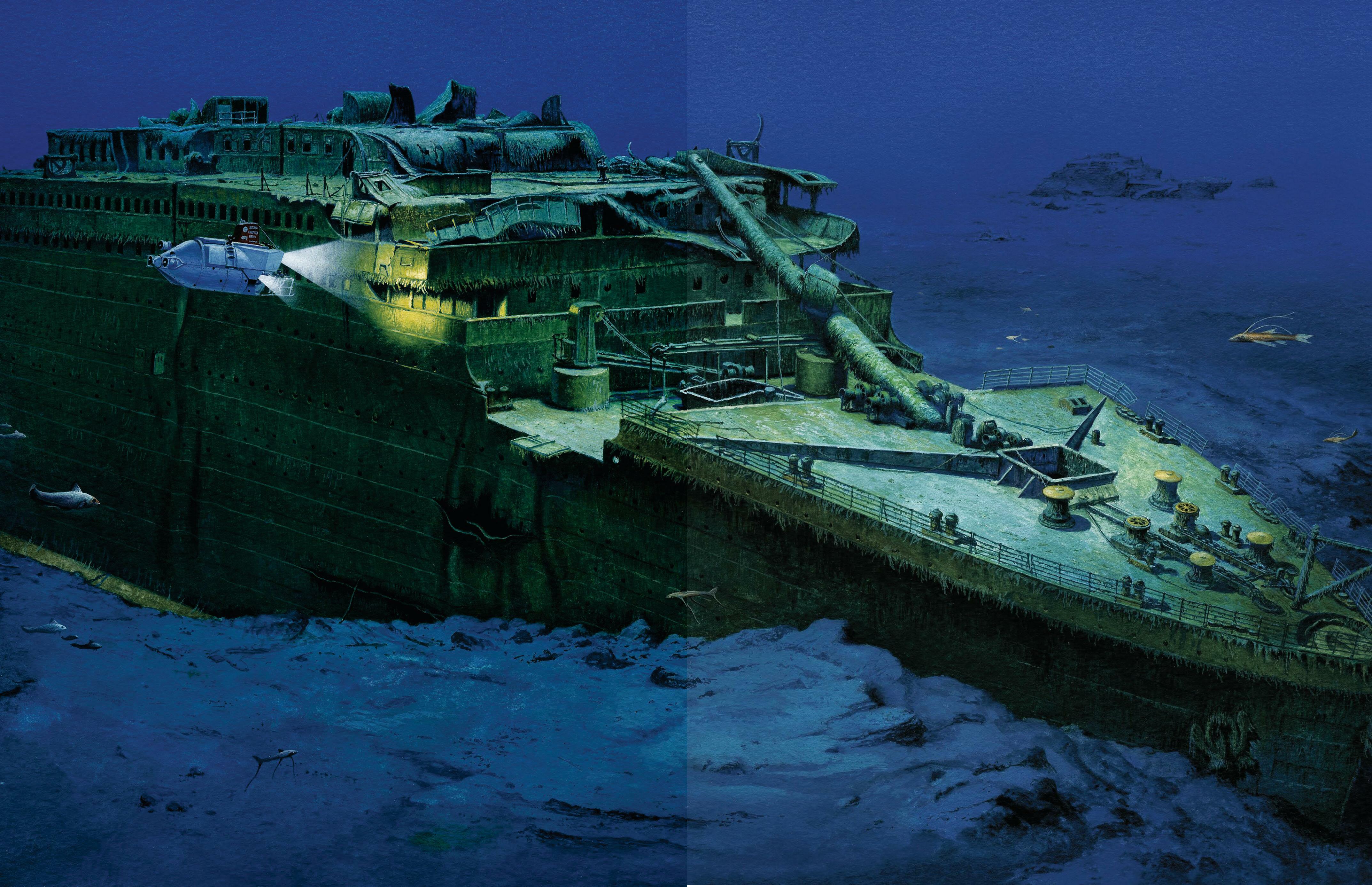
Anchors raised and horn blaring, the RMS Titanic set sail from Southampton, England, on 10 April 1912 and embarked on its maiden voyage across the Atlantic. With more than 2,240 people on board, the luxury passenger liner had America in its sights, with those aboard excited to see the glitz and glamour of New York City. However, the majority of its passengers would never set foot in the Big Apple after a drifting iceberg unexpectedly impaled the liner after four days at sea. The ship that was touted as 'unsinkable' was indeed sinkable, claiming the lives of over 1,500 passengers and crew.
The sinking of the unsinkable ship remains one of the most talked about events in modern-day history – inspiring numerous documentaries, taught in school curricula and becoming the backdrop for one of the world's most beloved cinematic love stories. Most people know its story, but for over 70 years after it sank, there was one thing about the Titanic nobody could put their finger on: where exactly did it sink? Somewhere at the bottom of the Atlantic was a wreck waiting to be discovered. Distress signals made by the crew at the time of the iceberg strike, along with navigation records, gave Titanic hunters the only clues as to where in the ocean the wreckage might be hiding.
Attempts to find the legendary liner were numerous, the first of which was carried out in 1953 by a Southampton-based company called Risdon Beazley Ltd. Using a relatively new wartime technology called sonar, the company detonated underwater explosives near the suspected site to plot the echoing sound waves, which would bounce off the wreckage. Unfortunately, the plan failed, and the Titanic remained at large.

Diese Geschichte stammt aus der Issue 206-Ausgabe von How It Works UK.
Abonnieren Sie Magzter GOLD, um auf Tausende kuratierter Premium-Geschichten und über 9.000 Zeitschriften und Zeitungen zuzugreifen.
Sie sind bereits Abonnent? Anmelden
WEITERE GESCHICHTEN VON How It Works UK

How It Works UK
FORMULA FAST
YOUR ULTIMATE GUIDE TO FORMULA ONE RACING

1 mins
Issue 212

How It Works UK
MY LIFE AS AN ASTHMANAUT
A CHILDREN'S BOOK ABOUT ASTHMA
1 min
Issue 212

How It Works UK
LYDIA LOVES BUGS
A SHORT AND SWEET STORY OF AN ENTHUSIASTIC ENTOMOLOGIST
1 min
Issue 212

How It Works UK
INSIDE A DRONE
Drones aren't just for the military any more. These flying marvels are now taking over our lives
3 mins
Issue 212

How It Works UK
WE CAN HEAR WITHOUT EARS
AND OTHER THINGS YOU DIDN'T KNOW WE PLANTS COULD DO
1 min
Issue 212

How It Works UK
DO GEESE GET GOOSEBUMPS?
Many animals experience a similar reaction when they feel cold or scared
2 mins
Issue 212

How It Works UK
SUBMARINES WITHOUT SAILORS
Dive into the world of autonomous submarines and discover the mission that will see one sail around the world
4 mins
Issue 212

How It Works UK
WHAT HAPPENS INSIDE A COCOON?
How certain species of insects transform from crawling caterpillars to flying moths and butterflies
3 mins
Issue 212

How It Works UK
HOW THE ROSE LOST ITS SCENT
From floral to fragranceless, there's a biological reason behind a rose's missing odour today
3 mins
Issue 212

How It Works UK
How many insects have been discovered so far?
The total number of named species is around a million.
7 mins
Issue 212
Listen
Translate
Change font size