Denemek ALTIN - Özgür
INSIDE THE MIND OF A GENIUS
How It Works UK
|Issue 205
What's going on inside the brains of those with truly exceptional mental abilities, and why are they so intelligent? Genetic analysis and Einstein's brain are providing us with some answers
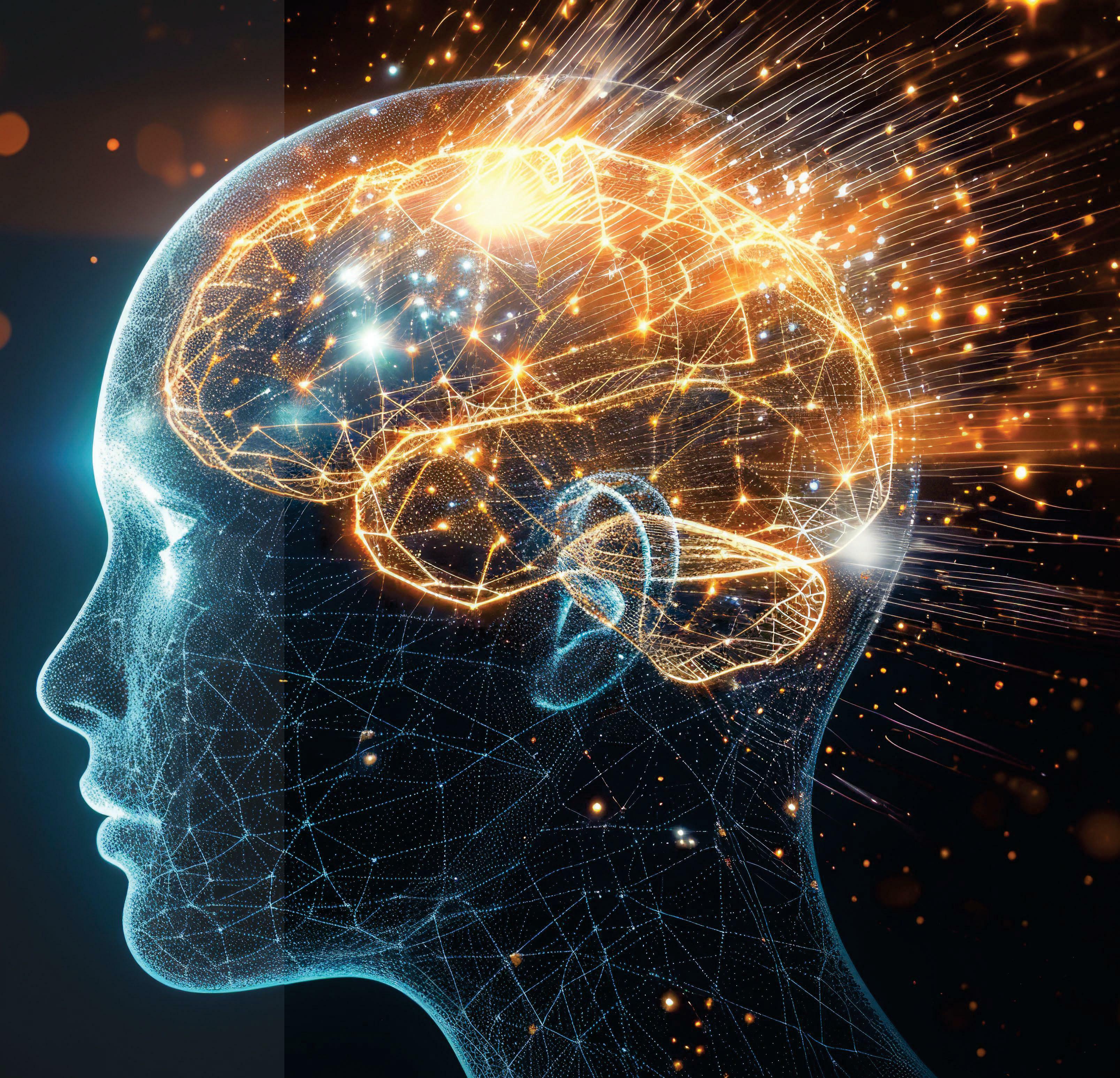
When Albert Einstein died, his brain became a scientific curiosity.
In the months following the famous physicist’s death in 1955, pathologist Thomas Harvey dissected it into 240 blocks. Over the years, he distributed tissue samples and photos to a select group of scientists and, gradually, little clues to Einstein's genius emerged.
Humanity is utterly fascinated by intellect, and with good reason - a higher IQ is linked to better jobs, income and health, as well as a lower risk of accidents and premature death. In 1904, English psychologist Charles Spearman noticed that high-school grades in different subjects tended to cluster around the same children — those who were good at maths were usually good at English too. He proposed that there was some common factor, or ‘g’, for general intelligence, that could explain some of the differences between people's mental abilities.
Although controversial and still debated today, the theory largely stands — with evidence that different skills, including speed of thought and verbal, numerical and spatial reasoning, are all high in certain individuals. If we can figure out what influences ‘g’, we can get an insight into to what makes geniuses smarter than the average person, and maybe give us and our children a boost.
The crucial problem is, as with most things involving the brain, intelligence is complicated. Brain size was long thought to play a part in IQ, but though there is some association, bigger isn't necessarily better. One of the earliest findings from Einstein's autopsy was that his brain was smaller than most, weighing about 200 grams less than the average 1,400 grams.
What we do know is that our genes play a large part. It's estimated that 50 to 70 per cent of your intelligence is passed on from your parents. Studies of adopted children show that, while a child’s IQ may vary, it ultimately ends up closer to that of their birth mother than their adopted mother.


Bu hikaye How It Works UK dergisinin Issue 205 baskısından alınmıştır.
Binlerce özenle seçilmiş premium hikayeye ve 9.000'den fazla dergi ve gazeteye erişmek için Magzter GOLD'a abone olun.
Zaten abone misiniz? Oturum aç
How It Works UK'den DAHA FAZLA HİKAYE

How It Works UK
FORMULA FAST
YOUR ULTIMATE GUIDE TO FORMULA ONE RACING

1 mins
Issue 212

How It Works UK
MY LIFE AS AN ASTHMANAUT
A CHILDREN'S BOOK ABOUT ASTHMA
1 min
Issue 212

How It Works UK
LYDIA LOVES BUGS
A SHORT AND SWEET STORY OF AN ENTHUSIASTIC ENTOMOLOGIST
1 min
Issue 212

How It Works UK
INSIDE A DRONE
Drones aren't just for the military any more. These flying marvels are now taking over our lives
3 mins
Issue 212

How It Works UK
WE CAN HEAR WITHOUT EARS
AND OTHER THINGS YOU DIDN'T KNOW WE PLANTS COULD DO
1 min
Issue 212

How It Works UK
DO GEESE GET GOOSEBUMPS?
Many animals experience a similar reaction when they feel cold or scared
2 mins
Issue 212

How It Works UK
SUBMARINES WITHOUT SAILORS
Dive into the world of autonomous submarines and discover the mission that will see one sail around the world
4 mins
Issue 212

How It Works UK
WHAT HAPPENS INSIDE A COCOON?
How certain species of insects transform from crawling caterpillars to flying moths and butterflies
3 mins
Issue 212

How It Works UK
HOW THE ROSE LOST ITS SCENT
From floral to fragranceless, there's a biological reason behind a rose's missing odour today
3 mins
Issue 212
How It Works UK
How many insects have been discovered so far?
The total number of named species is around a million.
7 mins
Issue 212
Listen
Translate
Change font size