कोशिश गोल्ड - मुक्त
INSIDE THE MIND OF A GENIUS
How It Works UK
|Issue 205
What's going on inside the brains of those with truly exceptional mental abilities, and why are they so intelligent? Genetic analysis and Einstein's brain are providing us with some answers
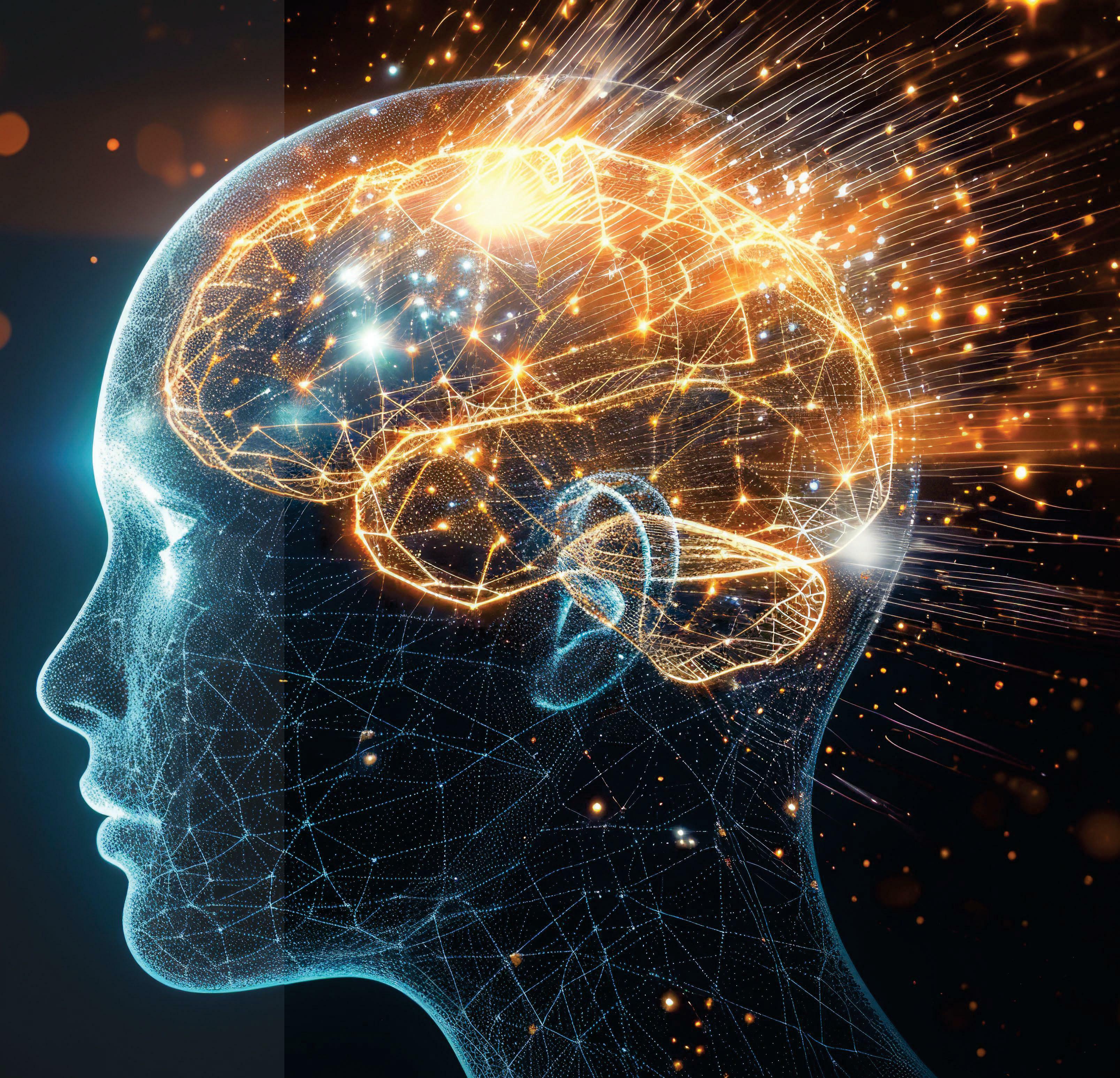
When Albert Einstein died, his brain became a scientific curiosity.
In the months following the famous physicist’s death in 1955, pathologist Thomas Harvey dissected it into 240 blocks. Over the years, he distributed tissue samples and photos to a select group of scientists and, gradually, little clues to Einstein's genius emerged.
Humanity is utterly fascinated by intellect, and with good reason - a higher IQ is linked to better jobs, income and health, as well as a lower risk of accidents and premature death. In 1904, English psychologist Charles Spearman noticed that high-school grades in different subjects tended to cluster around the same children — those who were good at maths were usually good at English too. He proposed that there was some common factor, or ‘g’, for general intelligence, that could explain some of the differences between people's mental abilities.
Although controversial and still debated today, the theory largely stands — with evidence that different skills, including speed of thought and verbal, numerical and spatial reasoning, are all high in certain individuals. If we can figure out what influences ‘g’, we can get an insight into to what makes geniuses smarter than the average person, and maybe give us and our children a boost.
The crucial problem is, as with most things involving the brain, intelligence is complicated. Brain size was long thought to play a part in IQ, but though there is some association, bigger isn't necessarily better. One of the earliest findings from Einstein's autopsy was that his brain was smaller than most, weighing about 200 grams less than the average 1,400 grams.
What we do know is that our genes play a large part. It's estimated that 50 to 70 per cent of your intelligence is passed on from your parents. Studies of adopted children show that, while a child’s IQ may vary, it ultimately ends up closer to that of their birth mother than their adopted mother.

यह कहानी How It Works UK के Issue 205 संस्करण से ली गई है।
हजारों चुनिंदा प्रीमियम कहानियों और 10,000 से अधिक पत्रिकाओं और समाचार पत्रों तक पहुंचने के लिए मैगज़्टर गोल्ड की सदस्यता लें।
क्या आप पहले से ही ग्राहक हैं? साइन इन करें
How It Works UK से और कहानियाँ

How It Works UK
SPACE MINING UNCOVERED
Asteroids rich in rare elements could be harvested for their valuable contents, but the real worth may be in using them as interplanetary fuel stations

2 mins
Issue 211

How It Works UK
WHY THINGS ROT
How dead plants and animals decay, and how living organisms rely on this natural process to survive
3 mins
Issue 211

How It Works UK
BOOZE, BEANS AND YOUR BODY
Caffeine and alcohol are two of the world's most common drugs. But what effects does drinking them have on our brains and bodies?
5 mins
Issue 211

How It Works UK
HOW TO CLEAN A SKYSCRAPER WINDOW
Discover how skilled window cleaners with nerves of steel tackle these towering glass facades
2 mins
Issue 211

How It Works UK
ASTRONAUTS SEE COMET LEMMON 'ABSORBED' BY AURORAE
For skywatchers, scientists and even the astronauts on the International Space Station (ISS), the skies have been active. The Sun has released its largest eruptions of 2025, sparking a series of aurorae that have reached as far south as Mexico. While astronauts on the ISS had to take shelter during the recent solar storms to avoid potentially dangerous radiation, they did manage to capture this image of Comet Lemmon appearing near the aurorae on Earth.
1 min
Issue 211
How It Works UK
HOW TO MAKE MAPLE SYRUP
Your favourite pancake topping is much more than just a sugary treat made in a factory
1 mins
Issue 211
How It Works UK
A high-fibre diet may ‘rejuvenate' immune cells that fight cancer
Microbes in the gut can help the immune system fight cancer, and a fibre-rich diet may be the key to unlocking those benefits, a study in mice suggests. The immune system is a key player in the body’s battle against cancer. On the front line of this resistance are CD8+ killer T cells, a type of immune cell that marauds around tumours and then exterminates the cancerous cells. But after each successive battle, these cells become worn out and don’t find tumours as effectively. As such, treatments that provide the cells with enough pep to finish their job are in high demand.
2 mins
Issue 211

How It Works UK
SEE THE BUTTERFLY NEBULA LIKE NEVER BEFORE
On 26 November 2025, the Gemini South telescope turned 25, and astronomers celebrated its birthday with a dazzling new image of the Butterfly Nebula.
1 min
Issue 211

How It Works UK
The Gulf of Suez is pulling apart
The Gulf of Suez, which partially divides Africa and Asia, may still be widening 5 million years after we thought it had stopped.
2 mins
Issue 211

How It Works UK
REMOTE ABILITIES
Infrared remotes are cheaper and more power-efficient than Bluetooth alternatives
1 mins
Issue 211
Listen
Translate
Change font size