Try GOLD - Free
A Hands-On Guide to Silex: Building Static Sites Visually
Open Source For You
|January 2026
This guide will show you how to use Silex's visual editor to go from a blank canvas to a ready-to-publish static site, all built on clean HTML and CSS standards.
-

The modern web requires sites that are fast, flexible, and completely under your control. While many popular platforms offer easy drag-and-drop editors, they come with a high price — constant subscription fees and proprietary code that traps you in their ecosystem. For anyone committed to open source, this loss of control is unacceptable. Developers, designers, and business owners deserve visual tools that truly respect their freedom and data ownership, allowing them to create without the fear of vendor lock-in.
This is where Silex comes in — a powerful, 100% free, and AGPL-licensed visual website builder. Silex lets you design, build, and export professional static websites without ever using proprietary software. If you prioritise freedom, performance, and control, Silex is the open source solution you need to master.
Accessing and starting Silex
The only prerequisite to access Silex is to have a GitLab account. To begin experimenting instantly, simply open the official instance https://v3.silex.me/ in your web browser; you will get a page to sign in using Gitlab.com.
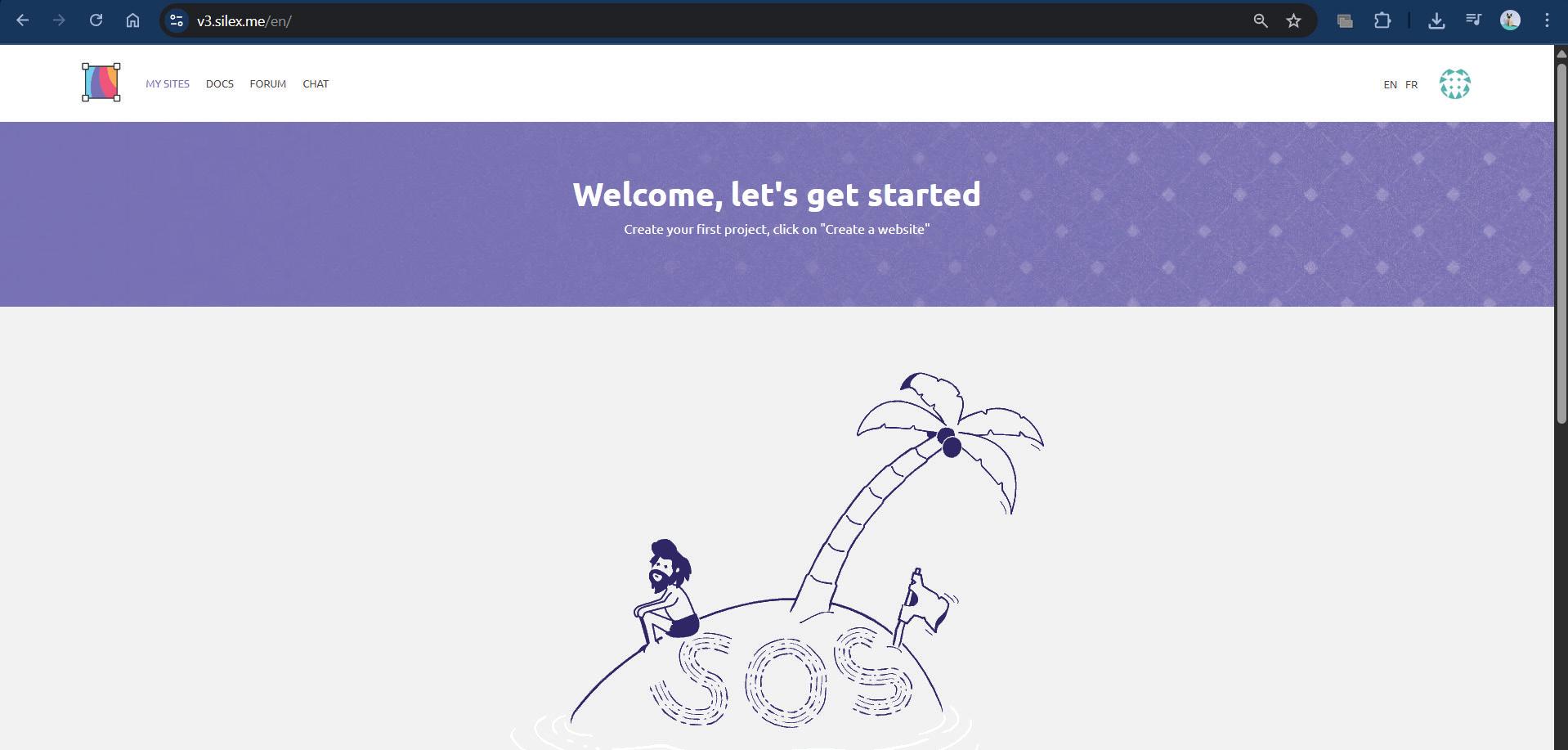 While you can build without an account, saving and managing projects remotely requires connecting a service. Silex uses GitLab for this integration due to its open source nature. To enable saving, you first need an active account on GitLab.com. Click on the Sign In/Sign Up button within the Silex interface, go to Authorize with Gitlab, and then approve the request from the Silex Labs Foundation. Once authorised, you can save your projects directly to your GitLab repositories, ensuring true version control and data ownership. Then the page shown in Figure 1 will appear.
Now scroll down, click on the Create Website button and provide a name for your site. Let us name it

This story is from the January 2026 edition of Open Source For You.
Subscribe to Magzter GOLD to access thousands of curated premium stories, and 10,000+ magazines and newspapers.
Already a subscriber? Sign In
MORE STORIES FROM Open Source For You

Open Source For You
Apache Paimon: Lakehouse Storage for Real-Time Analytics
Apache Paimon brings a streaming-first approach to lakehouse storage, making it ideal for real-time analytics and evolving data workloads.

2 mins
July 2026
Open Source For You
How Zero-Knowledge Proofs Enhance Privacy in Blockchains
Zero-Knowledge Proofs address a fundamental challenge that has existed since the birth of public blockchains: how can a decentralised network verify that the rules are being followed, without making all data public?
10 mins
July 2026

Open Source For You
Building Trust and Adoption Through Compliance in Open Source
Open source projects that adopt compliance as a core tenet lay the foundation for long-term success.
3 mins
July 2026

Open Source For You
The Necessity of Observability for AI and LLM Applications
Open source tools are allowing teams to build observability into AI and LLM applications without surrendering control of sensitive prompts, outputs, or internal workflows.
11 mins
July 2026

Open Source For You
Navigating the Security Paradox of IT/OT Convergence
With physical systems no longer isolated from the digital infrastructure, organisations must adopt new ways of ensuring cybersecurity.
10 mins
July 2026

Open Source For You
Building Intelligent Retrieval Augmented AI Systems
LLMs and vector databases work together to create intelligent Al systems that understand data.
6 mins
July 2026

Open Source For You
Securing AI Agents on Linux: Understanding Nvidia OpenShell
Nvidia OpenShell is an Apache 2.0-licensed open source runtime designed to provide security, privacy, and operational guardrails for AI workloads.
3 mins
July 2026

Open Source For You
A Beginner’s Guide to Open Source Security Tools
Open source security tools are as good as their commercial counterparts, if not better.
5 mins
July 2026
Open Source For You
From Black Box to Glass Box: Observability Strategies for Production AI
Most enterprises are running AI in production without being able to see what it's doing. Open source tools like OpenTelemetry, LangFuse, Grafana and Arize Phoenix bring real observability to LLM pipelines, agents, and inference at scale.
5 mins
July 2026

Open Source For You
Observability: The Nervous System of Modern Digital Infrastructure
Observability helps turn operational data into knowledge that enables resilient, efficient, and intelligent digital systems.
9 mins
July 2026
Listen
Translate
Change font size