
Ga onbeperkt met Magzter GOLD
Krijg onbeperkte toegang tot meer dan 9000 tijdschriften, kranten en Premium-verhalen voor slechts
A Hands-On Guide to Silex: Building Static Sites Visually
Open Source For You
|January 2026
This guide will show you how to use Silex's visual editor to go from a blank canvas to a ready-to-publish static site, all built on clean HTML and CSS standards.
-

The modern web requires sites that are fast, flexible, and completely under your control. While many popular platforms offer easy drag-and-drop editors, they come with a high price — constant subscription fees and proprietary code that traps you in their ecosystem. For anyone committed to open source, this loss of control is unacceptable. Developers, designers, and business owners deserve visual tools that truly respect their freedom and data ownership, allowing them to create without the fear of vendor lock-in.
This is where Silex comes in — a powerful, 100% free, and AGPL-licensed visual website builder. Silex lets you design, build, and export professional static websites without ever using proprietary software. If you prioritise freedom, performance, and control, Silex is the open source solution you need to master.
Accessing and starting Silex
The only prerequisite to access Silex is to have a GitLab account. To begin experimenting instantly, simply open the official instance https://v3.silex.me/ in your web browser; you will get a page to sign in using Gitlab.com.
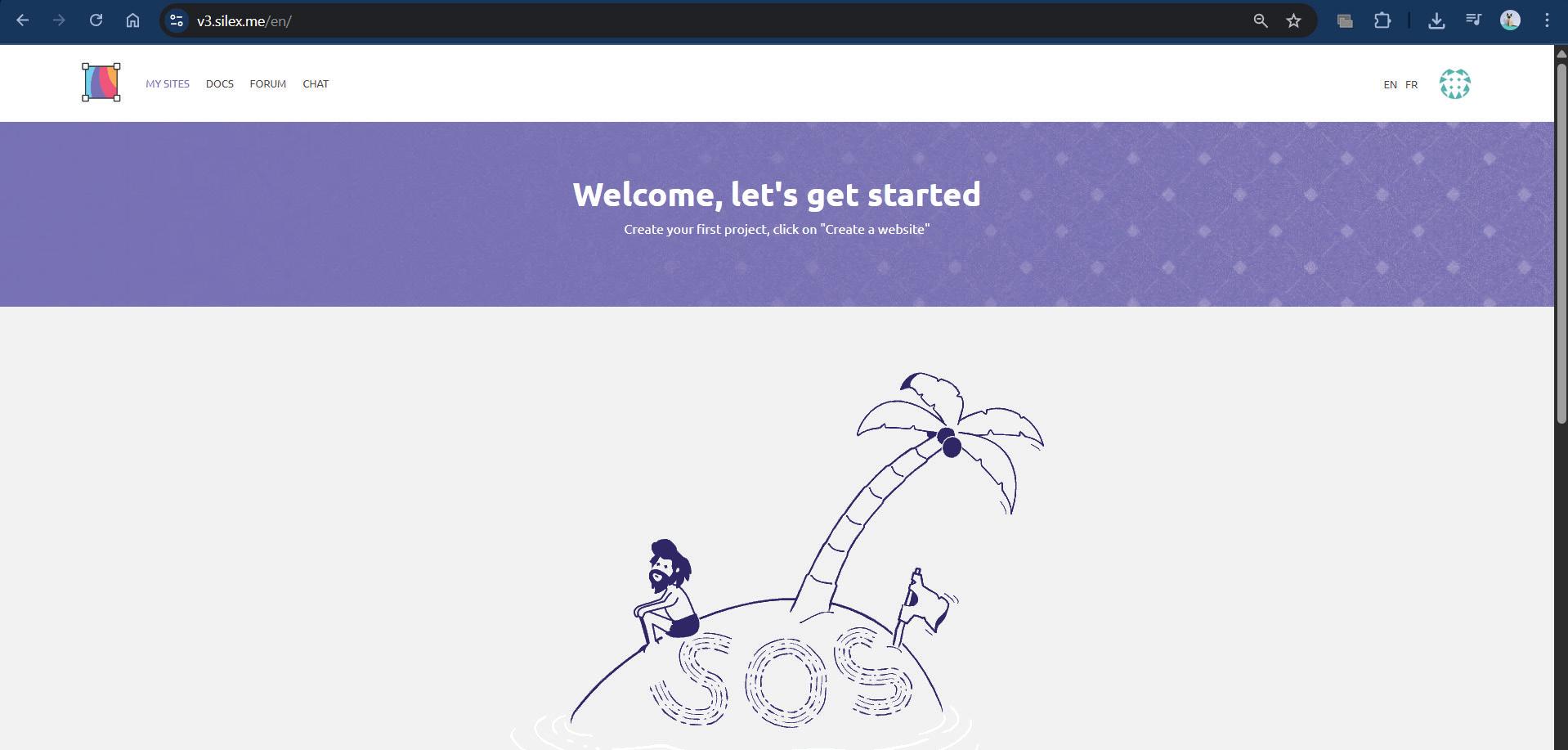 While you can build without an account, saving and managing projects remotely requires connecting a service. Silex uses GitLab for this integration due to its open source nature. To enable saving, you first need an active account on GitLab.com. Click on the Sign In/Sign Up button within the Silex interface, go to Authorize with Gitlab, and then approve the request from the Silex Labs Foundation. Once authorised, you can save your projects directly to your GitLab repositories, ensuring true version control and data ownership. Then the page shown in Figure 1 will appear.
Now scroll down, click on the Create Website button and provide a name for your site. Let us name it

Dit verhaal komt uit de January 2026-editie van Open Source For You.
Abonneer u op Magzter GOLD voor toegang tot duizenden zorgvuldig samengestelde premiumverhalen en meer dan 9000 tijdschriften en kranten.
Bent u al abonnee? Aanmelden
MEER VERHALEN VAN Open Source For You

Open Source For You
The Role of Open Source in Building Modern Data Infrastructure
It's no secret that open source is emerging as the backbone of modern data infrastructure. Here’s a list of the core open source technologies used to deploy this infrastructure, along with some real-world examples and a brief on why open source matters.

3 mins
December 2025

Open Source For You
The Whispering Machines: How Open Source is Bringing Intelligence to the Tiniest Devices
Built on open source frameworks, TinyML is enabling complex machine learning models to run on the microcontrollers embedded in connected devices, bringing artificial intelligence to the very edge of the network.
3 mins
December 2025

Open Source For You
Setting Up Snort to Secure Your Network
Snort is a popular, open source intrusion detection system that monitors traffic in real time to detect malware. Here’s a detailed explanation of how to set it up on Ubuntu and test it by generating traffic from another system.
7 mins
December 2025

Open Source For You
When AI Meets DevOps to Build Self-Healing Systems
Traditional DevOps, with its rule-based automation, is struggling to work effectively in today’s complex tech world. But when combined with AlOps, it can lead to IT systems that predict failures and solve issues without human intervention.
7 mins
December 2025

Open Source For You
How to Automate Java Code Modernisation
This short guide illustrates that automating Java code modernisation with Python and OpenAI API is not just possible-it's remarkably effective.
5 mins
December 2025

Open Source For You
The Quest to Build a Quantum Computer
The road to large-scale quantum computing is long and hard, with incremental advances paving the way. But the destination is in sight.
12 mins
December 2025

Open Source For You
Job Opportunities: What's Hot in the Cloud Space?
If there's one field that refuses to slow down, it's cloud computing. Even as automation and AI reshape roles, cloud adoption continues to surge. From startups deploying microservices overnight to enterprises migrating decades of legacy systems, cloud remains the engine of digital transformation. For professionals, this means one thing: skills that live in the cloud won't come down anytime soon.
2 mins
December 2025

Open Source For You
Securing Client Identity with Post-Quantum Cryptography
Here's a quick tutorial on how to build a secure, real world client-server model that establishes client identity by using CRYSTALS-Dilithium, a post-quantum cryptography algorithm.
3 mins
December 2025
Open Source For You
Unlocking the Power of Multi-Agent Solutions with the Microsoft Agentic Framework
The Microsoft Agentic Framework is rapidly emerging as a cornerstone for developers, architects, and technology leaders seeking to build dynamic, intelligent systems powered by multiple collaborating agents. In an era where automation, distributed intelligence, and adaptive software are increasingly vital, this framework offers robust tools and features to accelerate the design and deployment of agent-based solutions.
6 mins
December 2025

Open Source For You
Apache Iceberg and Trino: Powering Data Lakehouse Architecture
Apache Iceberg is a cornerstone of any open data lakehouse, providing the transactional foundation upon which highly scalable and flexible analytics can flourish. Along with Trino, it can be used to build a robust, scalable, and high-performance data lakehouse.
4 mins
December 2025
Listen
Translate
Change font size