Try GOLD - Free
Managing the energy demands of the AI revolution
EPR Magazine (Electrical & Power Review)
|July 2026
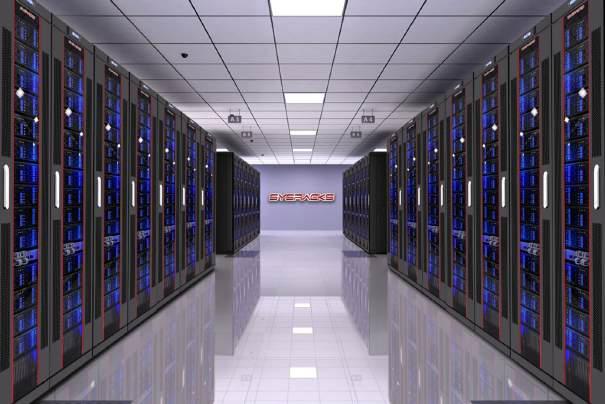
A data centre is a physical facility designed to house computing infrastructure such as servers, storage systems, and networking equipment, enabling the processing, storage, and distribution of digital data (Refer to figure 1).
-
Introduction
These facilities are critical for delivering services like cloud computing, artificial intelligence (AI), online transactions, streaming, and enterprise IT operations. Modern data centres operate 24/7 and require high reliability (99.99 percent uptime). They integrate power systems, cooling systems and redundancy mechanisms.
Types of data centres
Hyperscale data centres: These are large-scale facilities operated by tech giants such as Google, Amazon Web Services, and Microsoft.
Which comes with the features like: Massive scale (100,000+ servers), designed for cloud computing and AI workloads, and highly optimised for efficiency (low PUE). Hyperscale data centres account for 40-50 percent of global data centre capacity.
 Example: Google's global data centre network supporting Search, YouTube and AI services.
Co-location data centres: These are third-party facilities where businesses rent space for their servers and IT infrastructure. Features of these include shared infrastructure (power, cooling, security), which are cost-effective for small/medium enterprises with flexible scalability.
Enterprise data centres: Owned and operated by individual companies for internal use, these feature customised infrastructure, limited scalability compared to hyperscale, and gradually decline due to cloud adoption.
Working of data centres
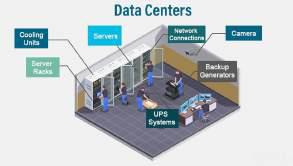
Core components: Data centres are built around three fundamental computational pillars: compute (servers), storage and networking. These components collectively enable data processing, storage and transmission. (Refer to Figure 2)


This story is from the July 2026 edition of EPR Magazine (Electrical & Power Review).
Subscribe to Magzter GOLD to access thousands of curated premium stories, and 10,000+ magazines and newspapers.
Already a subscriber? Sign In
MORE STORIES FROM EPR Magazine (Electrical & Power Review)

EPR Magazine (Electrical & Power Review)
Market Coupling in India: A strategic step towards an efficient, integrated and future-ready power market
Market Coupling is ultimately about who benefits — and the answer is: everyone in the electricity value chain, especially the end consumers.

5 mins
July 2026

EPR Magazine (Electrical & Power Review)
Surge protection devices strengthen industrial reliability and asset performance
In manufacturing, power surges or transient overvoltages are silent “financial killers” that can disrupt a production line in milliseconds.
2 mins
July 2026

EPR Magazine (Electrical & Power Review)
Servotech strengthens charging reliability, efficiency with OCPP-enabled connectivity
We are continuously enhancing our AC and DC charging portfolio with features such as dynamic load management, remote monitoring and intelligent diagnostics to improve operational efficiency and maximise charger uptime.
2 mins
July 2026
EPR Magazine (Electrical & Power Review)
K-LITE launches new series of LED Architectural Lighting
Each solution of this new series is backed by K-LITE's extensive understanding of urban illumination and expertise gained over three decades.
1 min
July 2026

EPR Magazine (Electrical & Power Review)
Integrating renewables into rail traction networks
Indian Railways has achieved over 97 percent route electrification across its vast network and projects a peak power demand of approximately 8,200 MW by 2029-30.
3 mins
July 2026

EPR Magazine (Electrical & Power Review)
Engineering reliability for wind power
We continue to invest in advanced manufacturing processes and reliability-centred technologies to support the industry's long-term growth.
2 mins
July 2026

EPR Magazine (Electrical & Power Review)
Managing the energy demands of the AI revolution
A data centre is a physical facility designed to house computing infrastructure such as servers, storage systems, and networking equipment, enabling the processing, storage, and distribution of digital data (Refer to figure 1).
5 mins
July 2026

EPR Magazine (Electrical & Power Review)
AERB approves continued operation of Tarapur Atomic Power Station
Tarapur Atomic Power Station (TAPS) Units 1&2, commissioned in 1969, are the oldest operating commercial nuclear power reactors in the world.
2 mins
July 2026

EPR Magazine (Electrical & Power Review)
President Murmu, PM Modi lay foundation for BCGCL coal-to-ammonium nitrate project
Bharat Coal Gasification & Chemicals Limited (BCGCL) is a joint venture company formed between Coal India Limited (CIL) and Bharat Heavy Electricals Limited (BHEL), with CIL holding 51 percent equity and BHEL holding 49 percent equity.
2 mins
July 2026

EPR Magazine (Electrical & Power Review)
HIKMICRO Thermal Cameras detect unseen electrical faults in residential and commercial buildings
These non-invasive, predictive cameras measure surface temperature differences to identify underlying defects long before they cause costly downtime or structural damage.
3 mins
July 2026
Listen
Translate
Change font size