Try GOLD - Free
Visions of Grandeur
Scientific American
|May 2026
Binoculars and other far-range optics span a gamut of price points. Here's what separates top-tier from entry-level
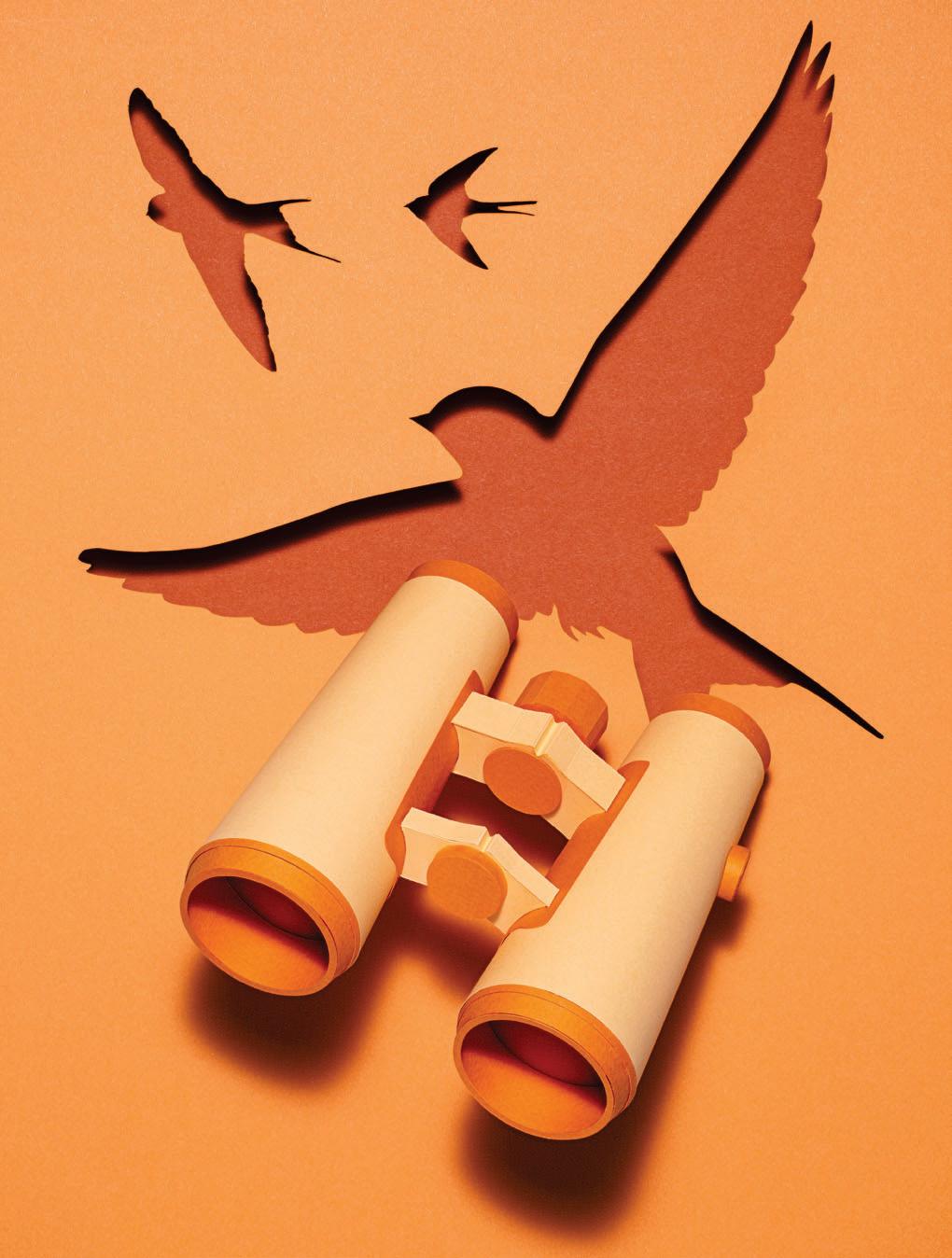
WHEN I FIRST TOOK UP birding, during the early days of the COVID-19 pandemic, I couldn’t believe I had only just discovered, in middle age, the joys of avian observation. It was the perfect hobby. I could watch birds anywhere. And I could do it virtually for free. I already had the one piece of equipment I needed to get started: a pair of good entry-level binoculars capable of magnifying small or distant birds so that I could better see their identifying characteristics and appreciate their beauty.
I was perfectly happy using those binoculars in the beginning. Before long I had racked up my first 100 species (“lifers” in the parlance of bird nerds) with them. Life was good. But then one day, out of curiosity, I tried out a pair of much more expensive bins from the locked display case at the local sporting goods store. Through them the world looked so much brighter, sharper, better. I could see the individual hairs of the taxidermy moose on the other side of the store. I didn’t buy those binoculars that day, but I knew that as soon as I could invest in primo optics like that, I would.
Eventually I took the plunge and purchased a pair of—gulp—$3,200 Swarovski Optik NL Pures, which many people consider to be the best binoculars on the market for bird-watching. My original bins, a Celestron NatureDX pair that cost less than $200, still get plenty of use, living as they do on the sill of the kitchen window, within easy reach whenever an interesting bird visits the backyard feeder while I’m doing the dishes. But it’s the new ones I take with me in the field on dedicated birding jaunts.
I love these binoculars. They’re a pleasure to look at and use, and, most important, I feel like they help me see a lot more. I’ll admit, however, that I’ve wondered whether the price is justified. What, exactly, distinguishes binoculars that cost thousands of dollars from ones that sell for an order of magnitude less? I decided to find out.


This story is from the May 2026 edition of Scientific American.
Subscribe to Magzter GOLD to access thousands of curated premium stories, and 10,000+ magazines and newspapers.
Already a subscriber? Sign In
MORE STORIES FROM Scientific American
Scientific American
Let There Be Weapons
The Department of Energy’s new Genesis Mission promises AI-accelerated discovery. Seven of its first 26 challenges focus on nuclear weapons and national security

4 mins
July/August 2026

Scientific American
How to Fix Science
The federal funding system for scientific research in the U.S. needs reform
9 mins
July/August 2026

Scientific American
Robots Can Now Fold Your Laundry
Home-helper tasks are becoming easier for robotic assistants
4 mins
July/August 2026

Scientific American
50, 100 & 150 Years
NATURAL FISSION REACTOR
3 mins
July/August 2026

Scientific American
Anna Ho
Describing the characteristics of short-lived astrophysical events
1 mins
July/August 2026
Scientific American
THE SOLILOQUY OF SCHRÖDINGER'S CAT
A MEDITATION ON LIFE AND THE VON NEUMANN–WIGNER INTERPRETATION OF QUANTUM MECHANICS
1 min
July/August 2026

Scientific American
Mikhail Kolmogorov
Developing software to reveal large genetic changes that lead to cancer
1 mins
July/August 2026

Scientific American
Jaye Gardiner
Learning how the matrix around cells and tissues impacts cancers
1 mins
July/August 2026

Scientific American
Timnit Gebru
On safeguarding independent research in the age of big tech
3 mins
July/August 2026

Scientific American
A Youthful Illusion Sharpens Memory
By making people feel as if their face is a younger version of itself, researchers can bring childhood memories into sharper focus
4 mins
July/August 2026
Listen
Translate
Change font size