Try GOLD - Free
The Past Is Our Future
Scientific American
|July/August 2026
It’s a difficult time to be a young scientist in America. Lessons from history can tell us what the future might hold
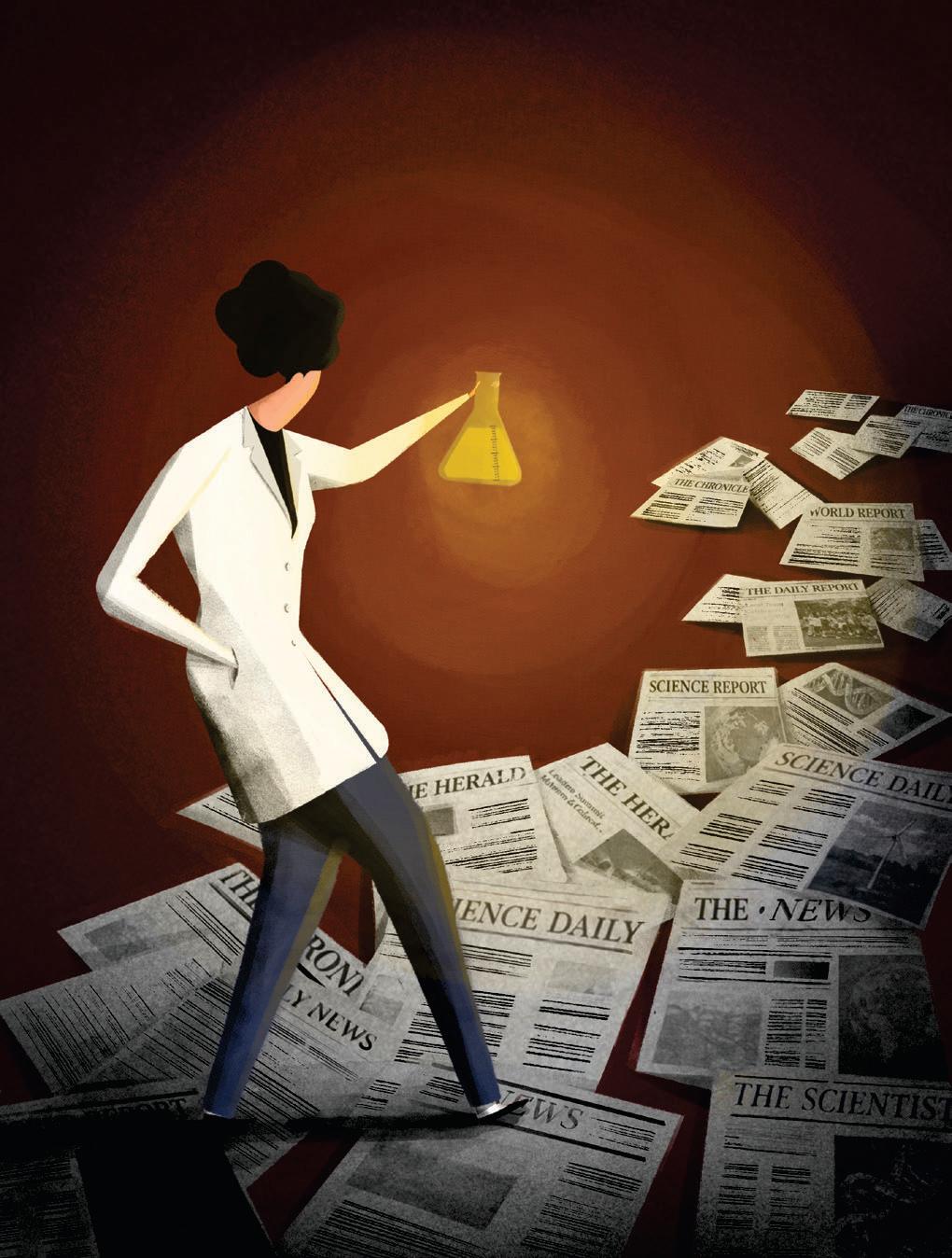
WHEN EMMA SCALES DECIDED she wanted to be a scientist, it seemed logical—simple, even.
She'd grown up in coastal New Jersey, attended a high school that emphasized marine biology, and learned about the connections among sea creatures large and small. She felt a calling to better understand and protect a world she loved.
Now a Ph.D. candidate at Cornell University, Scales is studying symbiosis, specifically the way bacteria can grow inside fungi and create a mutual-use arrangement. It’s what she calls a “Russian nesting doll” system. But these days little seems simple or logical. Scales’s research is aimed largely at protecting food crops, and at Cornell she’s recently watched laboratories shut down because of federal funding cuts, including labs running practical programs meant to help strengthen U.S. agriculture. Since 2025 the Trump administration has cut more than 7,800 grants, removed 25,000 scientists and related personnel from their jobs, and, as of January 2026, proposed budget cuts equaling about $32 billion. Cornell has recovered its funding, but doing so came with its own heavy costs, and warning signs are still flashing.
Scales is one of thousands of early-career researchers in the U.S. trying to make sense of how the current tumult in American science will shape their professional paths. Between lost funding and stalled programs, the young scientists of today are facing uncertainty in the job market and the possibility of having to leave the U.S. or, in some cases, leave science completely.
But Scales has decided to fight back, joining with other graduate students trying to protect universities. “They are scrubbing science of the influence of some of its most brilliant scientists. Work that has taken decades to build is being wiped out,” she says. When the research community gets a chance to rebuild, she wonders, how long will it take to regain what’s been lost?
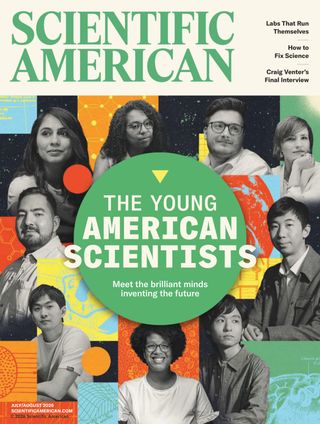

This story is from the July/August 2026 edition of Scientific American.
Subscribe to Magzter GOLD to access thousands of curated premium stories, and 10,000+ magazines and newspapers.
Already a subscriber? Sign In
MORE STORIES FROM Scientific American
Scientific American
Let There Be Weapons
The Department of Energy’s new Genesis Mission promises AI-accelerated discovery. Seven of its first 26 challenges focus on nuclear weapons and national security

4 mins
July/August 2026

Scientific American
How to Fix Science
The federal funding system for scientific research in the U.S. needs reform
9 mins
July/August 2026

Scientific American
Robots Can Now Fold Your Laundry
Home-helper tasks are becoming easier for robotic assistants
4 mins
July/August 2026

Scientific American
50, 100 & 150 Years
NATURAL FISSION REACTOR
3 mins
July/August 2026

Scientific American
Anna Ho
Describing the characteristics of short-lived astrophysical events
1 mins
July/August 2026
Scientific American
THE SOLILOQUY OF SCHRÖDINGER'S CAT
A MEDITATION ON LIFE AND THE VON NEUMANN–WIGNER INTERPRETATION OF QUANTUM MECHANICS
1 min
July/August 2026

Scientific American
Mikhail Kolmogorov
Developing software to reveal large genetic changes that lead to cancer
1 mins
July/August 2026

Scientific American
Jaye Gardiner
Learning how the matrix around cells and tissues impacts cancers
1 mins
July/August 2026

Scientific American
Timnit Gebru
On safeguarding independent research in the age of big tech
3 mins
July/August 2026

Scientific American
A Youthful Illusion Sharpens Memory
By making people feel as if their face is a younger version of itself, researchers can bring childhood memories into sharper focus
4 mins
July/August 2026
Listen
Translate
Change font size