Try GOLD - Free
Boosting Science
Scientific American
|May 2026
Inside NASA's audacious plan to save a doomed space telescope
-
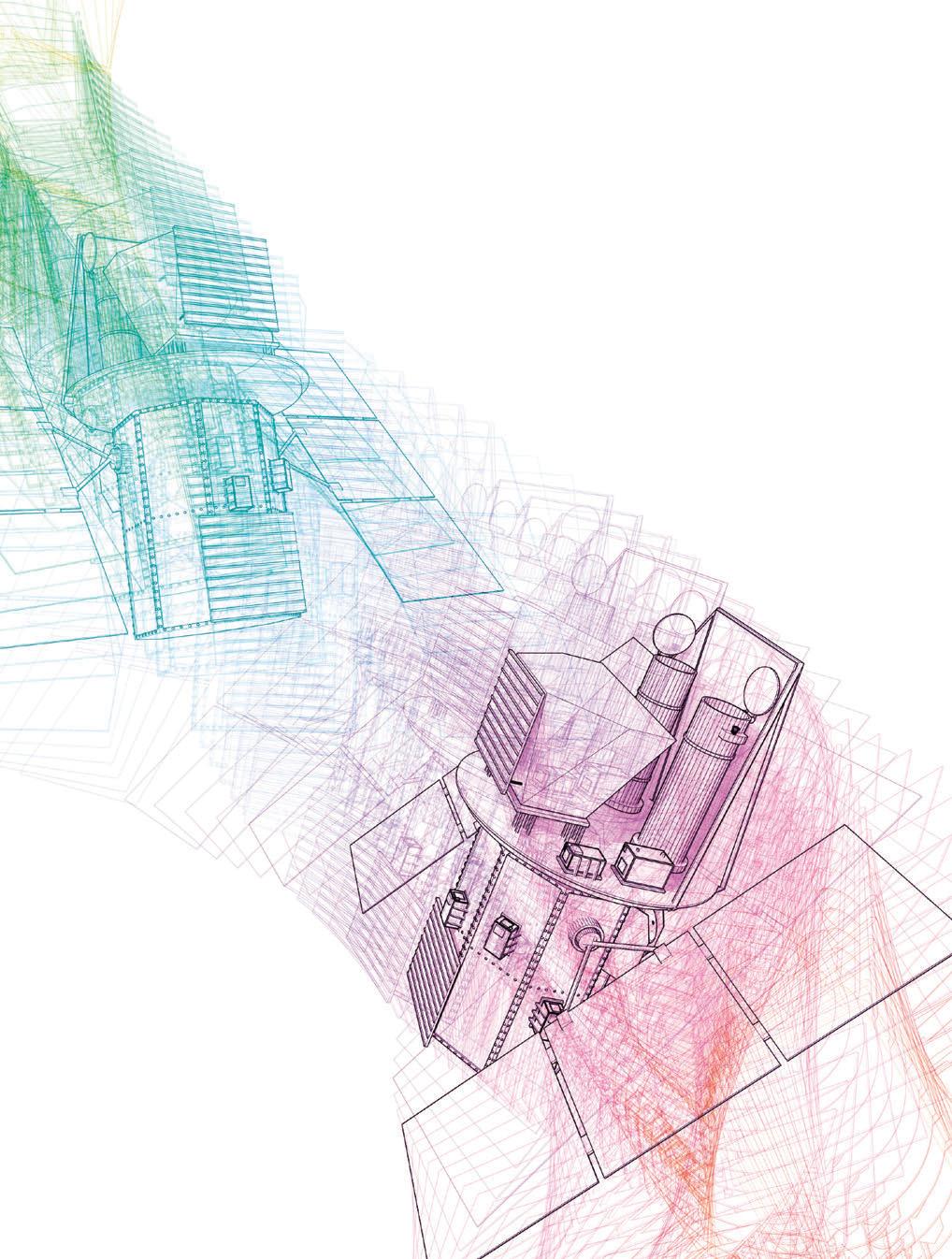
NASA'S NEIL GEHRELS Swift Observatory is in a race against time. For more than 21 years the Earth-orbiting telescope has surveyed the sky for gamma-ray bursts—the most powerful and luminous explosions in the universe—and whipped around to take a closer look. But on every orbit, it collides with countless particles from the planet's atmosphere. Each impact steals a tiny bit of the spacecraft's speed, pushing it a smidgen closer to Earth. If left alone, the spacecraft will lose the race later this year and fall out of orbit, bringing a fiery end to its long scientific tenure. But NASA hopes to buy the telescope an extra decade through a longstanding space-technology dream: a mission in which a robot will gently glom on to Swift, push it up into a safer orbit, then set it free. If it works, the technique could open up new possibilities for science spacecraft more generally.
“There have been ideas like this around for a long time, and I think the technology is finally getting to the point where it's not crazy,” says Jonathan McDowell, an astronomer and space sustainability analyst.
The Swift Observatory is equipped with a Burst Alert Telescope that surveys a huge amount of the sky at once, looking for flashes of light and pinpointing their locations. When the spacecraft detects something interesting, it pivots within a minute or two to examine the spot with its other two telescopes—one catching ultraviolet and visible light and the other capturing x-rays.


This story is from the May 2026 edition of Scientific American.
Subscribe to Magzter GOLD to access thousands of curated premium stories, and 10,000+ magazines and newspapers.
Already a subscriber? Sign In
MORE STORIES FROM Scientific American
Scientific American
Let There Be Weapons
The Department of Energy’s new Genesis Mission promises AI-accelerated discovery. Seven of its first 26 challenges focus on nuclear weapons and national security

4 mins
July/August 2026
Scientific American
How to Fix Science
The federal funding system for scientific research in the U.S. needs reform
9 mins
July/August 2026

Scientific American
Robots Can Now Fold Your Laundry
Home-helper tasks are becoming easier for robotic assistants
4 mins
July/August 2026
Scientific American
50, 100 & 150 Years
NATURAL FISSION REACTOR
3 mins
July/August 2026

Scientific American
Anna Ho
Describing the characteristics of short-lived astrophysical events
1 mins
July/August 2026
Scientific American
THE SOLILOQUY OF SCHRÖDINGER'S CAT
A MEDITATION ON LIFE AND THE VON NEUMANN–WIGNER INTERPRETATION OF QUANTUM MECHANICS
1 min
July/August 2026

Scientific American
Mikhail Kolmogorov
Developing software to reveal large genetic changes that lead to cancer
1 mins
July/August 2026

Scientific American
Jaye Gardiner
Learning how the matrix around cells and tissues impacts cancers
1 mins
July/August 2026

Scientific American
Timnit Gebru
On safeguarding independent research in the age of big tech
3 mins
July/August 2026
Scientific American
A Youthful Illusion Sharpens Memory
By making people feel as if their face is a younger version of itself, researchers can bring childhood memories into sharper focus
4 mins
July/August 2026
Listen
Translate
Change font size