Try GOLD - Free
AI Coding a Dyslexia Tutor
Scientific American
|February 2026
How one mom used a GPT to help her son learn his own way
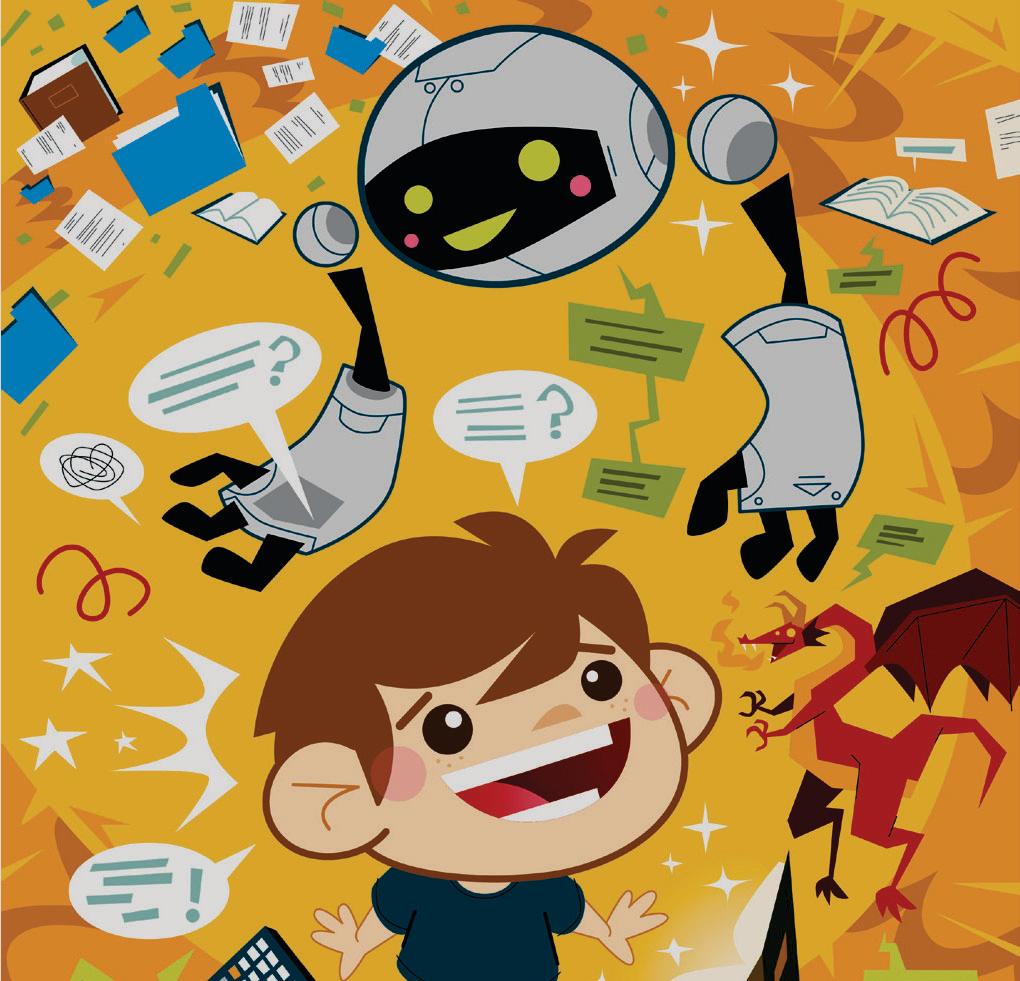
A DYSLEXIA DIAGNOSIS was supposed to offer solutions for a boy named Tobey. It was first identified in a routine school screening, which led to tutors, speech therapy, a neuropsychological evaluation and a spot at a Manhattan school that could better suit his needs. But Tobey continued to struggle. One winter afternoon in early 2025, at age 11, he came home discouraged, says his mother, Arlyn Gajilan. Why, he asked, did she keep telling him he was smart? “I’m slower than everybody else. Why is it so hard for me?’” she recalls him asking. “That was like a gut punch,” Gajilan says.
Gajilan, who has worked at Reuters for more than 14 years and was then digital news director, had been reading about artificial intelligence and custom generative pretrained transformers, or GPTs—tailored AI models that users can configure for specific tasks. After determining her data would be private, she fed one of the models Tobey’s report cards, neuropsychological evaluations and individualized education programs for his dyslexia. She also gave it his interests: dragons from the book series Wings of Fire, battles with Nerf guns, a song or two from Hamilton. She told the GPT he was bright and competitive but found reading and writing difficult, and she asked it to look for the best pedagogical approaches. “You are a special education teacher with expertise in teaching kids with dyslexia,” Gajilan recalls writing. “Your job is to help my son.” Then she handed Tobey her smartphone.
The decision wasn’t made lightly. Although Gajilan worked in technology, she didn’t let Tobey use social media, and he didn’t have his own smartphone. “I’m very conscious of the harm that technology can do,” she says.

This story is from the February 2026 edition of Scientific American.
Subscribe to Magzter GOLD to access thousands of curated premium stories, and 10,000+ magazines and newspapers.
Already a subscriber? Sign In
MORE STORIES FROM Scientific American
Scientific American
Let There Be Weapons
The Department of Energy’s new Genesis Mission promises AI-accelerated discovery. Seven of its first 26 challenges focus on nuclear weapons and national security

4 mins
July/August 2026
Scientific American
How to Fix Science
The federal funding system for scientific research in the U.S. needs reform
9 mins
July/August 2026

Scientific American
Robots Can Now Fold Your Laundry
Home-helper tasks are becoming easier for robotic assistants
4 mins
July/August 2026

Scientific American
50, 100 & 150 Years
NATURAL FISSION REACTOR
3 mins
July/August 2026

Scientific American
Anna Ho
Describing the characteristics of short-lived astrophysical events
1 mins
July/August 2026
Scientific American
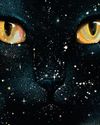
THE SOLILOQUY OF SCHRÖDINGER'S CAT
A MEDITATION ON LIFE AND THE VON NEUMANN–WIGNER INTERPRETATION OF QUANTUM MECHANICS
1 min
July/August 2026

Scientific American
Mikhail Kolmogorov
Developing software to reveal large genetic changes that lead to cancer
1 mins
July/August 2026

Scientific American
Jaye Gardiner
Learning how the matrix around cells and tissues impacts cancers
1 mins
July/August 2026

Scientific American
Timnit Gebru
On safeguarding independent research in the age of big tech
3 mins
July/August 2026

Scientific American
A Youthful Illusion Sharpens Memory
By making people feel as if their face is a younger version of itself, researchers can bring childhood memories into sharper focus
4 mins
July/August 2026
Listen
Translate
Change font size