Try GOLD - Free
The new era of human spaceflight
BBC Sky at Night Magazine
|August 2024
There's been a step-change in crewed space missions since the dawn of the 21st century. Ben Evans charts its course and looks ahead to future horizons

Six decades ago, human spaceflight was a two-sided coin, as the United States and Soviet Russia competed for primacy in the Space Race during the Cold War. With global nuclear holocaust looming menacingly on the horizon, parallel space programmes arose on opposite sides of the Iron Curtain: Mercury versus Vostok, Gemini versus Voskhod, Soyuz versus Apollo and the Space Shuttle.
Today, this East/West duopoly has ceded a few grains of its dominance to newer players. National actors like China and India have emerged like a whirlwind, along with a growing chorus of commercial entities from Boeing to SpaceX, and Blue Origin to Virgin Galactic, all hungrily eyeing the space domain.
When Yuri Gagarin conquered space in April 1961, the door creaked ajar for others to follow. But initially, those 'others' were exclusively military; for the average person in the street, the chance to fly into space was a door that was firmly barred and bolted.
Today, fewer than 700 souls - less than 0.00001 per cent of the world's 8.1 billion population - have experienced microgravity and seen Earth as it truly is: a fragile, glowing oasis of colour set jewel-like against the ethereal darkness of the cosmos.
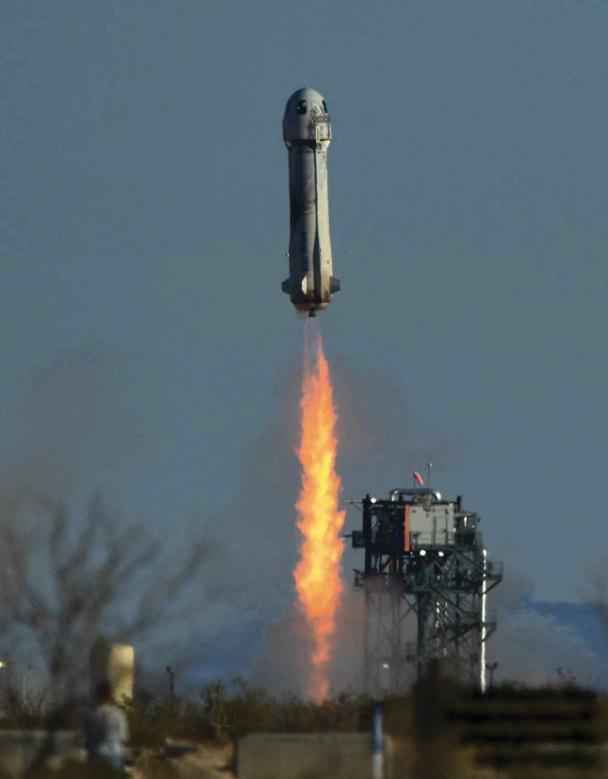 And when that miniscule number filters down to 'ordinary' people like you and me, the odds of reaching space are vanishingly remote. We humans are a long way from becoming a spacefaring species.
Yet with new spacecraft taking shape, this status quo is on the cusp of monumental change.


This story is from the August 2024 edition of BBC Sky at Night Magazine.
Subscribe to Magzter GOLD to access thousands of curated premium stories, and 10,000+ magazines and newspapers.
Already a subscriber? Sign In
MORE STORIES FROM BBC Sky at Night Magazine

BBC Sky at Night Magazine
Capture NLCs with a smartphone
Make this the summer that you nail a shot of beautiful night-shining clouds

3 mins
July 2026
BBC Sky at Night Magazine
ZWO Seestar S30 Pro smart telescope
ZWO Seestar S30 Pro smart telescope
4 mins
July 2026
BBC Sky at Night Magazine
The speed of light
The Universe has a speed limit - and it underpins everything we know about it. We explain the speed of light and its far-reaching implications for astronomy
2 mins
July 2026
BBC Sky at Night Magazine
COMETS AND ASTEROIDS
Can you spot dim, barely moving Pluto?
1 min
July 2026

BBC Sky at Night Magazine
THE SKY GUIDE CHALLENGE
What's the youngest Moon you can photograph? Try our ‘impossible’ challenge
2 mins
July 2026

BBC Sky at Night Magazine
Q&A WITH A SCIENCE COMMUNICATOR
As we find more planets in the habitable zones around other suns, we ask Neil deGrasse Tyson what would happen if we did meet intelligent alien life
3 mins
July 2026

BBC Sky at Night Magazine
Make an all-sky camera
How to set up an always-watching system to catch fleeting sky events
3 mins
July 2026

BBC Sky at Night Magazine
The Universe doesn't need a multiverse
The Universe doesn't need a multiverse The idea that there are many universes seems to solve our most stubborn cosmic mysteries. But, argues Brian Clegg, it's no substitute for hard evidence
2 mins
July 2026
BBC Sky at Night Magazine
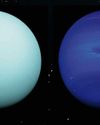
Planets of mystery
Uranus and Neptune – visited just once, 40 years ago – are the least-known planets in our Solar System. Now 21st-century science has revealed they may not even be the ‘ice giants’ we thought. Joseph Phelan investigates
6 mins
July 2026
BBC Sky at Night Magazine
THE BIG THREE
The top sights to observe or image this month
4 mins
July 2026
Listen
Translate
Change font size