
Gå ubegrenset med Magzter GOLD
Få ubegrenset tilgang til over 9000 magasiner, aviser og premiumhistorier for bare
The new era of human spaceflight
BBC Sky at Night Magazine
|August 2024
There's been a step-change in crewed space missions since the dawn of the 21st century. Ben Evans charts its course and looks ahead to future horizons

Six decades ago, human spaceflight was a two-sided coin, as the United States and Soviet Russia competed for primacy in the Space Race during the Cold War. With global nuclear holocaust looming menacingly on the horizon, parallel space programmes arose on opposite sides of the Iron Curtain: Mercury versus Vostok, Gemini versus Voskhod, Soyuz versus Apollo and the Space Shuttle.
Today, this East/West duopoly has ceded a few grains of its dominance to newer players. National actors like China and India have emerged like a whirlwind, along with a growing chorus of commercial entities from Boeing to SpaceX, and Blue Origin to Virgin Galactic, all hungrily eyeing the space domain.
When Yuri Gagarin conquered space in April 1961, the door creaked ajar for others to follow. But initially, those 'others' were exclusively military; for the average person in the street, the chance to fly into space was a door that was firmly barred and bolted.
Today, fewer than 700 souls - less than 0.00001 per cent of the world's 8.1 billion population - have experienced microgravity and seen Earth as it truly is: a fragile, glowing oasis of colour set jewel-like against the ethereal darkness of the cosmos.
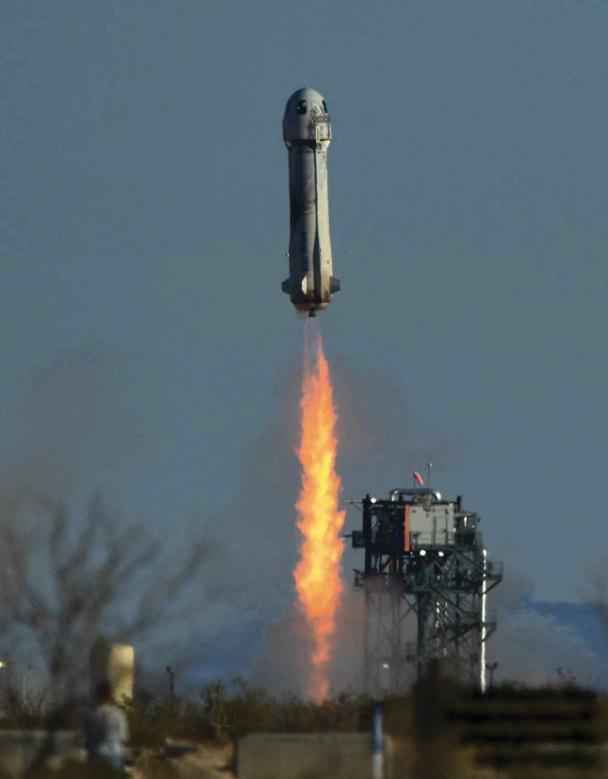 And when that miniscule number filters down to 'ordinary' people like you and me, the odds of reaching space are vanishingly remote. We humans are a long way from becoming a spacefaring species.
Yet with new spacecraft taking shape, this status quo is on the cusp of monumental change.


Denne historien er fra August 2024-utgaven av BBC Sky at Night Magazine.
Abonner på Magzter GOLD for å få tilgang til tusenvis av kuraterte premiumhistorier og over 9000 magasiner og aviser.
Allerede abonnent? Logg på
FLERE HISTORIER FRA BBC Sky at Night Magazine
BBC Sky at Night Magazine
MOONWATCH
January's top lunar feature to observe

2 mins
January 2026
BBC Sky at Night Magazine
Speed up your processing workflow
How to use Photoshop's Actions tool to drastically cut your processing time
3 mins
January 2026
BBC Sky at Night Magazine
Chasing Canada's polar lights
With solar maximum peaking and a new Moon promising dark skies, Jamie Carter travels to Churchill, Manitoba to hunt the Northern Lights - and dodge polar bears – in Canada's far north
7 mins
January 2026

BBC Sky at Night Magazine
Beyond Pluto: The search for the hidden planets
Could one – or even two - undiscovered planets lurk at the edges of our Solar System? Nicky Jenner explores how close we are to finding the elusive 'Planet 9'
6 mins
January 2026
BBC Sky at Night Magazine
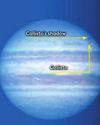
Jupiter moon events
Jupiter is a magnificent planet to observe.
2 mins
January 2026

BBC Sky at Night Magazine
What samples from space have taught us
Alastair Gunn explains what scientists have learnt in the 20 years since the first unmanned mission brought materials back from alien worlds
3 mins
January 2026
BBC Sky at Night Magazine
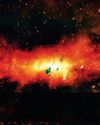
The Milky Way as you've never seen it before
This is the largest low-frequency radio colour image of our Galaxy ever assembled
1 min
January 2026
BBC Sky at Night Magazine
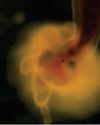
Merger of ‘impossibly' massive black holes explained
Scientists discover how enormous, fast-spinning black holes can exist after all
1 mins
January 2026
BBC Sky at Night Magazine
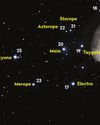
Lunar occultation of the Pleiades
BEST TIME TO SEE: 27 January from 20:30 UT
1 min
January 2026
BBC Sky at Night Magazine
The Universe's expansion may be slowing down
New study suggests current theories of dark energy could be wrong
1 mins
January 2026
Listen
Translate
Change font size