Try GOLD - Free
Record the motion of NLCs
BBC Sky at Night Magazine
|June 2023
Capture the movement, structure and colours of summer's night-shining clouds
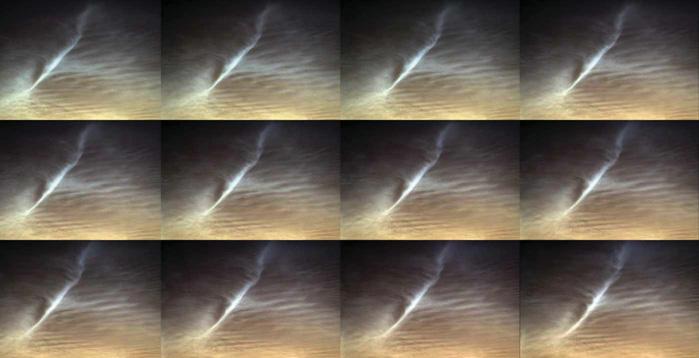
The lack of truly dark skies is an issue for the UK at this time of year. Some compensation is the chance to see noctilucent cloud (NLC) displays, and this month we'll look at how to photograph them to capture their structural movement.
NLCs are high-altitude ice-sheet clouds able to reflect sunlight despite the Sun being below the horizon from ground level. They are typically seen 90-120 minutes after sunset, low above the northwest horizon or a similar time before sunrise, low above the northeast horizon. Extensive displays may last all night, tracking from the northwest, through the north and ending in the northeast.
There are many interesting things about NLC displays, including their brightness, colour and different types of structure. This can all be seen visually, but recording displays with a camera allows you to create timelapse movies that show how NLCs develop over time and how their structures move.
This isn't particularly complicated to do and the results can be quite stunning, revealing aspects of NLCs that you may not have realised were there.
Let's consider the basics of an NLC capture setup, starting with the obvious: a camera that is capable of capturing them. Adjustment to the camera settings should allow a fair bit of control to get the best image possible. You should also bear in mind that NLCs appear against a twilight sky. This is one of the most challenging backgrounds in astronomy, as light levels are constantly changing, meaning you need to stay sharp to avoid under- or overexposure.
A wide lens is ideal for capturing panoramic views of a display, but will also reduce the size of cloud structures and the apparent speed of any movement.


This story is from the June 2023 edition of BBC Sky at Night Magazine.
Subscribe to Magzter GOLD to access thousands of curated premium stories, and 10,000+ magazines and newspapers.
Already a subscriber? Sign In
MORE STORIES FROM BBC Sky at Night Magazine
BBC Sky at Night Magazine
Capture NLCs with a smartphone
Make this the summer that you nail a shot of beautiful night-shining clouds

3 mins
July 2026
BBC Sky at Night Magazine
ZWO Seestar S30 Pro smart telescope
ZWO Seestar S30 Pro smart telescope
4 mins
July 2026
BBC Sky at Night Magazine
The speed of light
The Universe has a speed limit - and it underpins everything we know about it. We explain the speed of light and its far-reaching implications for astronomy
2 mins
July 2026
BBC Sky at Night Magazine
COMETS AND ASTEROIDS
Can you spot dim, barely moving Pluto?
1 min
July 2026
BBC Sky at Night Magazine
THE SKY GUIDE CHALLENGE
What's the youngest Moon you can photograph? Try our ‘impossible’ challenge
2 mins
July 2026

BBC Sky at Night Magazine
Q&A WITH A SCIENCE COMMUNICATOR
As we find more planets in the habitable zones around other suns, we ask Neil deGrasse Tyson what would happen if we did meet intelligent alien life
3 mins
July 2026
BBC Sky at Night Magazine
Make an all-sky camera
How to set up an always-watching system to catch fleeting sky events
3 mins
July 2026
BBC Sky at Night Magazine
The Universe doesn't need a multiverse
The Universe doesn't need a multiverse The idea that there are many universes seems to solve our most stubborn cosmic mysteries. But, argues Brian Clegg, it's no substitute for hard evidence
2 mins
July 2026
BBC Sky at Night Magazine
Planets of mystery
Uranus and Neptune – visited just once, 40 years ago – are the least-known planets in our Solar System. Now 21st-century science has revealed they may not even be the ‘ice giants’ we thought. Joseph Phelan investigates
6 mins
July 2026
BBC Sky at Night Magazine
THE BIG THREE
The top sights to observe or image this month
4 mins
July 2026
Translate
Change font size