
Ga onbeperkt met Magzter GOLD
Krijg onbeperkte toegang tot meer dan 9000 tijdschriften, kranten en Premium-verhalen voor slechts
Poging GOUD - Vrij
Record the motion of NLCs
BBC Sky at Night Magazine
|June 2023
Capture the movement, structure and colours of summer's night-shining clouds
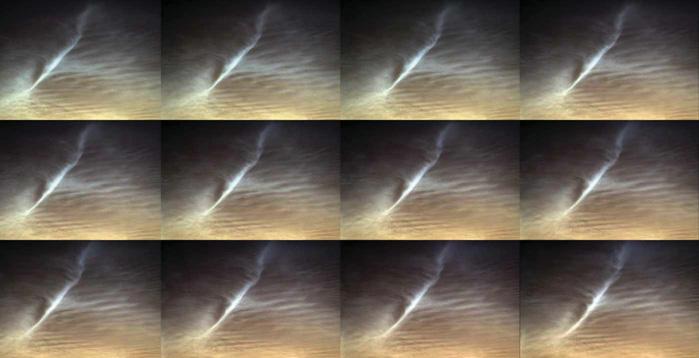
The lack of truly dark skies is an issue for the UK at this time of year. Some compensation is the chance to see noctilucent cloud (NLC) displays, and this month we'll look at how to photograph them to capture their structural movement.
NLCs are high-altitude ice-sheet clouds able to reflect sunlight despite the Sun being below the horizon from ground level. They are typically seen 90-120 minutes after sunset, low above the northwest horizon or a similar time before sunrise, low above the northeast horizon. Extensive displays may last all night, tracking from the northwest, through the north and ending in the northeast.
There are many interesting things about NLC displays, including their brightness, colour and different types of structure. This can all be seen visually, but recording displays with a camera allows you to create timelapse movies that show how NLCs develop over time and how their structures move.
This isn't particularly complicated to do and the results can be quite stunning, revealing aspects of NLCs that you may not have realised were there.
Let's consider the basics of an NLC capture setup, starting with the obvious: a camera that is capable of capturing them. Adjustment to the camera settings should allow a fair bit of control to get the best image possible. You should also bear in mind that NLCs appear against a twilight sky. This is one of the most challenging backgrounds in astronomy, as light levels are constantly changing, meaning you need to stay sharp to avoid under- or overexposure.
A wide lens is ideal for capturing panoramic views of a display, but will also reduce the size of cloud structures and the apparent speed of any movement.


Dit verhaal komt uit de June 2023-editie van BBC Sky at Night Magazine.
Abonneer u op Magzter GOLD voor toegang tot duizenden zorgvuldig samengestelde premiumverhalen en meer dan 9000 tijdschriften en kranten.
Bent u al abonnee? Aanmelden
MEER VERHALEN VAN BBC Sky at Night Magazine

BBC Sky at Night Magazine
Crush: Close Encounters with Gravity
Gravity is something that we're all innately familiar with. It keeps our feet on the ground, fights against a rocket trying to leave Earth and governs the movement of the planets and stars.

1 mins
April 2026
BBC Sky at Night Magazine
Exploring the Universe
There's no shortage of children's books about astronomy.
2 mins
April 2026
BBC Sky at Night Magazine
Make your Milky Way images pop
Simple, free processing techniques using FastStone Image Viewer
3 mins
April 2026

BBC Sky at Night Magazine
Nightfaring: In Search of the Disappearing Darkness
This book is a manifesto for dark skies, written as a travel memoir.
1 mins
April 2026
BBC Sky at Night Magazine
Flying saucers- The making of a modern myth
Our obsession with UFOs goes back further than you might think. Robert Pateman traces how early science fiction, dubious sightings and an alien-mad media led to the 1950s saucer fever
9 mins
April 2026
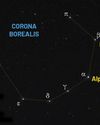
BBC Sky at Night Magazine
STAR OF THE MONTH
Alphecca, the brightest jewel in the Crown
1 min
April 2026
BBC Sky at Night Magazine
How to use a planisphere
Navigate the sky with the original stargazer's tool. No batteries, apps or Wi-Fi required!
3 mins
April 2026
BBC Sky at Night Magazine
Why rockets don't launch straight up
For a rocket to get its payload into space, it has to follow a curved path. But what would happen if it didn't?
2 mins
April 2026
BBC Sky at Night Magazine
Q&A WITH A DARK MATTER SPECIALIST
Dark matter makes up 27 per cent of all matter in the Universe. So why is it so hard to find? Meet one of the people making a map that leads us to it
3 mins
April 2026
BBC Sky at Night Magazine
Why I want to put a hotel on the Moon
Bored of the beach? Sick of city breaks? Step this way. Space entrepreneur Skyler Chan explains how he'll build a holiday destination on the Moon by 2030
2 mins
April 2026
Translate
Change font size