
Go Unlimited with Magzter GOLD
Get unlimited access to 10,000+ magazines, newspapers and Premium stories for just
Try GOLD - Free
THE QUEST TO FIND THE EDGE OF THE SOLAR SYSTEM
BBC Science Focus
|November 2025
NASA's newly launched IMAP mission is set to tell us more about the boundary between our Solar System and interstellar space than ever before
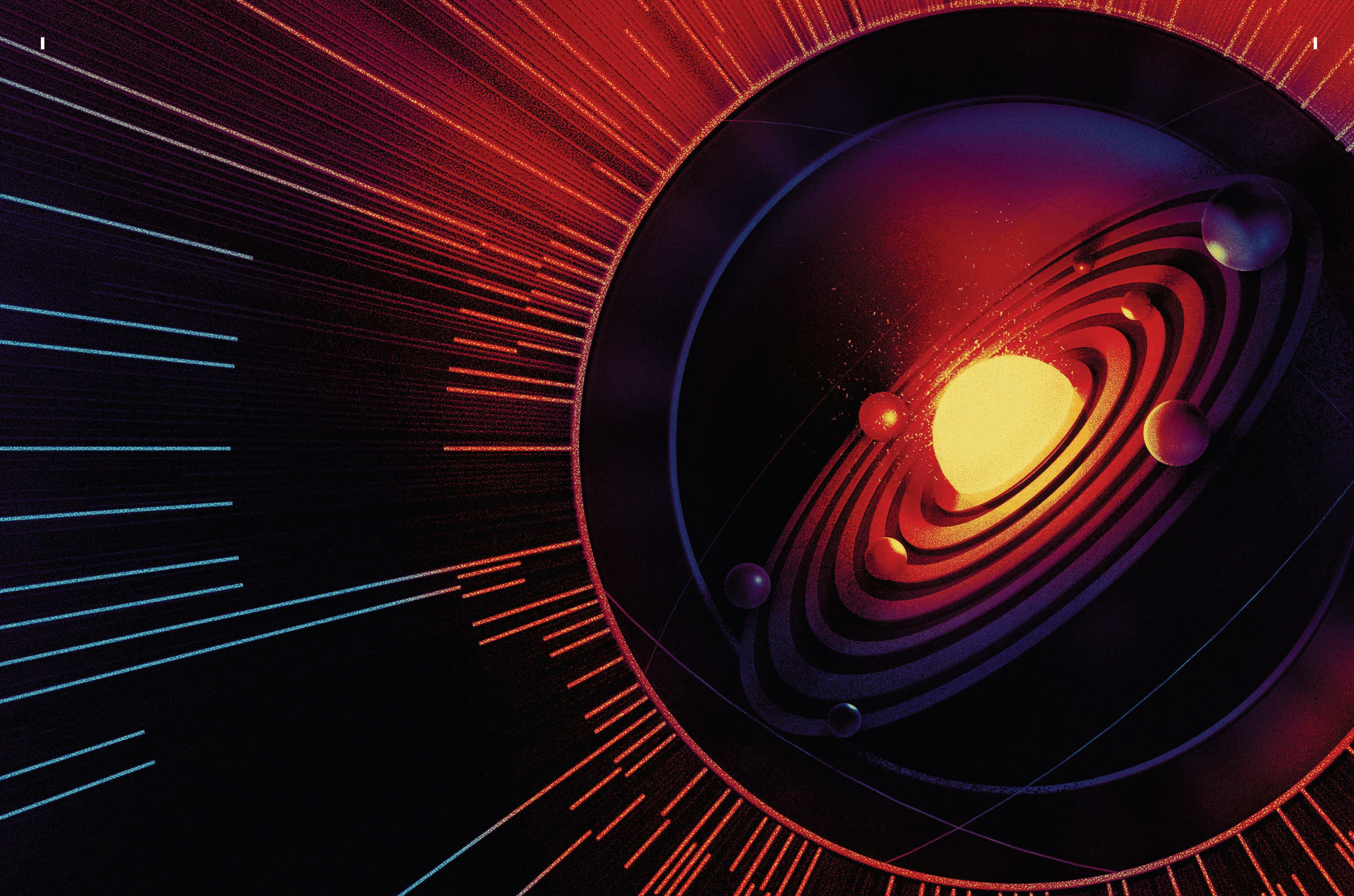
Earth exists in a bubble. Our atmosphere forms a protective barrier between everything on the planet's surface and the near-empty vastness of space. But it's not the only bubble Earth sits inside. Beyond our familiar atmospheric cocoon lies a much larger bubble, an invisible boundary carved by the Sun itself.
This bubble, known as the heliosphere, is enormous. It encompasses the entire Solar System, spanning such a vast distance that only two spacecraft have ever managed to leave it. Launched in 1977, NASA's Voyager 1 and 2 passed beyond the heliosphere into interstellar space – the region between stars – in 2012 and 2018 respectively. They're the first man-made objects to ever travel beyond the Sun's protective bubble, and are still transmitting data about the charged particles and plasma waves that can be found there.
But astronomers want to learn more about the heliosphere and what lies beyond it. What's its exact size and shape? How do solar particles emitted by the Sun interact with interstellar space once they pass through it? And how effective is it at protecting us from the high-energy cosmic rays coming in from outside?
"We're still putting together a lot of pieces about how the local interstellar medium really interacts with the heliosphere," says Dr Ralph McNutt, a physicist at Johns Hopkins University Applied Physics Laboratory (JHUAPL) in Maryland, in the US.
It's hoped a new $782 million (£580 million) NASA mission will help put more of those pieces together. The Interstellar Mapping and Acceleration Probe (IMAP) spacecraft was launched on 24 September 2025. And instead of spending decades travelling to the edge of the heliosphere, over the next few months it'll travel to a position about 1.5 million kilometres (one million miles) from Earth called Lagrange Point 1 (L1). Once there, unhindered by interference from Earth, IMAP can carry out its purpose: study the heliosphere, from afar.

This story is from the November 2025 edition of BBC Science Focus.
Subscribe to Magzter GOLD to access thousands of curated premium stories, and 10,000+ magazines and newspapers.
Already a subscriber? Sign In
MORE STORIES FROM BBC Science Focus

BBC Science Focus
HOW FISH COULD SAVE MILLIONS OF PEOPLE'S SIGHT
There's nowhere near enough donors to meet the demand for corneal transplants. A pioneering treatment that relies on fish scales could change that

3 mins
May 2026

BBC Science Focus
Your Wi-Fi is lying to you
Wi-Fi 7's giant speed claims might look impressive, but the realities of our homes – and the laws of physics – mean that real-world performance will never get close
6 mins
May 2026

BBC Science Focus
WHICH ANIMAL IS MOST LIKELY TO ESCAPE FROM THE ZOO?
Have you heard the one about the monkey and the Yorkshire pudding?
2 mins
May 2026

BBC Science Focus
THE BLACK SERVAL
The black serval (Leptailurus serval) is an unusual, melanistic version of the African serval, a medium-sized wild cat that's native to Africa.
2 mins
May 2026
BBC Science Focus
Cryosleep vs hibernation: What's the difference?
When hibernating animals, such as hedgehogs and dormice, disappear for winter, they don't freeze like the Siberian salamander.
1 mins
May 2026
BBC Science Focus
Space brain
The greatest names in science are often said to be 'big-brained', but this cosmic wonder puts them all to shame. Nebula PMR 1 - otherwise known as the 'Exposed Cranium' nebula for its distinctive shape - measures around 3.2 light-years across.
1 min
May 2026

BBC Science Focus
Your most draining relationships are taking years off your life, study suggests
Difficult people don't just zap your energy - they may also accelerate your biological ageing
4 mins
May 2026

BBC Science Focus
DOES EARTH HAVE A HEARTBEAT?
Move over, Ringo Starr.
1 mins
May 2026
BBC Science Focus
WEIGHT-LOSS DRUGS FOR ALL?
The obesity crisis is ruining lives and costing governments trillions. But some healthcare experts think there's now a radical solution: roll out GLP-1 jabs to everyone who needs them for free. Could it work?
9 mins
May 2026
BBC Science Focus
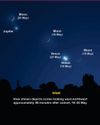
HOW TO SEE VENUS ON APPROACH TO JUPITER
Venus has been slowly moving away from the Sun's glare over the past few weeks, heading into the evening twilight after sunset.
1 mins
May 2026
Listen
Translate
Change font size