
Go Unlimited with Magzter GOLD
Get unlimited access to 10,000+ magazines, newspapers and Premium stories for just
Try GOLD - Free
A QUESTION OF QUANTUM TIME
BBC Science Focus
|September 2025
The closer we look at time, the stranger it gets
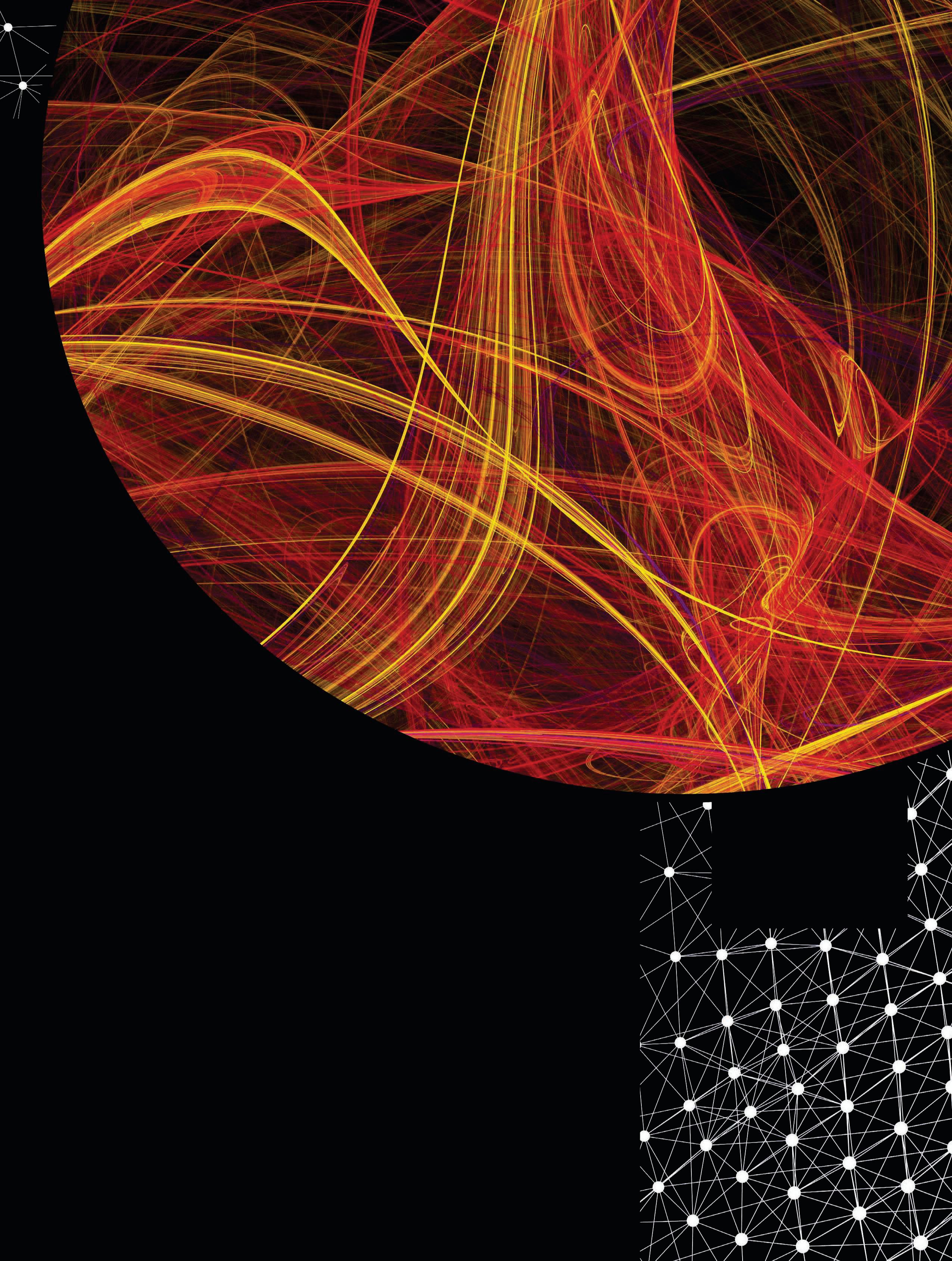
The nature of time is one of the most profound and longstanding problems in physics – one that no one can agree on. From our perspective, time seems to steadily progress forward with each tick of the clock. But the closer we look, the more bizarre time becomes – from equations that state time should flow as freely backwards as it does forwards, to the strange quantum realm where cause and effect can flip on their heads. Could it even be that time itself is an illusion?
What makes time so confounding is that we have three very different ways of defining it, which don't easily fit together.
The first definition comes from the equations that describe how things change over time. We have many such equations describing everything from the motion of tennis balls to the decay of atomic nuclei. In all these equations, time is a quantity, referred to as 'coordinate time'. Time is no more than a mathematical label to which we can assign a particular value.
The second definition of time comes from Einstein's theories of relativity, where it's a dimension in addition to the three we're familiar with. It's a direction in four-dimensional spacetime. Our picture of reality then becomes one in which all times - past, present and future - are equally real and coexist, just as all points in space are equally real. More than that; time has a deep connection with gravity according to General Relativity, where the shape of spacetime is influenced by gravity.
Much of the effort at the forefront of theoretical physics over the past half-century has been devoted to unifying General Relativity with the strange world of quantum mechanics. Mathematical frameworks that attempt to do this are known as theories of quantum gravity. But how do we reconcile these two notions of time - the quantum mechanical idea, in which time is a mere parameter, versus the relativistic idea that time is a dimension in spacetime? I call this 'the first problem of physical time'.

This story is from the September 2025 edition of BBC Science Focus.
Subscribe to Magzter GOLD to access thousands of curated premium stories, and 10,000+ magazines and newspapers.
Already a subscriber? Sign In
MORE STORIES FROM BBC Science Focus

BBC Science Focus
HOW FISH COULD SAVE MILLIONS OF PEOPLE'S SIGHT
There's nowhere near enough donors to meet the demand for corneal transplants. A pioneering treatment that relies on fish scales could change that

3 mins
May 2026

BBC Science Focus
Your Wi-Fi is lying to you
Wi-Fi 7's giant speed claims might look impressive, but the realities of our homes – and the laws of physics – mean that real-world performance will never get close
6 mins
May 2026

BBC Science Focus
WHICH ANIMAL IS MOST LIKELY TO ESCAPE FROM THE ZOO?
Have you heard the one about the monkey and the Yorkshire pudding?
2 mins
May 2026

BBC Science Focus
THE BLACK SERVAL
The black serval (Leptailurus serval) is an unusual, melanistic version of the African serval, a medium-sized wild cat that's native to Africa.
2 mins
May 2026
BBC Science Focus
Cryosleep vs hibernation: What's the difference?
When hibernating animals, such as hedgehogs and dormice, disappear for winter, they don't freeze like the Siberian salamander.
1 mins
May 2026

BBC Science Focus
Space brain
The greatest names in science are often said to be 'big-brained', but this cosmic wonder puts them all to shame. Nebula PMR 1 - otherwise known as the 'Exposed Cranium' nebula for its distinctive shape - measures around 3.2 light-years across.
1 min
May 2026

BBC Science Focus
Your most draining relationships are taking years off your life, study suggests
Difficult people don't just zap your energy - they may also accelerate your biological ageing
4 mins
May 2026

BBC Science Focus
DOES EARTH HAVE A HEARTBEAT?
Move over, Ringo Starr.
1 mins
May 2026
BBC Science Focus
WEIGHT-LOSS DRUGS FOR ALL?
The obesity crisis is ruining lives and costing governments trillions. But some healthcare experts think there's now a radical solution: roll out GLP-1 jabs to everyone who needs them for free. Could it work?
9 mins
May 2026
BBC Science Focus
HOW TO SEE VENUS ON APPROACH TO JUPITER
Venus has been slowly moving away from the Sun's glare over the past few weeks, heading into the evening twilight after sunset.
1 mins
May 2026
Listen
Translate
Change font size