
استمتع بـUnlimited مع Magzter GOLD
احصل على وصول غير محدود إلى أكثر من 9000 مجلة وصحيفة وقصة مميزة مقابل
يحاول ذهب - حر
A QUESTION OF QUANTUM TIME
September 2025
|BBC Science Focus
The closer we look at time, the stranger it gets
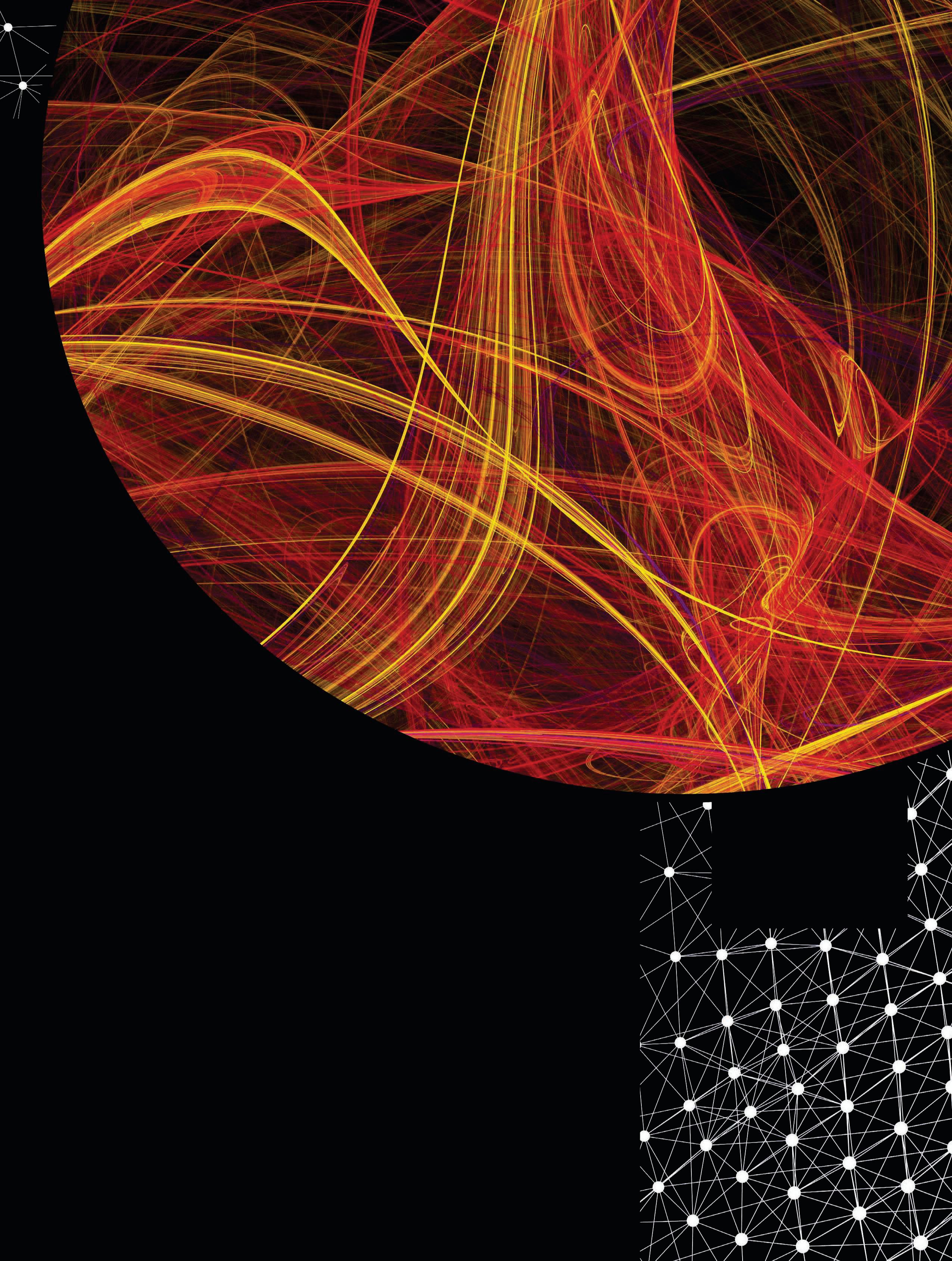
The nature of time is one of the most profound and longstanding problems in physics – one that no one can agree on. From our perspective, time seems to steadily progress forward with each tick of the clock. But the closer we look, the more bizarre time becomes – from equations that state time should flow as freely backwards as it does forwards, to the strange quantum realm where cause and effect can flip on their heads. Could it even be that time itself is an illusion?
What makes time so confounding is that we have three very different ways of defining it, which don't easily fit together.
The first definition comes from the equations that describe how things change over time. We have many such equations describing everything from the motion of tennis balls to the decay of atomic nuclei. In all these equations, time is a quantity, referred to as 'coordinate time'. Time is no more than a mathematical label to which we can assign a particular value.
The second definition of time comes from Einstein's theories of relativity, where it's a dimension in addition to the three we're familiar with. It's a direction in four-dimensional spacetime. Our picture of reality then becomes one in which all times - past, present and future - are equally real and coexist, just as all points in space are equally real. More than that; time has a deep connection with gravity according to General Relativity, where the shape of spacetime is influenced by gravity.
Much of the effort at the forefront of theoretical physics over the past half-century has been devoted to unifying General Relativity with the strange world of quantum mechanics. Mathematical frameworks that attempt to do this are known as theories of quantum gravity. But how do we reconcile these two notions of time - the quantum mechanical idea, in which time is a mere parameter, versus the relativistic idea that time is a dimension in spacetime? I call this 'the first problem of physical time'.

هذه القصة من طبعة September 2025 من BBC Science Focus.
اشترك في Magzter GOLD للوصول إلى آلاف القصص المتميزة المنسقة، وأكثر من 9000 مجلة وصحيفة.
هل أنت مشترك بالفعل؟ تسجيل الدخول
المزيد من القصص من BBC Science Focus

BBC Science Focus
DOES MY DOG HAVE ADHD?
Officially, Attention-Deficit Hyperactivity Disorder (ADHD) is a human condition. People are diagnosed with it. Dogs are not. Yet many of its core features, including hyperactivity, impulsivity and distractibility, can be found in dogs.

1 min
March 2026
BBC Science Focus
DOES MY BRAIN LIVE A LITTLE IN THE PAST?
Yes, your brain does live a little in the past. It can't help it. The information it receives via your senses is always a little out of date. Whether it's light entering the retinas in your eyes, or sounds vibrating the hairs in your ears, it not only takes time for the data to arrive, but your brain then has to process it.
2 mins
March 2026
BBC Science Focus
ASTRONOMY FOR BEGINNERS
RETURN OF THE EVENING STAR (VENUS)
1 mins
March 2026

BBC Science Focus
CAN YOU STOP YOUR SENSE OF TASTE DULLING AS YOU AGE?
Sometimes I hear people say that food just doesn't taste the same as they get older. It's tempting to blame this on age, but there are other factors at play, too.
1 mins
March 2026
BBC Science Focus
MICROBIOMES OF THE SUPERAGERS
BY STUDYING THE INCREASING NUMBER OF PEOPLE WHO ARE LIVING BEYOND THEIR 100TH BIRTHDAYS, SCIENTISTS ARE DISCOVERING THAT THE SECRET TO REACHING A RIPE OLD AGE IN RUDE HEALTH MIGHT LIE IN OUR GUTS
8 mins
March 2026

BBC Science Focus
HOW BIG WERE MEDIEVAL WAR HORSES?
You might picture knights charging into battle on towering steeds, but medieval horses were typically no bigger than modern-day ponies.
1 min
March 2026
BBC Science Focus
FORCES OF HABIT
Could new research on setting up healthy habits resuscitate those stuttering New Year resolutions?
3 mins
March 2026

BBC Science Focus
5 DANGERS HIDING IN YOUR PROCESSED FOOD
We all know that ultra-processed foods are bad for us, but what ingredients should we particularly try to avoid? And what are they doing to our bodies?
9 mins
March 2026
BBC Science Focus
Mosquitoes are becoming thirstier for human blood
Habitat loss may be pushing mosquitoes towards human hosts with deadly consequences
1 mins
March 2026

BBC Science Focus
HOW CAN I GET OVER MY EX?
Relationship breakups can be brutal, just look at the popularity of songs like 'Someone Like You' by Adele, or all the covers of 'Cry Me a River' by Julie London.
1 mins
March 2026
Listen
Translate
Change font size