Try GOLD - Free
The Forgotten Still-Life Prodigy
The Atlantic
|September 2025
The 17th-century painter Rachel Ruysch was once more famous than Vermeer.
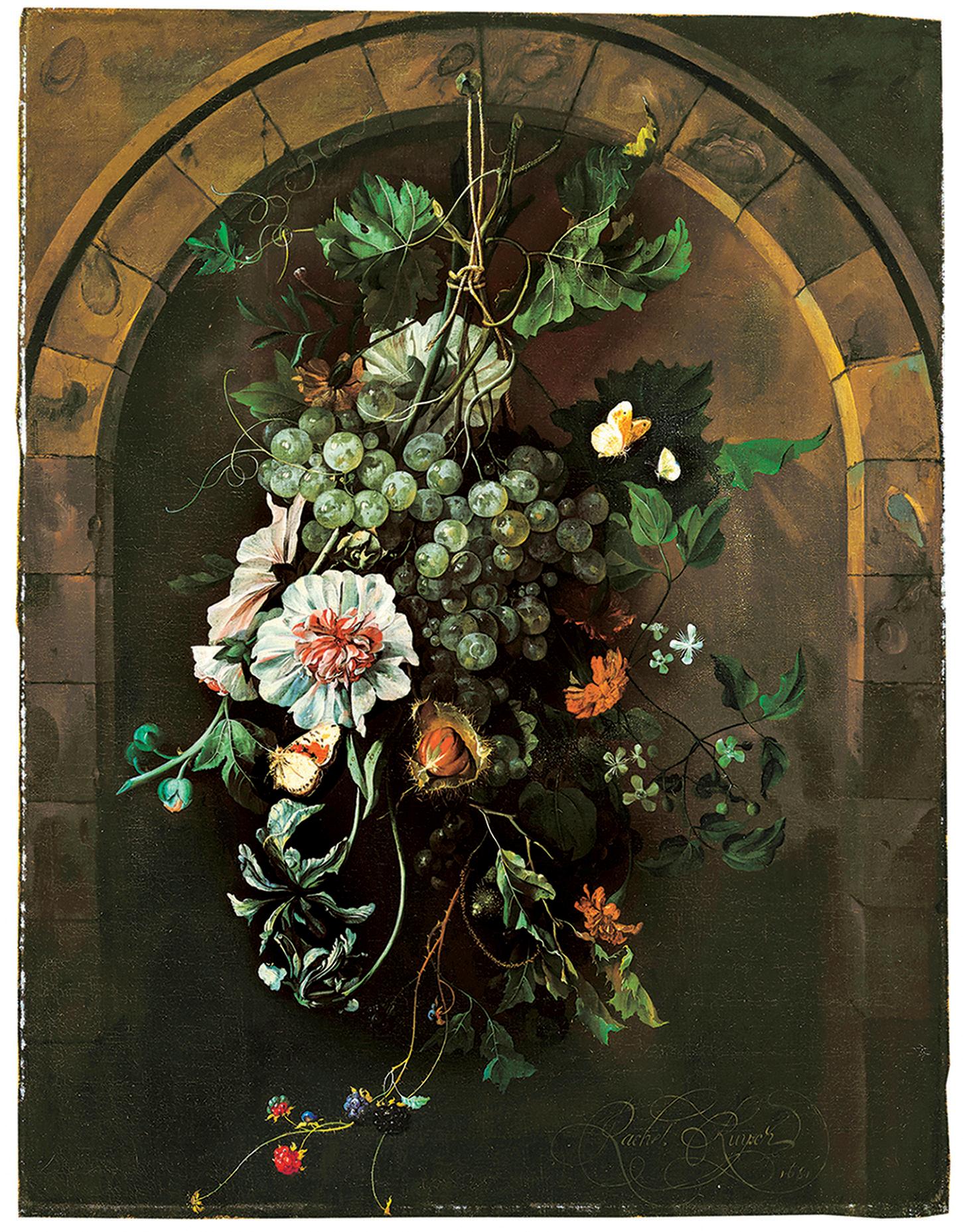
If still-life painting is the art of arresting decay, then it makes a lot of sense that Rachel Ruysch grew up to become one of the greatest still-life painters in the history of art. In the 17th century, Frederik Ruysch, her father, was an internationally famous embalmer. His job was to make a natural object seem permanently alive and pleasing to the eye. He could transform the corpse of a bullet-pierced admiral into the “fresh carcase of an infant,” Samuel Johnson once said. He could turn dead children into the serenest version of themselves—their faces so full of life that people wanted to kiss them, as Peter the Great once did.
The house where Rachel grew up, near the town hall in Amsterdam, had an annex for her father's skeletons, organ jars, and severed limbs, which he collected along with a growing stockpile of dead insects, amphibians, and flowers. It was a rich soil in which to live and work if you were an ambitious Enlightenment-era man of science, as Frederik was. To be a child in that environment, though, would have been incredibly weird. Imagine your father coming home day after day smelling of organ meat, his clothes speckled with blood and vague fluids. He keeps trying to show you his newest cow's heart or amputated foot, or a skink shipped in from one of the colonies. What's that under the chair? Ah, yes—a piece of lung. The barrier between life and death starts to seem thinner, more porous. Your sense of beauty dilates and shifts.
Rachel Ruysch (1664-1750) did not spend her time dissecting stray dogs or making fake fiddles out of human thigh bones, as her father did. Instead she devoted herself to the most conventionally beautiful object in nature: the flower. In fact, she became one of the top flower painters in Europe. Even though Ruysch is now a footnote in art history, she was more famous in her own lifetime than Rembrandt and Vermeer.

This story is from the September 2025 edition of The Atlantic.
Subscribe to Magzter GOLD to access thousands of curated premium stories, and 10,000+ magazines and newspapers.
Already a subscriber? Sign In
MORE STORIES FROM The Atlantic

The Atlantic
The First 18 Months
A Cabinet meeting with my son, who is exactly as old as the current administration

2 mins
July 2026
The Atlantic
What Dogs See
To understand a painting, look for the canine.
10 mins
July 2026

The Atlantic
Boy George
Finally, an action movie about Washington’s French and Indian War years.
5 mins
July 2026
The Atlantic
Disneyland With No People
When I was 17, I worked at Fantasyland’s magic shop as a magician demonstrating Svengali decks, cups and balls, and the Incredible (their word) Shrinking Die.
4 mins
July 2026
The Atlantic
THE REBELLIOUS ORIGINS OF AMERICAN SPORTS
FROM THE BEGINNING, PATRIOTISM AND PLAY HAVE BEEN INEXTRICABLY LINKED.
12 mins
July 2026

The Atlantic
Queen of the Skies
The Boeing 747, the world’s first jumbo jet, has started its final descent.
18 mins
July 2026

The Atlantic
HOW TO TELL THE AMERICAN STORY
Finding a common history that’s both unsparing and unifying has proved all but impossible in recent years. It shouldn’t be.
17 mins
July 2026

The Atlantic
Nathaniel Hawthorne’s American Horror Story
The author wrote a tale that challenged the nation’s founding myths. Then it disappeared.
13 mins
July 2026
The Atlantic
The Surprising, Liberating History of Marriage
To find a future for the institution, Stephanie Coontz turns to its wildly varying past.
11 mins
July 2026
The Atlantic
USE IT OR LOSE IT
Freedom of speech, and of the press, can be guaranteed only if Americans exercise their rights.
8 mins
July 2026
Listen
Translate
Change font size