
Go Unlimited with Magzter GOLD
Get unlimited access to 10,000+ magazines, newspapers and Premium stories for just
Try GOLD - Free
The Diva
The Atlantic
|June 2026
Denyce Graves is retiring from performing after a career as one of opera's leading women. But there's more work for her to do.
When the curtain of New York's Metropolitan Opera House rose for the closing matinee of Porgy and Bess in January, the boos that typically accompany the entrance of the show's villains were a mere murmur. The nearly 4,000 people who packed the space to capacity—175 of them standing-room ticket holders who remained on their feet for the opera's three-and-a-half-hour run time—had come to cheer.
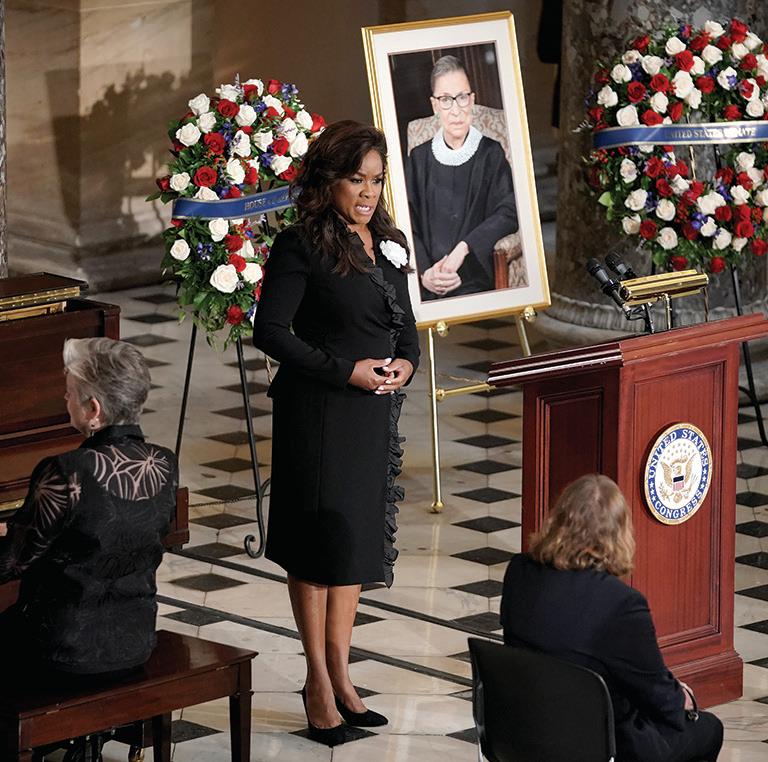
Thirty-one years before, Denyce Graves had made her Met debut in the title role of Georges Bizet's Carmen. The mezzo-soprano had been a revelation, her full, rich voice and lusty physicality defining the role for a generation. Graves was a diva in the original, operatic sense: a world-renowned performer who made journalists wilt, and whose name alone was enough to draw crowds. But here she was, playing a supporting character in Porgy and Bess. Graves was singing the part of Maria, the matriarch of the 1920s working-class Black community of Catfish Row, the Lowcountry settlement where the show takes place. It was set to be her final performance ever, a return to the opera that had launched her professional career in 1985.
After intermission, but before the opera resumed, the entire company crowded onto the stage, and the house rose to its feet. Peter Gelb, the company’s general manager, presented Graves with a plaque recognizing her career. It would be installed in the Met’s List Hall, where aspiring artists audition. “My heart is unrehearsed at having to hold so much love,” Graves said, tearing up and taking a few beats to collect herself. “It has never been asked to hold this capacity of love before.”

This story is from the June 2026 edition of The Atlantic.
Subscribe to Magzter GOLD to access thousands of curated premium stories, and 10,000+ magazines and newspapers.
Already a subscriber? Sign In
MORE STORIES FROM The Atlantic

The Atlantic
How America Celebrated Its 100th Birthday
The Centennial Exhibition of 1876 promised a glorious industrial future. Outside its gates, the country seethed with violence and corruption.

12 mins
June 2026

The Atlantic
THE CLOWN SHOW
The Savannah Bananas are reviving one of the most entertaining—and controversial—teams in Negro Leagues history.
21 mins
June 2026

The Atlantic
The Diva
Denyce Graves is retiring from performing after a career as one of opera's leading women. But there's more work for her to do.
10 mins
June 2026

The Atlantic
Cat Heir
Did Karl Lagerfeld really leave millions to Choupette?
26 mins
June 2026

The Atlantic
The Secret of Elizabeth Strout's Appeal
How she writes best sellers that are also critical darlings
10 mins
June 2026
The Atlantic
THE VENTURE-CAPITAL POPULIST
How David Sacks and the new tech right went full MAGA and captured Washington
32 mins
June 2026

The Atlantic
Glory Days
Heartland rock was shot through with nostalgia— but nostalgia for what?
9 mins
June 2026

The Atlantic
Alien Nation
Why Americans want to believe that the government is hiding the truth about extraterrestrial life
11 mins
June 2026

The Atlantic
Dinah's Hat
On the day Dinah lost her hat, I was sitting on the top step of my just-right Scamp trailer doing a crossword.
24 mins
June 2026

The Atlantic
THE AMERICA I'VE KNOWN
In my 93rd year, it's become ever more clear that patriotism requires sacrifice and collective effort.
7 mins
June 2026
Listen
Translate
Change font size