Try GOLD - Free
On Track
The Atlantic
|April 2025
The time I spent working on the railroad changed the course of my life.
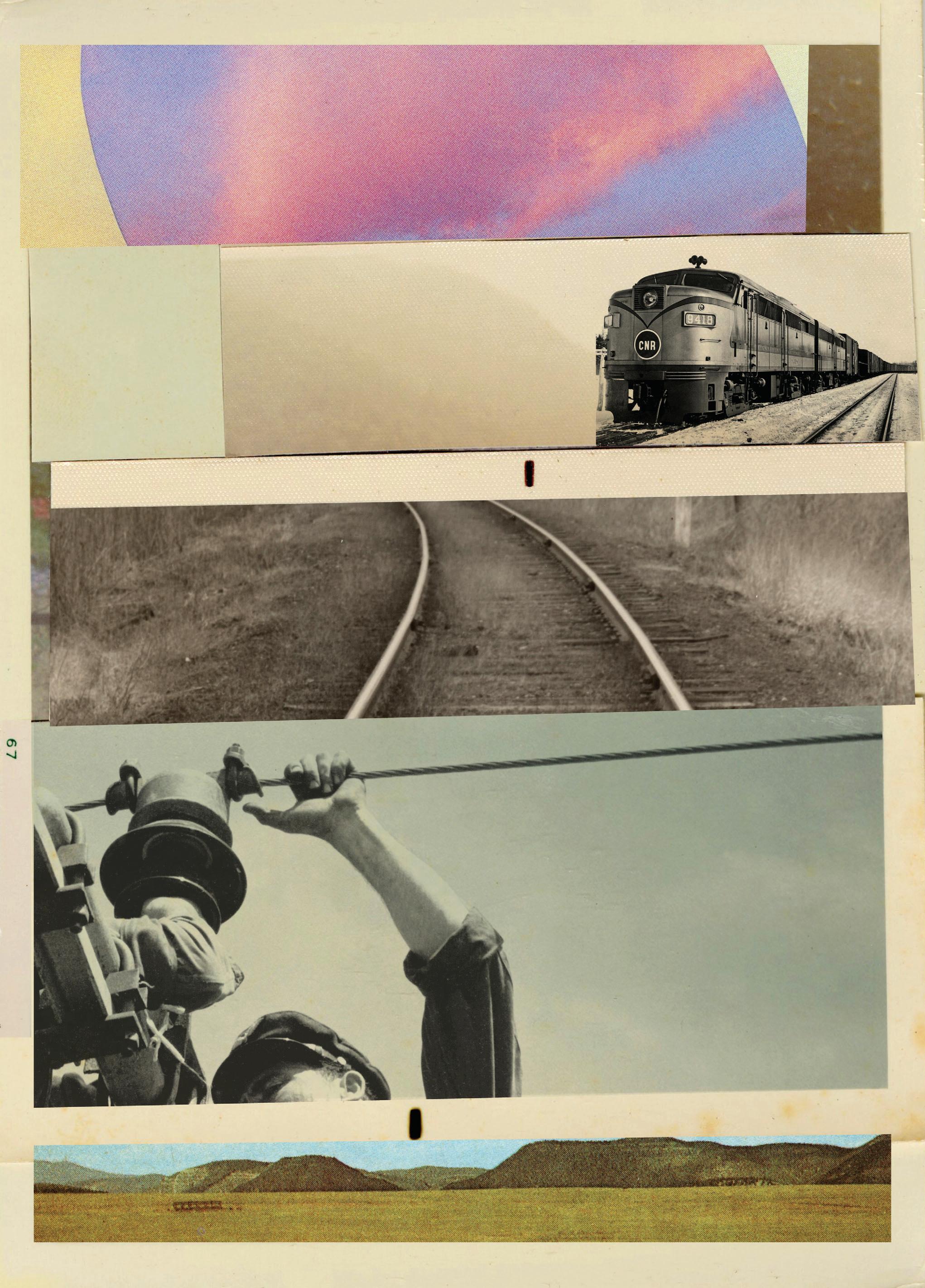
Decades ago, and probably extending well before that, there was a custom among middle-class Canadian families to send their sons out West to work on the railroad for a spell. The parents’ intention was not only to get the boys out of their hair for a while but also to toughen them up and introduce them to the ways of the world well beyond what would now be called their comfort zones. As it happened, one of my father's sisters,
Aunt Irene, was a vice president of the Canadian National Railways, a sprawling transportation network of trains, steamships, and grand hotels. It was as much a part of the Canadian national identity as the Bonanza star Lorne Greene and Hockey Night in Canada. Aunt Irene was a tall, thin, dignified woman. I don’t think I ever saw her when she wasn’t wearing a twinset and pearls. Family lore had it that during the final chapter of World War II, she had been the wire operator who sent word of Hitler’s death to news organizations across Canada. Afterward, she went to work for the Canadian National Railways, also as a wire operator, and rose through the ranks.
Egged on by my parents, I wrote to her, asking for a job. I was 19 at the time. As she described it in her letter back to me, there were two types of positions available. I could be a groundman, at $2.20 an hour. Or I could be a lineman, at $2.80 an hour. Like any sane person, I had a fear of heights and said that I’d like to get a groundman’s job, which I was told entailed lugging equipment to the linemen, who climbed telegraph poles all day. Aunt Irene told me to report to the Symington Yard, in Winnipeg. With only a dim idea of what I was getting myself into, I boarded a train heading 1,300 miles west, to the capital of Manitoba.

This story is from the April 2025 edition of The Atlantic.
Subscribe to Magzter GOLD to access thousands of curated premium stories, and 10,000+ magazines and newspapers.
Already a subscriber? Sign In
MORE STORIES FROM The Atlantic

The Atlantic
STRUCK
What getting hit by lightning does to the body and mind

15 mins
April 2026

The Atlantic
LEAVING THE UNITED STATES BEHIND
The Cruz family spent years building a life in New York. Then the risks of staying became too great.
16 mins
April 2026

The Atlantic
MY SELF-DRIVING CAR CRASH
The Tesla was driving perfectly—until it wasn't.
8 mins
April 2026

The Atlantic
The Last Days of Franco
Montserrat Roig's classic novel captures Barcelona on the cusp of unimaginable change.
7 mins
April 2026

The Atlantic
INSATIABLE
Indoor rain, windows to nowhere, and reanimated nuclear reactors- how the race to power AI is remaking the physical world
16 mins
April 2026

The Atlantic
THE WOMEN OF AVENGER FIELD
THEY BRAVELY SERVED AS PILOTS IN WORLD WAR II. THEN AMERICA FORGOT THEM.
15 mins
April 2026

The Atlantic
The Unbearable Lightness of Signalgate
Nearly a year after a national-security scandal erupted on my iPhone, no one in the Trump administration has faced serious consequences.
14 mins
April 2026

The Atlantic
Robyn Is Still Dancing On Her Own
The queen of poptimism takes up motherhood and midlife desire.
5 mins
April 2026
The Atlantic
The College-Educated Working Class
Can a generation of graduates frustrated by their economic prospects change American labor politics?
13 mins
April 2026

The Atlantic
THAT 1930s FEELING
How dark fringes reached the center of the Republican Party
10 mins
April 2026
Listen
Translate
Change font size