
Magzter GOLD ile Sınırsız Olun
Sadece 9.000'den fazla dergi, gazete ve Premium hikayeye sınırsız erişim elde edin
On Track
The Atlantic
|April 2025
The time I spent working on the railroad changed the course of my life.
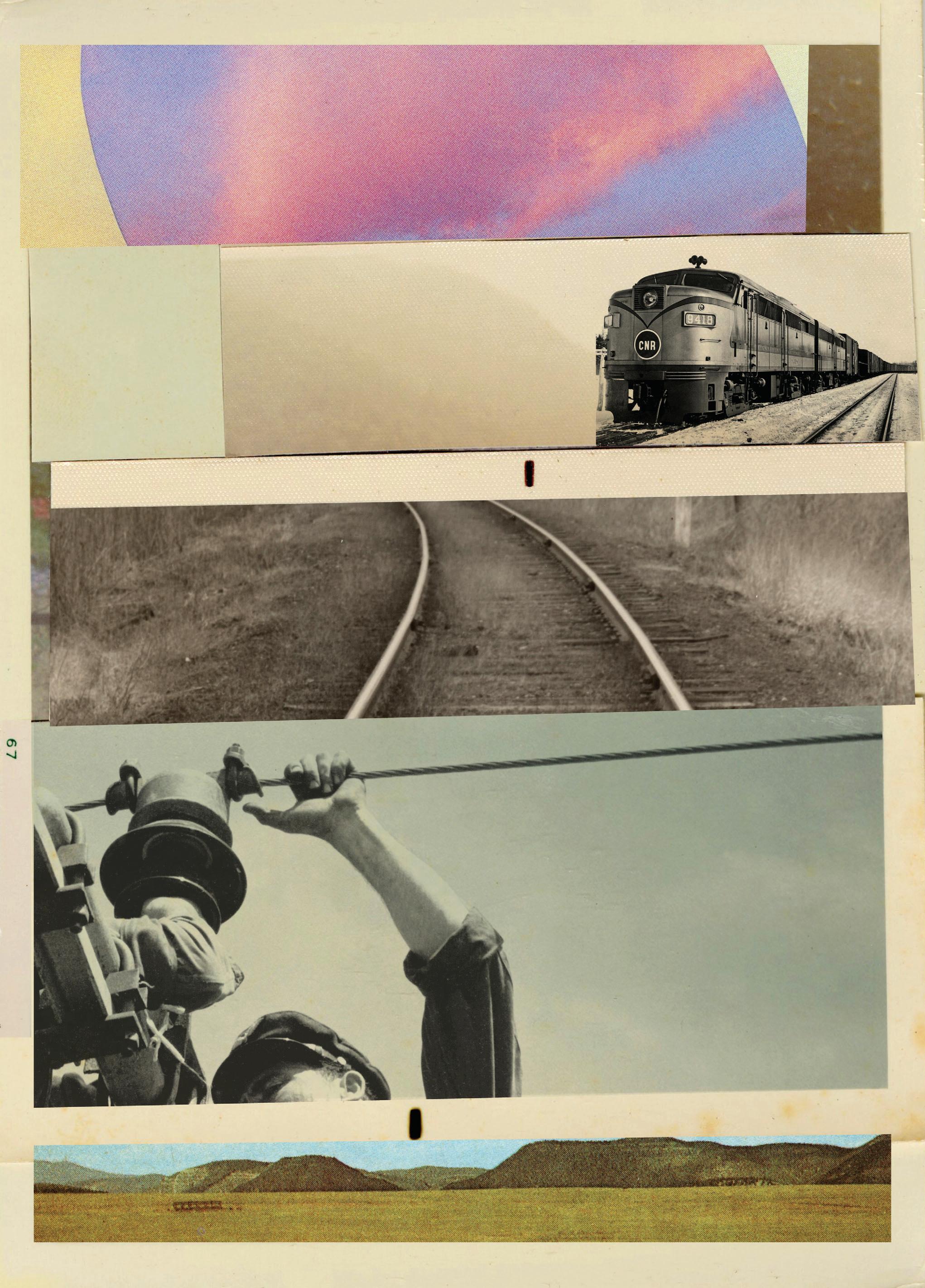
Decades ago, and probably extending well before that, there was a custom among middle-class Canadian families to send their sons out West to work on the railroad for a spell. The parents’ intention was not only to get the boys out of their hair for a while but also to toughen them up and introduce them to the ways of the world well beyond what would now be called their comfort zones. As it happened, one of my father's sisters,
Aunt Irene, was a vice president of the Canadian National Railways, a sprawling transportation network of trains, steamships, and grand hotels. It was as much a part of the Canadian national identity as the Bonanza star Lorne Greene and Hockey Night in Canada. Aunt Irene was a tall, thin, dignified woman. I don’t think I ever saw her when she wasn’t wearing a twinset and pearls. Family lore had it that during the final chapter of World War II, she had been the wire operator who sent word of Hitler’s death to news organizations across Canada. Afterward, she went to work for the Canadian National Railways, also as a wire operator, and rose through the ranks.
Egged on by my parents, I wrote to her, asking for a job. I was 19 at the time. As she described it in her letter back to me, there were two types of positions available. I could be a groundman, at $2.20 an hour. Or I could be a lineman, at $2.80 an hour. Like any sane person, I had a fear of heights and said that I’d like to get a groundman’s job, which I was told entailed lugging equipment to the linemen, who climbed telegraph poles all day. Aunt Irene told me to report to the Symington Yard, in Winnipeg. With only a dim idea of what I was getting myself into, I boarded a train heading 1,300 miles west, to the capital of Manitoba.

Bu hikaye The Atlantic dergisinin April 2025 baskısından alınmıştır.
Binlerce özenle seçilmiş premium hikayeye ve 9.000'den fazla dergi ve gazeteye erişmek için Magzter GOLD'a abone olun.
Zaten abone misiniz? Oturum aç
The Atlantic'den DAHA FAZLA HİKAYE

The Atlantic
You Had to Be There
An emerging field of history asks if we can ever really understand how our forebears experienced love, anger, fear, and sorrow.

23 mins
January 2026

The Atlantic
By the Horns
The week before the biggest bullfight of her career, in Cádiz, Spain, this past July, 24-year-old Miriam Cabas posted a carefully produced video on Instagram.
1 mins
January 2026

The Atlantic
The New German War Machine
After World War II, Germany embraced pacifism as a form of atonement. Now the country is arming itself again.
18 mins
January 2026
The Atlantic
The Eloquence
The prime minister was watching a disaster movie when we found him.
4 mins
January 2026

The Atlantic
What's for Dinner, Mom?
The women who want to change the way America eats
12 mins
January 2026

The Atlantic
How Terror Works
A 1947 German novel explores the sometimes corrosive, sometimes energizing nature of fear.
8 mins
January 2026

The Atlantic
Yesterday's Idea of a Modern Man
Sam Shepard, a self-made cowboy, was also a poet of masculine angst.
7 mins
January 2026

The Atlantic
ACCOMMODATION NATION
America's colleges have an extra-time-on-tests problem.
11 mins
January 2026

The Atlantic
Respect the Drummer
A new history of rock, told through its overlooked heroes
5 mins
January 2026

The Atlantic
THE MOST POWERFUL MAN IN SCIENCE
WHY IS ROBERT F. KENNEDY JR. SO CONVINCED HE'S RIGHT?
42 mins
January 2026
Listen
Translate
Change font size