
Go Unlimited with Magzter GOLD
Get unlimited access to 10,000+ magazines, newspapers and Premium stories for just
Try GOLD - Free
Is VR Meaningful Escapism?
Philosophy Now
|June/July 2025
Amir Haj-Bolouri enquires into possible meaning through technology.
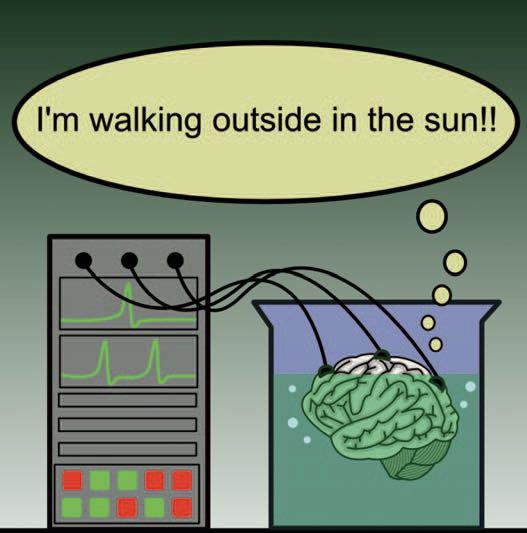
Immersive Virtual Reality (IVR) is considered the perfect technology for extending the experiences we have in the physical world. Through it, we can represent and simulate the past, the present and the future. And through the rapid development of Artificial Intelligence, modern VR experiences are not only realistically convincing, but also smart. As such, IVR experiences can increasingly be a creative product of human imagination. Moreover, the IVR experience is 'immersive' in the way that it turns the user into a 'being-in-the-virtual-world' - that is, an embodied avatar, dynamically present, and capable of accomplishing 'magic' - teleportation across virtual worlds, walking through walls, hiding inside furniture, or generally, exercising the god-like power of being able to define the (virtual) reality around us. The immersive effect is arguably dependent on the sensory configuration of IVR technology, in that it provides an enclosed visual field for the user, headphones that cancel out the sound of the outside world, and haptic devices that can provide sensory feedback loops of touch, pain, heat or cold.
However, with the possibilities that IVR increasingly affords us also come existential questions, and thoughts about the distinction between what's real and what is a layer of illusion. One might wonder where reality begins and ends, especially when IVR experiences will begin to extend the world we engage with on a daily basis. David Chalmers argues in Reality+ (2022) that virtual reality is genuine reality because we can live meaningful lives there; and increasingly, we will. Subsequently, Chalmers invokes questions such as: What is reality, anyway? How can we live a meaningful life? And how do we know there is an external world independent of human experience?
Of course, through the ages, philosophers have questioned our conceptions of reality. One famous example is provided by Hilary Putnam in
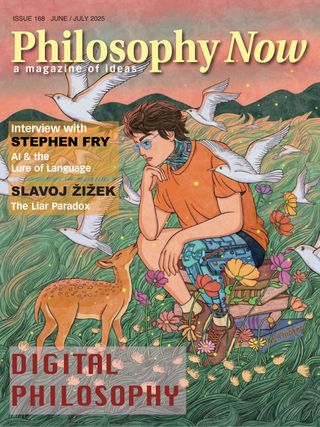

This story is from the June/July 2025 edition of Philosophy Now.
Subscribe to Magzter GOLD to access thousands of curated premium stories, and 10,000+ magazines and newspapers.
Already a subscriber? Sign In
MORE STORIES FROM Philosophy Now

Philosophy Now
Nosferatu
Stefan Bolea considers two very different artistic approaches to love and death.

6 mins
April/May 2025

Philosophy Now
Heidegger's Ghost
Raymond Tallis wonders where Heidegger's body went when he was philosophising.
7 mins
April/May 2025

Philosophy Now
Is Comedy Good For Us?
Damaris Stock has a laugh with Plato and friends.
10 mins
April/May 2025
Philosophy Now
In Defense of Idleness
Wendell O'Brien says, 'Just Don't Do It'.
10 mins
April/May 2025
Philosophy Now
Leaving Nothing to Chance by Carl Knight
LEAVING NOTHING TO Chance (2025) by Carl Knight, is an informed, proficient and lucid defence of luck egalitarianism.
3 mins
April/May 2025

Philosophy Now
Star Maker by Olaf Stapledon
THE 1937 SCIENCE FICTION novel Star Maker was written by philosophy professor Olaf Stapledon in the dark days as Europe awaited the onslaught of Nazi Germany. This casts a shadow over the whole book.
6 mins
April/May 2025
Philosophy Now
Love & Emptiness in the Sufi Tradition
Medha Ninad Tambe meditates on Rumi, love and self-negation.
7 mins
April/May 2025

Philosophy Now
The Hedgehog's Dilemma: A Metaphor About the Challenges of Human Intimacy
Krishna Chaubey explains Arthur Schopenhauer's poignant thought experiment.
4 mins
April/May 2025
Philosophy Now
The Mirror & the Flame
Rebwar Fatah imagines Attar's & Hegel's shared path.
4 mins
April/May 2025
Philosophy Now
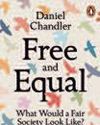
Free and Equal by Daniel Chandler
DANIEL CHANDLER, AN economist and philosopher based at the London School of Economics, begins Free and Equal: What Would a Fair Society Look Like? (2023) by asking an intriguing question. How is it, he wonders, that the most influential political philosopher of the last century has had almost no practical impact on politics or policy? The philosopher in question is John Rawls, whose magnum opus was A Theory of Justice (1971).
5 mins
April/May 2025
Listen
Translate
Change font size