Try GOLD - Free
20 COOP CONSIDERATIONS
Hobby Farms
|March - April 2025
Keep these 20 things in mind when designing a home for your chickens.
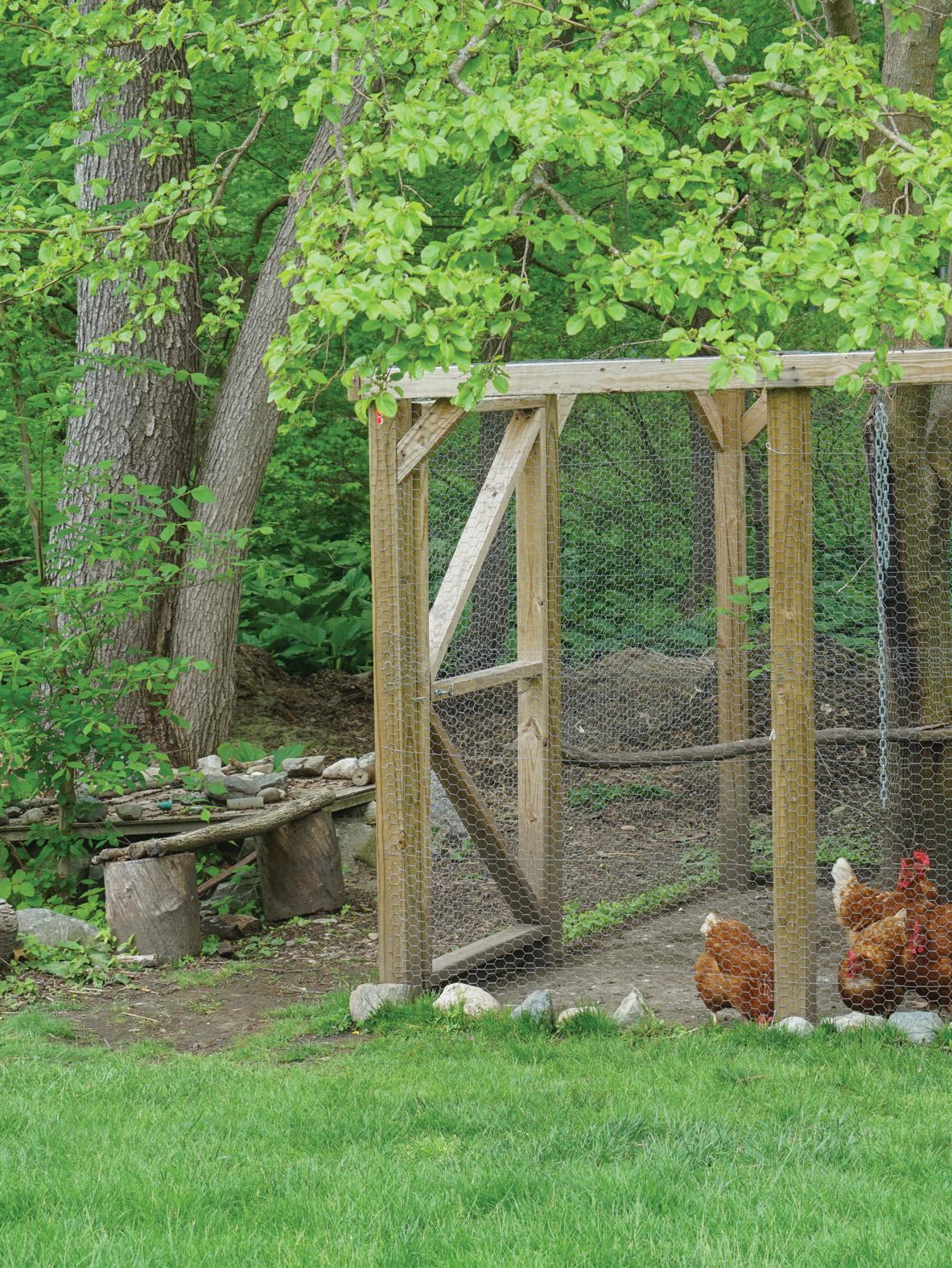
Whether it’s a custom-designed prefabricated construction or self-built structure, every chicken coop should be planned with certain needs in mind. Generally, a flock’s home will consist of a coop where hens sleep and a spot for them to lay their eggs. Birds also need enough space to stretch their wings, usually in an enclosed run attached to the chicken coop.
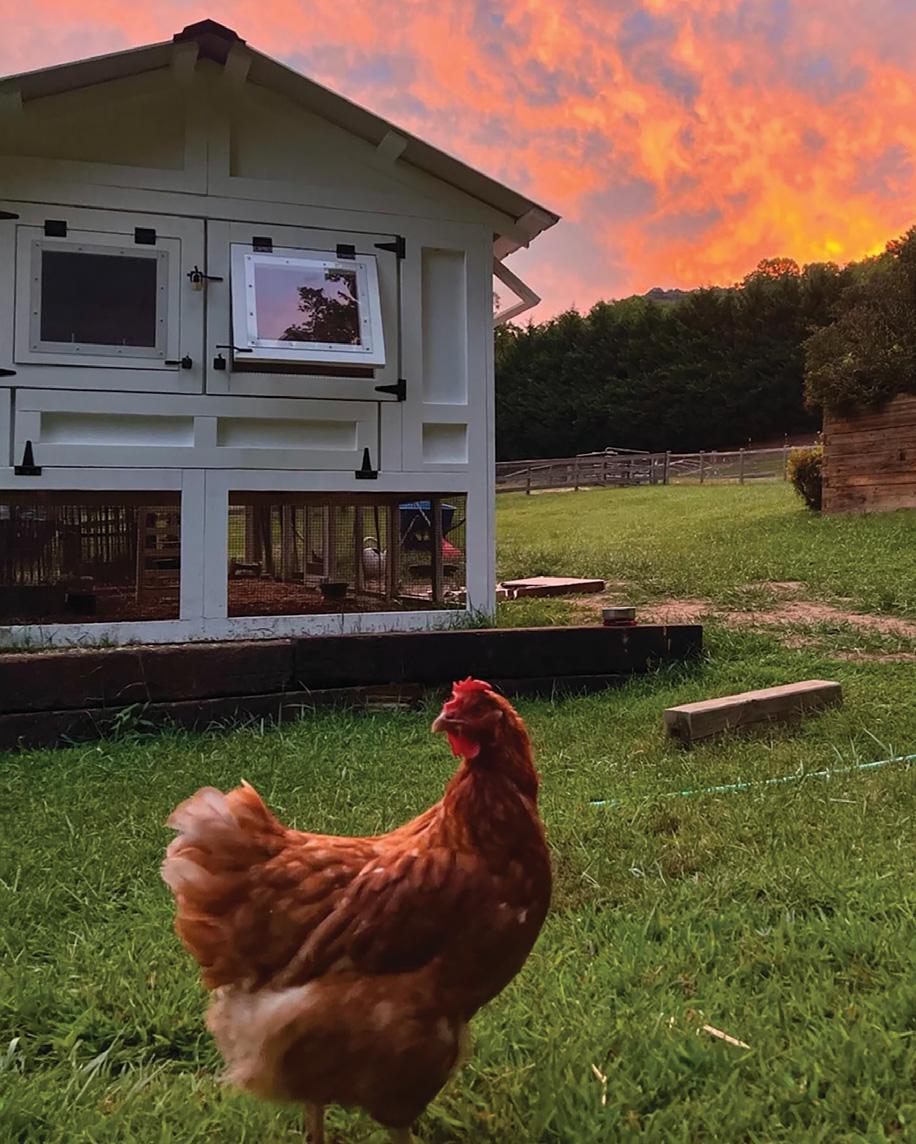 Windows that can be opened in the summer encourage air flow and make a coop air-tight in the winter.
START WITH THE BASICS
1 LOCATION: Before hammering the first nail or sketching the first design, figure out where to locate your coop. It should be a spot that can be leveled with plenty of drainage and protection from winds. Placing a coop so it’s visible from the house can be very handy. A coop near trees provides ample water drainage, wind protection and shade in the summer.
2 SIZE: Whether constructing a new coop or expanding an existing one, the next thing to determine is how large the coop should be. If birds won’t be able to free-range every day, a good rule of thumb is a minimum of 4 square feet of space per hen, which includes an enclosed run if hens have access to it at all hours. Larger hens need more space. Without ample space, chickens become vulnerable to undue stress, which can result in lots of pecking and reduced egg production. It also puts them at risk for infections and diseases.
3 ENCLOSURE: The coop and run should be enclosed on all sides to protect hens from predators. Many chicken owners use small mesh wire fencing or hardware cloth for the sides of their runs. Coop construction can range from plywood to metal to concrete. If it’s sturdy and nontoxic, there are many choices.


This story is from the March - April 2025 edition of Hobby Farms.
Subscribe to Magzter GOLD to access thousands of curated premium stories, and 10,000+ magazines and newspapers.
Already a subscriber? Sign In
MORE STORIES FROM Hobby Farms
Hobby Farms
AN HERB TO AVOID IN WINTER
While many culinary herbs are beneficial in winter, some members of the mint family are best to avoid when temperatures dip below 40 degrees Fahrenheit.

1 min
Healthy Hens 2026
Hobby Farms
Golden Girls
Discover some of the most overlooked health issues in aging hens.
6 mins
Healthy Hens 2026
Hobby Farms
Winter Tea Supplement
Several years ago, I noticed that while my healthy hens were robust during the growing season, their health declined a little during winter when they weren’t regularly consuming herbs or other greens.
2 mins
Healthy Hens 2026

Hobby Farms
Cool CHOOKS
Most chicken breeds are pretty hardy, but you can still make them more comfortable by offering them some escape from the summer heat.
7 mins
Healthy Hens 2026

Hobby Farms
Feeding Fowl
What you feed, how you supplement and when you treat will make all the difference for your chickens.
10 mins
Healthy Hens 2026

Hobby Farms
Egg-Eating Hens
Egg-eating hens can be a frustrating and costly problem for backyard chicken-keepers.
6 mins
Healthy Hens 2026

Hobby Farms
Potent PREDATORS
Take precautions, as these 15 marauders can wipe out an entire flock.
12 mins
Healthy Hens 2026
Hobby Farms
15 TOXIC PLANTS
Don't let your chickens eat these common plants.
6 mins
Healthy Hens 2026
Hobby Farms
BUG Off!
Bugs, who needs 'em? Certainly not chicken-keepers, who sometimes struggle to keep pesky flies and poultry parasites at bay.
7 mins
Healthy Hens 2026
Hobby Farms
ALPHA Hens
With or without a flock rooster, one lady always steps up to be the queen.
7 mins
Healthy Hens 2026
Listen
Translate
Change font size