
Go Unlimited with Magzter GOLD
Get unlimited access to 10,000+ magazines, newspapers and Premium stories for just
Try GOLD - Free
Smart Feeding Strategies for Ducks and Geese
The Country Smallholder
|October 2025
In this feature, Sarah Day, nutritionist for Small Holder Feed, shares expert guidance to help you make informed feeding choices, from tiny hatchlings through to laying adults.
-
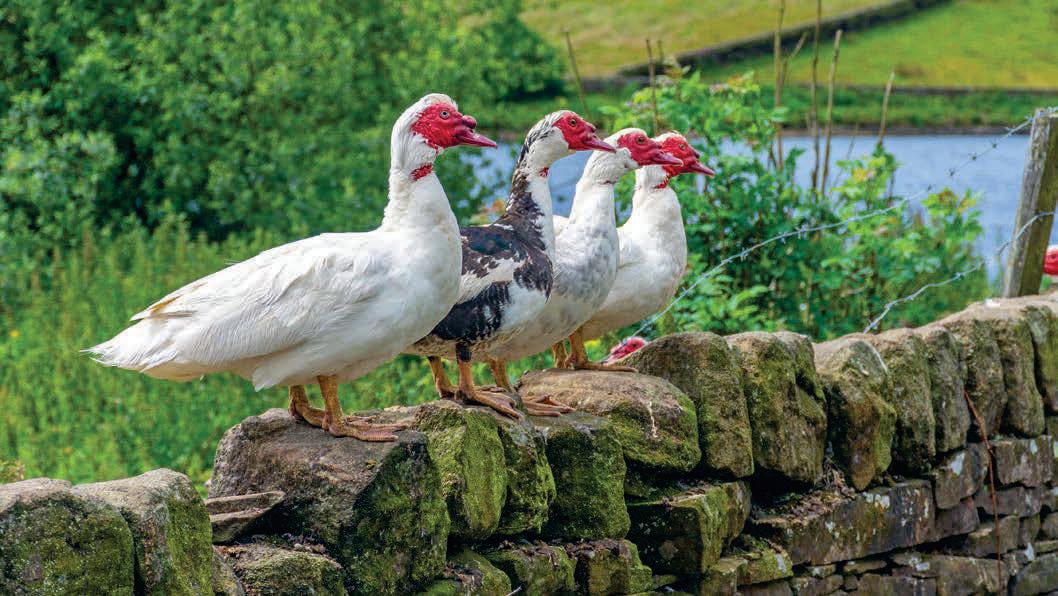
Feeding ducks and geese doesn't need to be complicated. With the right approach and a little planning, you can keep your birds healthy, productive and behaving naturally at every stage of life
FEEDING ADULT DUCKS AND GEESE
Once your ducks or geese reach 16 weeks of age, it's time to move them onto a feed that's suited to adult birds. This ensures they're getting the nutrition they need for long-term health and performance.
If your birds are heading into their first laying season, don't worry if they don't lay quite as many eggs as older birds. Introduce a layers feed from point of lay, typically from 18 to 24 weeks of age for lighter laying breeds such as Khaki Campbells and Indian Runners. Heavier breeds, such as Aylesburys and Rouens, usually begin laying later, at around 26 to 28 weeks. Geese tend to mature more slowly, usually starting to lay at around 9 to 12 months of age. However, some may not begin laying until their second spring, particularly if they hatch late in the year.
A good quality layers feed provides the essential nutrients needed to support steady egg production and overall health. It also supplies the calcium and protein required to produce strong-shelled, good-quality eggs. When comparing feeds, look for a premium layer's option that includes natural ingredients like maize, marigold and alfalfa, as these help to enhance yolk colour and boost overall nutritional value.
As daylight hours shorten in autumn and winter, egg production in traditional breeds naturally slows. Continuing to feed a good-quality layers feed during this time will help to maintain condition and ensure birds are ready to resume laying when daylight hours increase.

This story is from the October 2025 edition of The Country Smallholder.
Subscribe to Magzter GOLD to access thousands of curated premium stories, and 10,000+ magazines and newspapers.
Already a subscriber? Sign In
MORE STORIES FROM The Country Smallholder
The Country Smallholder
Give Birds Space this Summer
Don't look up, look down to protect ground nesting birds.

2 mins
June 2026

The Country Smallholder
Summer fruit is a bountiful crop so the solution is to preserve it
Dr Andrew Oldham looks at methods you can use to have a taste of the summer in the winter
3 mins
June 2026
The Country Smallholder
Fat Hen and Good King Henry in history
Jane Brooks says some 'weeds' represent a bridge to our agricultural past, offering a free alternative to modern greens
2 mins
June 2026

The Country Smallholder
Bobbin Lacemaking
A new grass roots initiative seeking to create an assured future for an endangered heritage craft
3 mins
June 2026
The Country Smallholder
Glorious June heralds the start of summer.
Allison Lee says it is a lively, energetic month filled with things that need doing and no time to lose.
2 mins
June 2026
The Country Smallholder
How to survive (and do well in) the show ring
Linda Aldous believes that you should try showing your wonderful pedigree pigs - it can be rewarding and enjoyable if you plan ahead
5 mins
June 2026
The Country Smallholder
Cooking with summer evenings and picnics in mind
Henrietta Balcon celebrates her new hens' arrival and makes a cool, colourful and quick pudding
2 mins
June 2026
The Country Smallholder
Q&A
Our Experts answer your questions
5 mins
June 2026
The Country Smallholder
Increase Your Bees
It's possible to increase the number of hives by making your own colonies Claire Waring discusses options for expanding your apiary
6 mins
June 2026
The Country Smallholder
The alpaca shearing season is in full swing so make that important day easier for animals and people
Joy Whitehead speaks from experience when she gives her top tips for a successful shearing day
4 mins
June 2026
Listen
Translate
Change font size