
Go Unlimited with Magzter GOLD
Get unlimited access to 10,000+ magazines, newspapers and Premium stories for just
Try GOLD - Free
Preventing Afterswarms
The Country Smallholder
|August 2025
Claire Waring describes steps to stop casting if you have lost the prime swarm
-
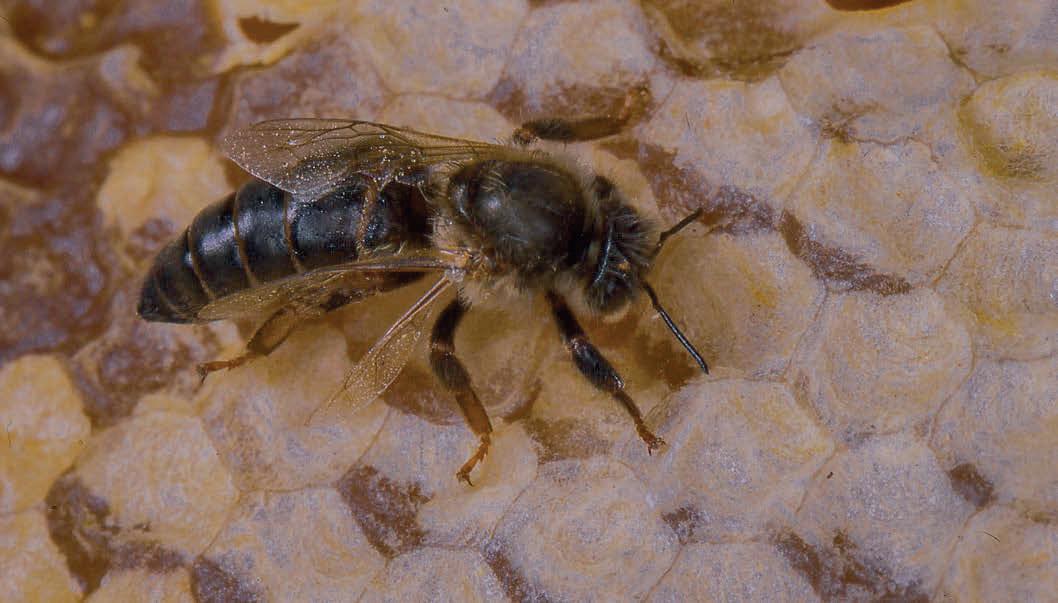
We have considered how to control swarms and what is involved in catching and hiving a swarm. Of course, we all know that swarms have always come from someone else’s bees but, inevitably, it will happen in one of your colonies. The important thing then is to make sure that you don’t lose any more bees in an afterswarm or cast.
THE SITUATION IN THE HIVE
When the colony has swarmed, what remains is queenless but it contains a potential replacement in the form of queen cells.
Option 1 is to do nothing. The first virgin queen to hatch will leave the hive with about half of the remaining bees in an afterswarm. This will be repeated as subsequent virgins emerge until the colony ‘decides’ that to lose any more bees will deplete it to a point where it will struggle to survive. At this point, the next virgin that hatches will visit the other queen cells and sting the occupants to death through the cell wall. She and/or the workers will then tear down the cells.
The colony is then in a position where its survival depends on this queen mating successfully, returning to the hive and starting to lay. This seems a rather risky way of going about things as all the colony’s eggs are in one basket so to speak, but that’s the way things are!
The prime (first) swarm leaves round about the time the first queen cell is sealed. That means the first virgin will hatch seven days later. Consider an egg laid just before the old queen departs. When the first virgin hatches, that larva will be four days old, too old to be raised as a queen. Hence, if the virgin is lost or fails to mate properly, the colony is hopelessly queenless and, without intervention from the beekeeper, is doomed. Don’t panic! The majority of virgin queens mate successfully. However, it is worth understanding the sequence and being prepared for the one that doesn’t.
PREVENTING AFTERSWARMS

This story is from the August 2025 edition of The Country Smallholder.
Subscribe to Magzter GOLD to access thousands of curated premium stories, and 10,000+ magazines and newspapers.
Already a subscriber? Sign In
MORE STORIES FROM The Country Smallholder
The Country Smallholder
Making sure you put enough nutrition into your dairy goat to support her milk production
Sarah Day, nutritionist for Small Holder Feed offers feeding advice for your dairy goats to help them be happy, healthy and milky animals.

6 mins
March 2026
The Country Smallholder
Welcoming the very start of the spring season
Henrietta Balcon makes the most of the new crop rhubarb
2 mins
March 2026
The Country Smallholder
Starting with Pigs - before you start
Linda Aldous outlines what you need to do before anything porcine arrives on your smallholding
3 mins
March 2026
The Country Smallholder
Insurance to protect livestock - and your peace of mind
Looking ahead to a busy 2026 for Pedigree Sales, farmers and breeders will be preparing their livestock for the upcoming markets
2 mins
March 2026
The Country Smallholder
Getting Your Electric Fence Spring-Ready: Expert Q&A
As Spring arrives, it’s the perfect time to give your electric fence some attention. Based on questions we discuss regularly here at www.electricfencing.co.uk, here’s a list of the checks you should be carrying out now, and why they matter.
2 mins
March 2026

The Country Smallholder
Check your kit for the busy seasons ahead
Agricultural journalist, and machinery writer Jane Brooks, joins us for her regular look at the world.
4 mins
March 2026
The Country Smallholder
Flock together: is now the right time to add more hens?
Andy Hill explains how to integrate birds into a flock without feathers flying
4 mins
March 2026
The Country Smallholder
The secrets behind maximising incubator hatch rates
Buying quality point of lay hens can be an expensive proposition these days (even if you can find a local source of the breed that you want). Incubating fertilised eggs can save a great deal of money and make many more breeds accessible. If you already keep poultry that includes a cockerel, an incubator means that you can hatch their eggs either to increase your flock or to sell. Hugh & Fiona Osborne have been using incubators for many years and have learned that getting a good hatch means attention to detail.
7 mins
March 2026
The Country Smallholder
Making choices for your chicks
Victoria Roberts BVSc MRCVS says Natural and Artifical Incubation are not an either/or choice
5 mins
March 2026

The Country Smallholder
An appetite for asparagus
Our Experts answer your questions
1 mins
March 2026
Listen
Translate
Change font size