Try GOLD - Free
Flying foxes
BBC Wildlife
|July 2025
FLYING FOXES ARE BIG TROPICAL BATS that tend to roost in large numbers and mainly feed on fruit, pollen and nectar.
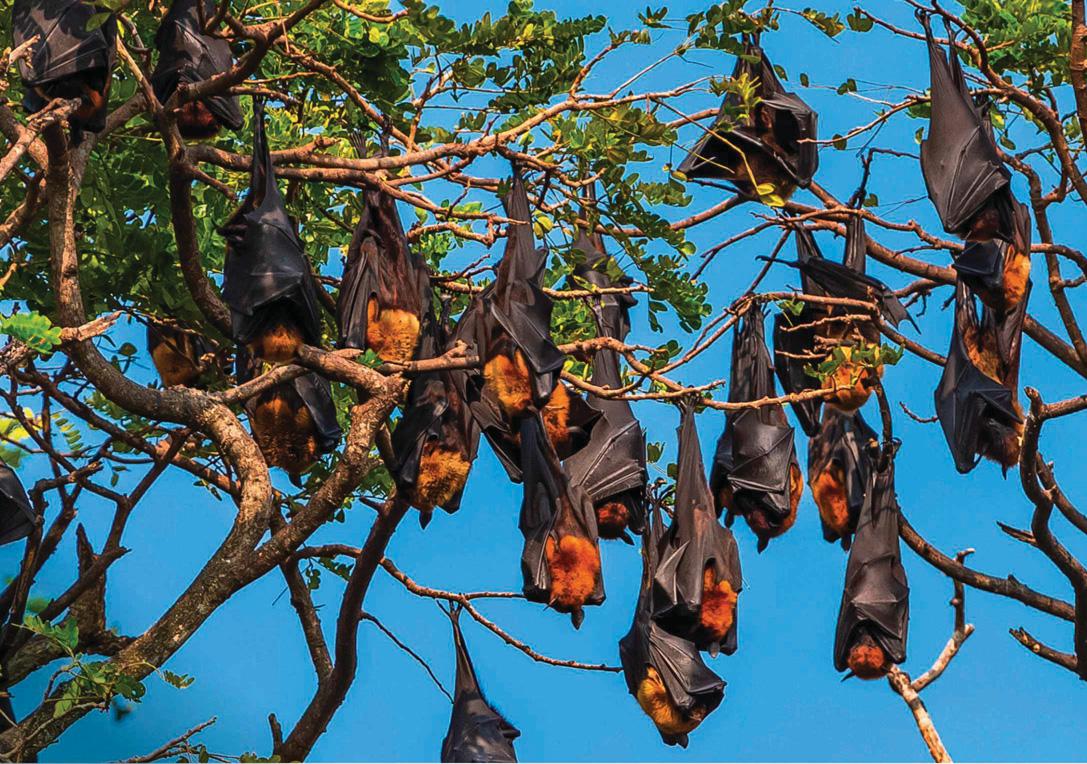
They play a crucial ecological role as pollinators (when they eat, pollen sticks to their fur) and seed dispersers (via excretion), and are responsible for maintaining high plant diversity in the primary forest habitats that they live in.
Why are they called flying foxes?
They have heads that resemble a fox, with pointed ears and large eyes. They belong to the genus Pteropus (considered to be 'true' flying foxes), which is part of the megabat family Pteropodidae. Pteropus means 'winged foot', from the Greek words pteron (winged) and pus (foot). Acerodon species are also often referred to as flying foxes and are part of the Pteropodidae family.
Where do they live?
More than 60 species of flying fox are recognised, and they are found in tropical and subtropical regions of Asia, and islands in the Pacific and Indian oceans.
How big are flying foxes?
According to Guinness World Records, flying foxes are the largest bats in the world: “The biggest are generally considered to be the Indian flying fox (Pteropus giganteus) and the giant golden-crowned flying fox (Acerodon jubatus).” Several species in the genera Pteropus and Acerodon have a head-body length of up to 45cm, a wingspan of 1.7m and a weight of 1.6kg.
Why do they need large wings?

This story is from the July 2025 edition of BBC Wildlife.
Subscribe to Magzter GOLD to access thousands of curated premium stories, and 10,000+ magazines and newspapers.
Already a subscriber? Sign In
MORE STORIES FROM BBC Wildlife
BBC Wildlife
Animal welfare
FURTHER TO EM GENOVESE'S LETTER (Your Letters, Spring 2026), I would like to signpost the charity Wild Welfare to readers.

2 mins
May 2026
BBC Wildlife
"The hooves pounded up the trail behind us"
Moose in Colorado
3 mins
May 2026

BBC Wildlife
SEAGRASS SAVIOURS
Sometimes, saving the planet requires a bright idea, some practical know-how and a bit of tinkering
6 mins
May 2026
BBC Wildlife
WALL TO WILD
After the fall of the Berlin Wall, reunified Germany became a new landscape not only for people, but for wildlife too 'M SITTING IN A FOREST IN Brandenburg, northeast Germany, looking over a large clearing.
7 mins
May 2026
BBC Wildlife
SNAP-CHAT
Samuel Bloch on wild horses, crazy capercaillies and sleeping on the job
2 mins
May 2026
BBC Wildlife
Old trees key to resilience
Study finds mature trees trump youthful ones
1 min
May 2026
BBC Wildlife
ONE STEP BEYOND
There's a lot more to these quirky seabirds than their eye-catching limbs
2 mins
May 2026
BBC Wildlife
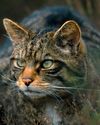
RETURN OF A LEGEND
Once teetering on the very brink of extinction, the elusive Scottish wildcat is prowling the Highlands once more, thanks to a bit of help
7 mins
May 2026
BBC Wildlife
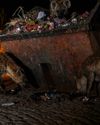
Urban scavengers help curb carbon
New study reveals the extent of emissions saved as city animals feast on food waste
2 mins
May 2026
BBC Wildlife
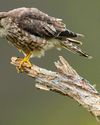
Merlin on the brink
The diminutive raptor is one of many species facing extinction in Britain, suggests new report
1 mins
May 2026
Listen
Translate
Change font size