Versuchen GOLD - Frei
Flying foxes
BBC Wildlife
|July 2025
FLYING FOXES ARE BIG TROPICAL BATS that tend to roost in large numbers and mainly feed on fruit, pollen and nectar.
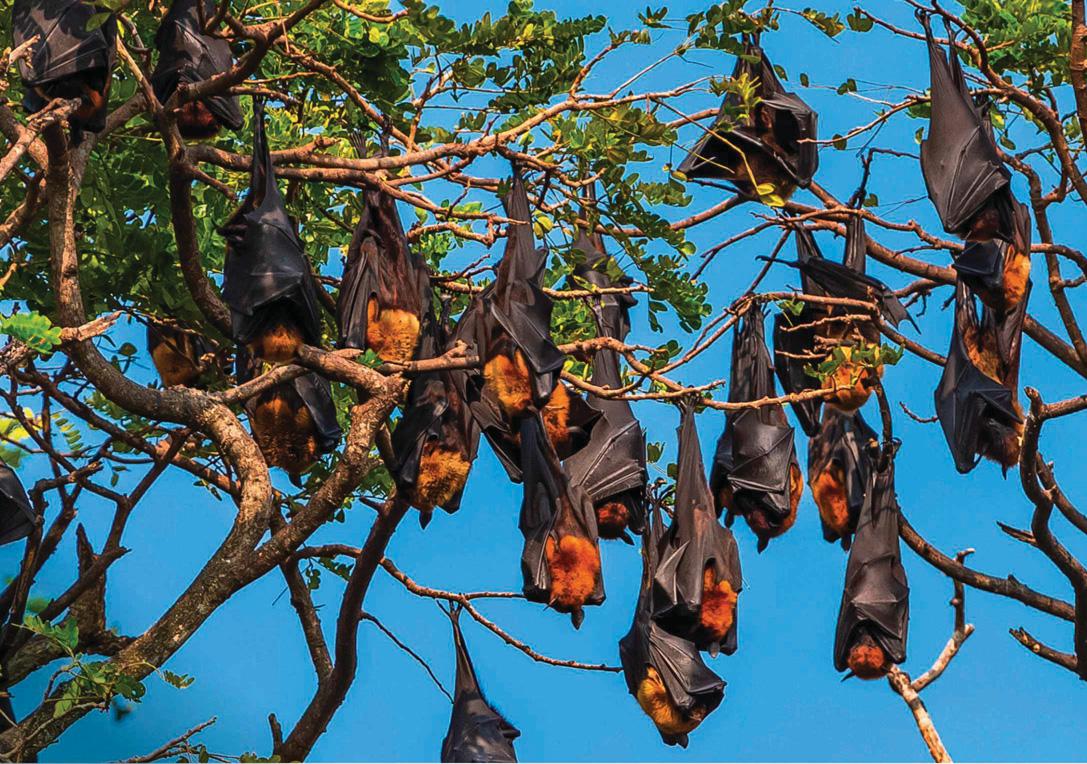
They play a crucial ecological role as pollinators (when they eat, pollen sticks to their fur) and seed dispersers (via excretion), and are responsible for maintaining high plant diversity in the primary forest habitats that they live in.
Why are they called flying foxes?
They have heads that resemble a fox, with pointed ears and large eyes. They belong to the genus Pteropus (considered to be 'true' flying foxes), which is part of the megabat family Pteropodidae. Pteropus means 'winged foot', from the Greek words pteron (winged) and pus (foot). Acerodon species are also often referred to as flying foxes and are part of the Pteropodidae family.
Where do they live?
More than 60 species of flying fox are recognised, and they are found in tropical and subtropical regions of Asia, and islands in the Pacific and Indian oceans.
How big are flying foxes?
According to Guinness World Records, flying foxes are the largest bats in the world: “The biggest are generally considered to be the Indian flying fox (Pteropus giganteus) and the giant golden-crowned flying fox (Acerodon jubatus).” Several species in the genera Pteropus and Acerodon have a head-body length of up to 45cm, a wingspan of 1.7m and a weight of 1.6kg.
Why do they need large wings?

Diese Geschichte stammt aus der July 2025-Ausgabe von BBC Wildlife.
Abonnieren Sie Magzter GOLD, um auf Tausende kuratierter Premium-Geschichten und über 9.000 Zeitschriften und Zeitungen zuzugreifen.
Sie sind bereits Abonnent? Anmelden
WEITERE GESCHICHTEN VON BBC Wildlife
BBC Wildlife
"I was terrified the elephant would ram us"
African elephant in Kenya

2 mins
January 2026
BBC Wildlife
ALL YOU EVER NEEDED TO KNOW ABOUT THE Fennec fox
THE FENNEC FOX IS THE SMALLEST fox in the world, with a body length that can be as little as 24cm.
3 mins
January 2026
BBC Wildlife
INTO THE PLASTISPHERE
A unique synthetic ecosystem is evolving in our oceans – welcome to the plastisphere
7 mins
January 2026
BBC Wildlife
“More than half of all animal life exists in a parasitic relationship, and all life lives in symbiosis”
Our survival depends on species evolving to live together - but some relationships take dark turns
7 mins
January 2026
BBC Wildlife
Are animals able to dream?
SLEEP IS A MYSTERIOUS THING. FOR A long time, we weren't sure why we do it.
1 mins
January 2026
BBC Wildlife
Does a cuckoo know it's a cuckoo?
ABSURD LITTLE BIRDS ACROSS THE world lay their eggs in the nests of other species, leaving the hapless parents to raise a changeling at the expense of their own offspring.
2 mins
January 2026
BBC Wildlife
Orcas killing young sharks
Juvenile great whites are easy prey for orca pod
1 mins
January 2026
BBC Wildlife
Ocean goes on tour
Acclaimed film touring the UK, backed by live orchestra and choir
1 min
January 2026
BBC Wildlife
Feisty bats hunt like lions
Winged mammals use a 'hang and wait' strategy to take down large prey
1 mins
January 2026

BBC Wildlife
SNAP-CHAT
Richard Birchett on magical merlins, wily coyotes and charging deer
2 mins
January 2026
Listen
Translate
Change font size