Try GOLD - Free
Pioneers of Dark Matter
BBC Sky at Night Magazine
|May 2022
The term 'dark matter' was coined a century ago this month. Govert Schilling selects seven scientists who shed light on astronomy's biggest mystery

Dark matter is what makes the Universe tick. It represents 85 per cent of the material content of our cosmos. Through its gravity, it has enabled the formation of cosmic structure, and it keeps galaxies and galaxy clusters from flying apart.
Astronomers have mapped dark matter's distribution by studying gravitational lensing - the bending of starlight by massive objects in space - but no one has ever seen the mysterious stuff, as it doesn't emit, absorb or reflect light. In this article we take a look at seven of the leading voices who helped progress the quest to understand dark matter.
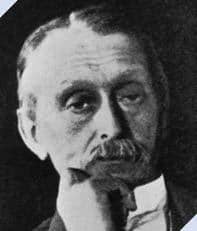
JACOBUS KAPTEYN (1851-1922)
The originator of the term 'dark matter'
Dutch astronomer Jacobus Kapteyn made an early mention of the term 'dark matter' in his Astrophysical Journal paper on the structure of our Milky Way Galaxy. The paper was published on 1 May 1922, a few weeks before Kapteyn died.
One of 15 children, young Jacobus was raised in a private boarding school run by his parents. In 1878, he was appointed professor of astronomy at the University of Groningen, but he lacked the money to buy a proper telescope. Instead, he joined forces with Scottish astronomer David Gill, who photographed the southern sky from Cape Observatory in South Africa.
Using a manual plate-measuring machine, Kapteyn spent five-and-a-half years meticulously measuring the positions of 454,875 individual stars - an impressive undertaking that led to the Cape Photographic Durchmusterung (CPD) – the largest and most accurate stellar catalogue of the time.


This story is from the May 2022 edition of BBC Sky at Night Magazine.
Subscribe to Magzter GOLD to access thousands of curated premium stories, and 10,000+ magazines and newspapers.
Already a subscriber? Sign In
MORE STORIES FROM BBC Sky at Night Magazine

BBC Sky at Night Magazine
Crush: Close Encounters with Gravity
Gravity is something that we're all innately familiar with. It keeps our feet on the ground, fights against a rocket trying to leave Earth and governs the movement of the planets and stars.

1 mins
April 2026
BBC Sky at Night Magazine
Exploring the Universe
There's no shortage of children's books about astronomy.
2 mins
April 2026
BBC Sky at Night Magazine
Make your Milky Way images pop
Simple, free processing techniques using FastStone Image Viewer
3 mins
April 2026

BBC Sky at Night Magazine
Nightfaring: In Search of the Disappearing Darkness
This book is a manifesto for dark skies, written as a travel memoir.
1 mins
April 2026
BBC Sky at Night Magazine
Flying saucers- The making of a modern myth
Our obsession with UFOs goes back further than you might think. Robert Pateman traces how early science fiction, dubious sightings and an alien-mad media led to the 1950s saucer fever
9 mins
April 2026

BBC Sky at Night Magazine
STAR OF THE MONTH
Alphecca, the brightest jewel in the Crown
1 min
April 2026

BBC Sky at Night Magazine
How to use a planisphere
Navigate the sky with the original stargazer's tool. No batteries, apps or Wi-Fi required!
3 mins
April 2026

BBC Sky at Night Magazine
Why rockets don't launch straight up
For a rocket to get its payload into space, it has to follow a curved path. But what would happen if it didn't?
2 mins
April 2026
BBC Sky at Night Magazine
Q&A WITH A DARK MATTER SPECIALIST
Dark matter makes up 27 per cent of all matter in the Universe. So why is it so hard to find? Meet one of the people making a map that leads us to it
3 mins
April 2026

BBC Sky at Night Magazine
Why I want to put a hotel on the Moon
Bored of the beach? Sick of city breaks? Step this way. Space entrepreneur Skyler Chan explains how he'll build a holiday destination on the Moon by 2030
2 mins
April 2026
Translate
Change font size