
Gå ubegrenset med Magzter GOLD
Få ubegrenset tilgang til over 9000 magasiner, aviser og premiumhistorier for bare
Pioneers of Dark Matter
BBC Sky at Night Magazine
|May 2022
The term 'dark matter' was coined a century ago this month. Govert Schilling selects seven scientists who shed light on astronomy's biggest mystery

Dark matter is what makes the Universe tick. It represents 85 per cent of the material content of our cosmos. Through its gravity, it has enabled the formation of cosmic structure, and it keeps galaxies and galaxy clusters from flying apart.
Astronomers have mapped dark matter's distribution by studying gravitational lensing - the bending of starlight by massive objects in space - but no one has ever seen the mysterious stuff, as it doesn't emit, absorb or reflect light. In this article we take a look at seven of the leading voices who helped progress the quest to understand dark matter.
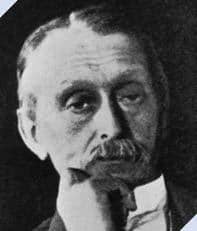
JACOBUS KAPTEYN (1851-1922)
The originator of the term 'dark matter'
Dutch astronomer Jacobus Kapteyn made an early mention of the term 'dark matter' in his Astrophysical Journal paper on the structure of our Milky Way Galaxy. The paper was published on 1 May 1922, a few weeks before Kapteyn died.
One of 15 children, young Jacobus was raised in a private boarding school run by his parents. In 1878, he was appointed professor of astronomy at the University of Groningen, but he lacked the money to buy a proper telescope. Instead, he joined forces with Scottish astronomer David Gill, who photographed the southern sky from Cape Observatory in South Africa.
Using a manual plate-measuring machine, Kapteyn spent five-and-a-half years meticulously measuring the positions of 454,875 individual stars - an impressive undertaking that led to the Cape Photographic Durchmusterung (CPD) – the largest and most accurate stellar catalogue of the time.


Denne historien er fra May 2022-utgaven av BBC Sky at Night Magazine.
Abonner på Magzter GOLD for å få tilgang til tusenvis av kuraterte premiumhistorier og over 9000 magasiner og aviser.
Allerede abonnent? Logg på
FLERE HISTORIER FRA BBC Sky at Night Magazine
BBC Sky at Night Magazine
MOONWATCH
January's top lunar feature to observe

2 mins
January 2026
BBC Sky at Night Magazine
Speed up your processing workflow
How to use Photoshop's Actions tool to drastically cut your processing time
3 mins
January 2026
BBC Sky at Night Magazine
Chasing Canada's polar lights
With solar maximum peaking and a new Moon promising dark skies, Jamie Carter travels to Churchill, Manitoba to hunt the Northern Lights - and dodge polar bears – in Canada's far north
7 mins
January 2026
BBC Sky at Night Magazine
Beyond Pluto: The search for the hidden planets
Could one – or even two - undiscovered planets lurk at the edges of our Solar System? Nicky Jenner explores how close we are to finding the elusive 'Planet 9'
6 mins
January 2026
BBC Sky at Night Magazine
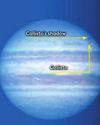
Jupiter moon events
Jupiter is a magnificent planet to observe.
2 mins
January 2026
BBC Sky at Night Magazine
What samples from space have taught us
Alastair Gunn explains what scientists have learnt in the 20 years since the first unmanned mission brought materials back from alien worlds
3 mins
January 2026
BBC Sky at Night Magazine
The Milky Way as you've never seen it before
This is the largest low-frequency radio colour image of our Galaxy ever assembled
1 min
January 2026
BBC Sky at Night Magazine
Merger of ‘impossibly' massive black holes explained
Scientists discover how enormous, fast-spinning black holes can exist after all
1 mins
January 2026
BBC Sky at Night Magazine
Lunar occultation of the Pleiades
BEST TIME TO SEE: 27 January from 20:30 UT
1 min
January 2026
BBC Sky at Night Magazine
The Universe's expansion may be slowing down
New study suggests current theories of dark energy could be wrong
1 mins
January 2026
Translate
Change font size