
Go Unlimited with Magzter GOLD
Get unlimited access to 10,000+ magazines, newspapers and Premium stories for just
Try GOLD - Free
Where Are The Shudras ?
The Caravan
|October 2018
Why the Shudras are lost in today's India

When the government implemented the Mandal Commission recommendations, in the early 1990s, it was meant to be a watershed moment for the Shudras. The measure reserved positions in government employment and public higher education for the Other Backward Classes—a category made up overwhelmingly of disadvantaged Shudra castes, traditionally labourers and craftspeople. The commission had identified these castes, part of the fourth and lowest varna of the Brahminical order, as holding a wretched place in Indian society. They lagged far behind the better-off castes on multiple social, economic and educational measures, yet were excluded from the system of positive discrimination created at Independence for the Dalits and Adivasis—officially, the Scheduled Castes and Scheduled Tribes. The commission rightly created a separate category of reservations for the OBCs based on their historical backwardness.
The reservations were met with vicious backlash from Brahmin and Vaishya castes, and from a section of the Shudras as well. For decades, relatively prosperous, landholding groups at the top of the intra-Shudra caste hierarchy—the Kammas, Reddys, Kapus, Gowdas, Nairs, Jats, Patels, Marathas, Gujjars, Yadavs and so on—had been Sanskritising themselves, taking on the habits and prejudices of the Brahmin-Bania castes. In my book Why I am Not a Hindu, published in 1996, I described these “upper” Shudra castes as Neo-Kshatriyas, to reflect their hope that Sanskritisation would earn them the role and rank in the caste system left largely vacant by the waning of the Kshatriyas, traditionally the second varna.
Two and a half decades have passed since the Mandal Commission reservations came into force, the space of a full generation. It is time to ask: How far have the reservations brought the Shudra OBCs? What good has come to the upper Shudras who opposed them? Where do the Shudras find themselves in India today?
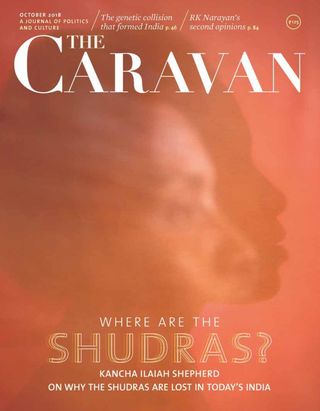

This story is from the October 2018 edition of The Caravan.
Subscribe to Magzter GOLD to access thousands of curated premium stories, and 10,000+ magazines and newspapers.
Already a subscriber? Sign In
MORE STORIES FROM The Caravan

The Caravan
Dim Views
Punjab's new media suffers from old problems

22 mins
February 2026
The Caravan
ON FIRM GROUND
The civic struggle against uranium mining in the West Khasi Hills
6 mins
February 2026

The Caravan
DANGEROUS LIAISON
Why India enabled Israel's genocide in Gaza
44 mins
February 2026

The Caravan
Platform for Change
A women-led union gives voice to India's gig workers
6 mins
February 2026

The Caravan
NARAVANE'S Moment of Truth
An army chief's unpublished memoir exposes how the Modi government spun the China border crisis
44 mins
February 2026
The Caravan
A Brief History of the Slap
How Telugu cinema's heroes turn violence against women into romance
9 mins
February 2026
The Caravan
FACE PALM
Why the Congress keeps losing elections
33 mins
January 2025

The Caravan
The Great Transformation
Challenges facing independent news outlets in the digital age/Media
6 mins
January 2025

The Caravan
The Mob Comes for Film Critics
Dhurandhar and the manufacture of a national consensus
11 mins
January 2025
The Caravan
Memories Are Made of This
FOOD IN DALIT AND ADIVASI WRITING
15 mins
January 2025
Translate
Change font size