يحاول ذهب - حر
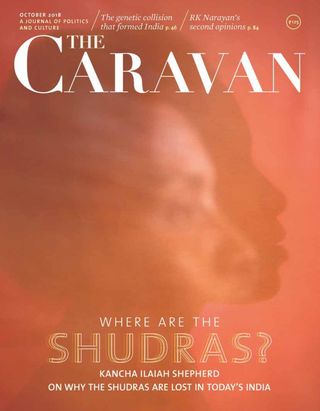
Where Are The Shudras ?
October 2018
|The Caravan
Why the Shudras are lost in today's India

When the government implemented the Mandal Commission recommendations, in the early 1990s, it was meant to be a watershed moment for the Shudras. The measure reserved positions in government employment and public higher education for the Other Backward Classes—a category made up overwhelmingly of disadvantaged Shudra castes, traditionally labourers and craftspeople. The commission had identified these castes, part of the fourth and lowest varna of the Brahminical order, as holding a wretched place in Indian society. They lagged far behind the better-off castes on multiple social, economic and educational measures, yet were excluded from the system of positive discrimination created at Independence for the Dalits and Adivasis—officially, the Scheduled Castes and Scheduled Tribes. The commission rightly created a separate category of reservations for the OBCs based on their historical backwardness.
The reservations were met with vicious backlash from Brahmin and Vaishya castes, and from a section of the Shudras as well. For decades, relatively prosperous, landholding groups at the top of the intra-Shudra caste hierarchy—the Kammas, Reddys, Kapus, Gowdas, Nairs, Jats, Patels, Marathas, Gujjars, Yadavs and so on—had been Sanskritising themselves, taking on the habits and prejudices of the Brahmin-Bania castes. In my book Why I am Not a Hindu, published in 1996, I described these “upper” Shudra castes as Neo-Kshatriyas, to reflect their hope that Sanskritisation would earn them the role and rank in the caste system left largely vacant by the waning of the Kshatriyas, traditionally the second varna.
Two and a half decades have passed since the Mandal Commission reservations came into force, the space of a full generation. It is time to ask: How far have the reservations brought the Shudra OBCs? What good has come to the upper Shudras who opposed them? Where do the Shudras find themselves in India today?

هذه القصة من طبعة October 2018 من The Caravan.
اشترك في Magzter GOLD للوصول إلى آلاف القصص المتميزة المنسقة، وأكثر من 9000 مجلة وصحيفة.
هل أنت مشترك بالفعل؟ تسجيل الدخول
المزيد من القصص من The Caravan
The Caravan
ANY RESEMBLANCE TO ACTUAL EVENTS IS NOT COINCIDENTAL
INTERFAITH ROMANCE FICTION IN THE ERA OF LOVE JIHAD

31 mins
December 2025
The Caravan
Manufacturing Legitimacy
How a Washington Post columnist laundered the Sangh's violent history
7 mins
December 2025

The Caravan
DEATH of REPORTAGE
THE DISMANTLING OF OUTLOOK'S LEGACY
32 mins
December 2025

The Caravan
FOG LIGHT
Samayantar's two-and-half-decade fight against the shrinking of Hindi's world
22 mins
December 2025
The Caravan
THE FINE PRINT
ON 19 MARCH 2005, thousands came out on the streets of Udupi, in coastal Karnataka, to protest a gruesome incident that had shaken the region a week earlier.
23 mins
December 2025

The Caravan
CHARACTER BUILDING
The enduring language of Indian streets
5 mins
December 2025

The Caravan
THE CONVENIENT EVASIONS OF RAJDEEP SARDESAI
DRESSED IN A turban and white kurta pyjama, Narendra Modi sat in the passenger seat of a van crossing the Patan district of Gujarat, in September 2012. Next to him sat Rajdeep Sardesai, the founder-editor of the news channel CNN-IBN.
63 mins
December 2025

The Caravan
Ahmed Kamal Junina: “Every class we hold is a defiant refusal to surrender”
A professor in Gaza on teaching during a genocide / Conflict
11 mins
December 2025

The Caravan
Bangla Pride, Urdu Prejudice
The language wars have primed West Bengal for the RSS
8 mins
November 2025

The Caravan
THE INTERVIEW
\"The people are naked before the government but the government is opaque to them\"
16 mins
November 2025
Translate
Change font size