
Go Unlimited with Magzter GOLD
Get unlimited access to 10,000+ magazines, newspapers and Premium stories for just
Try GOLD - Free
TURN TO CHAPTER THREE
Outlook
|August 17, 2020
The national education policy promises ‘large-scale’ changes, but can it complete unfinished lessons

A is for apple, B for ball, C for curveball—because someone has to walk the cat that defined Indian school and college education since British colonialists seeded the subcontinent with the Western primer. But the cat comes as a default setting, no matter how much one tries to move it aside. That’s the case with education policies of the past; the cat among the pigeons. That also brings to context the revised national education policy (NEP), overhauled on PM Narendra Modi’s watch after 34 years. Will it keep pace with a hyper looping century, where Windows and Androids shift shape with changing seasons? Time will tell, although history has seldom been kind to change.
Take the 1968 attempt for perspective, when Indira Gandhi’s government announced the first NEP that stressed the need for “a radical reconstruction” of the system to improve its quality, expand opportunities, provide free and compulsory education to all children up to 14, and focus on science/tech and “cultivation of moral values”. The user manual for this policy based on recommendations of the Kothari Commission—the aka for the more business-like Indian Education Commission (1964-66)—had all the to-dos that would touch the lives of every citizen, empower them to contribute towards “national progress and security”, promote “sense of common citizenship and culture”, and strengthen “national integration”. But the product didn’t sell. Education was a state subject constitutionally and the states didn’t buy the policy primarily because of their reservation towards a proposed uniform educational structure—the 10+2+3 system (ten years till matriculation, two years in pre-degree/higher secondary, and three years for college graduation).
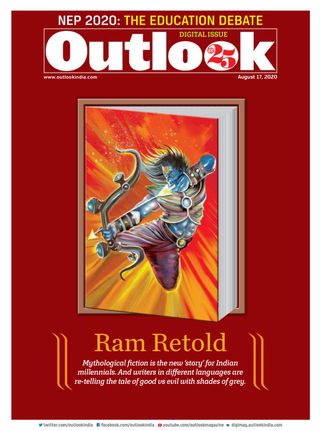

This story is from the August 17, 2020 edition of Outlook.
Subscribe to Magzter GOLD to access thousands of curated premium stories, and 10,000+ magazines and newspapers.
Already a subscriber? Sign In
MORE STORIES FROM Outlook

Outlook
'Why GDP Growth Doesn't Always Translate Into Votes'
The recent election results have once again shown that economic growth alone does not guarantee electoral victory.

3 mins
June 06, 2026

Outlook
Lights, Camera, Othering
The establishment of Israel has been accompanied by a national cinema devoted to negating and erasing the Palestinian Other
5 mins
June 06, 2026

Outlook
Goodbye to All That
Booker-winning British author Julian Barnes' Departure(s) is a unique hybrid work: playful, philosophical, whimsical
4 mins
June 06, 2026

Outlook
Collapse of Trust
As the NEET-UG 2026 paper leak forced the cancellation of India’s biggest medical entrance exam, more than 22 lakh aspirants find themselves trapped in uncertainty
11 mins
June 06, 2026

Outlook
NO LONGER A TWELFTH MAN
Bihar cricket, which has languished in the shadows for long, is all set to improve its strike rate, thanks to Vaibhav Sooryavanshi, the new Bihari kid on the block
5 mins
June 06, 2026

Outlook
BLAZE OF GLORY
The challenges of being a celebrity cricketer at a young age can be tough to handle
5 mins
June 06, 2026

Outlook
THE SWASHBUCKLERS
A new generation of fearless stars is emerging and finding its feet at the very top of an extremely competitive cricketing environment
5 mins
June 06, 2026

Outlook
THE TEEN TORNAD
At the age of 15, Vaibhav Sooryavanshi is already a cricketing legend
10 mins
June 06, 2026
Outlook
A Journey to Remember
The prerecorded message crackled over the din in the compartment: ‘Welcome to the Shatabdi Express.
4 mins
June 06, 2026

Outlook
Crossing Borders
Ruth Martin is the translator of German-Iranian author Shida Bazyar’s novel The Nights are Quiet in Tehran (originally written in German), which has been shortlisted for the 2026 International Booker Prize.
4 mins
June 06, 2026
Translate
Change font size