Try GOLD - Free
THE NOWHERE PEOPLE
Outlook
|April 13, 2020
Experts warn that reverse migration will have a debilitating effect on the rural sector

For over a week, Sadat Ansari has been confined to a dingy 10x10 feet room in Khirki extension in South Delhi, a rented accommodation he shares with seven more people. He stares at the sprawling shopping centres across the street, constantly reminded of the glaring social distance between him and the urban crowd. Ansari, a daily wage earner was rendered jobless on March 25 when Prime Minister Narendra Modi announced a nationwide lockdown to stop the spread of a silent killer—the new coronavirus.
Hunkered down at his tenement, the 36-year-old who came to Delhi from Bihar’s Madhubani district 20 years ago wanted to join the thousands of migrant workers who had hoped to rush back to their villages, despite the lockdown. What held him back? Ansari left his village because it has little to offer. No jobs, no money. Abject poverty. The stich hasn’t changed all these years. Besides, the Bihar government has no plan in place for them. “I don’t even own a small plot of land. What will I eat there? Though the Bihar government has announced free ration, we will get it only next month. Do they want us to die?” he asks. But his roommate, Mohammed Usman, thinks it’s “better to die on the roads than die of hunger in this city”.
As governments—at the Centre and states—grappled to tackle a humanitarian and potential health crisis due to the reverse migration of workers from urban centres to villages, experts warn that the exodus could lead to massive economic devastation in the rural sector. Dr K.P. Kannan of the Thiruvananthapuram-based Centre for Development Studies predicts that the rural sector will face economic as well as social distress in the coming days as the returning migrants are not going to be welcomed in their native places.
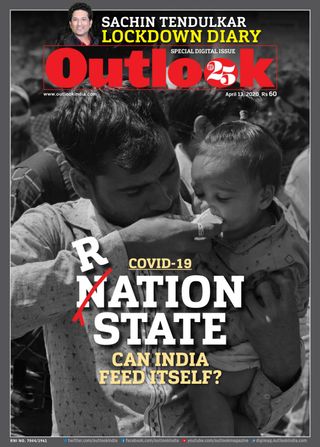

This story is from the April 13, 2020 edition of Outlook.
Subscribe to Magzter GOLD to access thousands of curated premium stories, and 10,000+ magazines and newspapers.
Already a subscriber? Sign In
MORE STORIES FROM Outlook

Outlook
Get the Right Partner
The broking industry is now in a price-war phase, but cost is no longer the key differentiator. The choice will depend on how you plan to use a broking platform

4 mins
July 06, 2026

Outlook
Balanced Fertilizer Push for India
As India faces fertilizer import shocks; Deepak Shah, Chairman of CCFI calls for shift to high NUE solutions for food security and growth.
2 mins
July 06, 2026

Outlook
India’s Anaemia Paradox
From disputed estimates to hidden causes, India’s anaemia story is entering a new phase, one that could reshape how the country understands and addresses a condition affecting millions
5 mins
July 06, 2026

Outlook
Record Placements Anchor PIMR Legacy
Prestige Institute of Management and Research, Indore (Deemed to be University): Anchoring Three Decades of Academic Vanguard and Frontier Leadership
3 mins
July 06, 2026

Outlook
Clinical Excellence in High precision Radiation Therapy
Driven by the conviction that healing begins with humanity, radiation oncologist Dr. Amit Jain has impacted countless lives
2 mins
July 06, 2026

Outlook
A Paradise Worth Protecting
Ancient rainforests, endemic and rare mammals, birds and reptiles, exotic species of trees, breathtaking corals and indigenous tribes... Great Nicobar is home to all this and a lot more
5 mins
July 06, 2026

Outlook
Your Future Starts Here
Adichunchanagiri University (ACU), nurturing visionary thinkers, global leaders, and bold entrepreneurs who are ready to drive impact in a fast-evolving digital economy
3 mins
July 06, 2026

Outlook
Building a Sustainable Airport Ecosystem in Bengaluru
At Kempegowda International Airport Bengaluru (BLR Airport), sustainability is a guiding philosophy shaping infrastructure, operations, growth, resilience and workplace culture.
4 mins
July 06, 2026

Outlook
Intelligent Imaging for Smarter Healthcare
Dilip Bhosale, shares with Outlook, how Agfa Radiology Solutions is leveraging advanced digital technologies, workflow automation and global expertise to shape the future of diagnostic imaging in India in conversation with Aditi Chakraborty
2 mins
July 06, 2026

Outlook
Advancing the Future of Oncology in Eastern India
A champion of accessible and patient-centred cancer care, Dr Soma Mukhopadhyay is leading NCRI Hospital towards new standards of excellence in oncology
2 mins
July 06, 2026
Translate
Change font size