Poging GOUD - Vrij
Flying over TITAN
BBC Sky at Night Magazine
|August 2024
Ezzy Pearson reports on NASA's Dragonfly, the first-ever science mission to fly on another world, which is set to soar over Saturn's largest moon in search of the elements of life

Titan, Saturn's largest moon, is a contradiction: a world that's remarkably Earth-like and profoundly alien at the same time.
Like our own planet, the moon has a nitrogen-dominated atmosphere over a landscape of mountains, deserts and even seas. Only on Titan, the mountains aren't made from rock, but ice. And rather than water, in its rivers flows liquid methane.
Most captivating of all, the moon is rich with the organic chemicals that form the foundations of life on Earth. All this makes Titan an ideal place to investigate the evolution of the chemistry that makes our planet, and perhaps others too, habitable.
In April this year, NASA confirmed that it intends to send the Dragonfly mission on its way to the mysterious moon in July 2028. When it arrives in 2034, the spacecraft won't just roam on the moon's surface, it will also soar above it. Dragonfly will live up to its name, becoming the first-ever full science mission capable of flight in another world's atmosphere.
"Dragonfly is an octocopter - with four pairs of rotors - that will traverse to different sites on Titan by flying from place to place," says Zibi Turtle from Johns Hopkins University Applied Physics Laboratory and principal investigator of Dragonfly.
 During its mission, Dragonfly will cover hundreds of kilometres. It will start its journey in the Shangri-La dune field, a desert just south of Titan's equator.
From here it will hop from dune to dune, exploring a variety of landscapes and eventually making its way to the 80kmwide (50-mile) Selk impact crater.
Chemical quest


Dit verhaal komt uit de August 2024-editie van BBC Sky at Night Magazine.
Abonneer u op Magzter GOLD voor toegang tot duizenden zorgvuldig samengestelde premiumverhalen en meer dan 9000 tijdschriften en kranten.
Bent u al abonnee? Aanmelden
MEER VERHALEN VAN BBC Sky at Night Magazine

BBC Sky at Night Magazine
Capture NLCs with a smartphone
Make this the summer that you nail a shot of beautiful night-shining clouds

3 mins
July 2026

BBC Sky at Night Magazine
ZWO Seestar S30 Pro smart telescope
ZWO Seestar S30 Pro smart telescope
4 mins
July 2026

BBC Sky at Night Magazine
The speed of light
The Universe has a speed limit - and it underpins everything we know about it. We explain the speed of light and its far-reaching implications for astronomy
2 mins
July 2026
BBC Sky at Night Magazine
COMETS AND ASTEROIDS
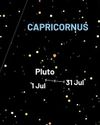
Can you spot dim, barely moving Pluto?
1 min
July 2026
BBC Sky at Night Magazine
THE SKY GUIDE CHALLENGE
What's the youngest Moon you can photograph? Try our ‘impossible’ challenge
2 mins
July 2026

BBC Sky at Night Magazine
Q&A WITH A SCIENCE COMMUNICATOR
As we find more planets in the habitable zones around other suns, we ask Neil deGrasse Tyson what would happen if we did meet intelligent alien life
3 mins
July 2026
BBC Sky at Night Magazine
Make an all-sky camera
How to set up an always-watching system to catch fleeting sky events
3 mins
July 2026

BBC Sky at Night Magazine
The Universe doesn't need a multiverse
The Universe doesn't need a multiverse The idea that there are many universes seems to solve our most stubborn cosmic mysteries. But, argues Brian Clegg, it's no substitute for hard evidence
2 mins
July 2026
BBC Sky at Night Magazine
Planets of mystery
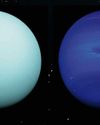
Uranus and Neptune – visited just once, 40 years ago – are the least-known planets in our Solar System. Now 21st-century science has revealed they may not even be the ‘ice giants’ we thought. Joseph Phelan investigates
6 mins
July 2026
BBC Sky at Night Magazine
THE BIG THREE
The top sights to observe or image this month
4 mins
July 2026
Listen
Translate
Change font size