
Magzter GOLDで無制限に
10,000以上の雑誌、新聞、プレミアム記事に無制限にアクセスできます。
試す 金 - 無料
Flying over TITAN
BBC Sky at Night Magazine
|August 2024
Ezzy Pearson reports on NASA's Dragonfly, the first-ever science mission to fly on another world, which is set to soar over Saturn's largest moon in search of the elements of life

Titan, Saturn's largest moon, is a contradiction: a world that's remarkably Earth-like and profoundly alien at the same time.
Like our own planet, the moon has a nitrogen-dominated atmosphere over a landscape of mountains, deserts and even seas. Only on Titan, the mountains aren't made from rock, but ice. And rather than water, in its rivers flows liquid methane.
Most captivating of all, the moon is rich with the organic chemicals that form the foundations of life on Earth. All this makes Titan an ideal place to investigate the evolution of the chemistry that makes our planet, and perhaps others too, habitable.
In April this year, NASA confirmed that it intends to send the Dragonfly mission on its way to the mysterious moon in July 2028. When it arrives in 2034, the spacecraft won't just roam on the moon's surface, it will also soar above it. Dragonfly will live up to its name, becoming the first-ever full science mission capable of flight in another world's atmosphere.
"Dragonfly is an octocopter - with four pairs of rotors - that will traverse to different sites on Titan by flying from place to place," says Zibi Turtle from Johns Hopkins University Applied Physics Laboratory and principal investigator of Dragonfly.
 During its mission, Dragonfly will cover hundreds of kilometres. It will start its journey in the Shangri-La dune field, a desert just south of Titan's equator.
From here it will hop from dune to dune, exploring a variety of landscapes and eventually making its way to the 80kmwide (50-mile) Selk impact crater.
Chemical quest


このストーリーは、BBC Sky at Night Magazine の August 2024 版からのものです。
Magzter GOLD を購読すると、厳選された何千ものプレミアム記事や、10,000 以上の雑誌や新聞にアクセスできます。
すでに購読者ですか? サインイン
BBC Sky at Night Magazine からのその他のストーリー
BBC Sky at Night Magazine
New moons found around Jupiter and Saturn
And we think we know why Jupiter has more big moons than its neighbour

1 min
June 2026

BBC Sky at Night Magazine
Q&A WITH A STAR DIMMING EXPERT
Extraordinary flickering in a distant star has led astronomers to the wreckage of two planets colliding. We meet one of the team behind the rare discovery
3 mins
June 2026
BBC Sky at Night Magazine
Don't let stars overpower your images
How to use Siril freeware to turn down the stars and turn up delicate details
3 mins
June 2026

BBC Sky at Night Magazine
Chasing UFOs on the web
Robert Pateman investigates how the internet has changed the way we view and report on UFO sightings
6 mins
June 2026

BBC Sky at Night Magazine
Under southern SKIES Stargazing in Australia's Warrumbungles
Ten years after Australia gained its first International Dark Sky Park, Yvette Cook finds out exactly why Warrumbungle National Park is a world-class astrotourism destination
7 mins
June 2026

BBC Sky at Night Magazine
Pick the perfect eyepiece
How to choose the right match for your target, telescope and sky conditions
3 mins
June 2026
BBC Sky at Night Magazine
What's really at the heart of our GALAXY?
Colin Stuart investigates the radical claim that our Milky Way's central supermassive black hole may not exist after all
7 mins
June 2026

BBC Sky at Night Magazine
A new way to find advanced alien life
Model could find patterns across multiple planets that reveal life - whatever form it takes
1 mins
June 2026

BBC Sky at Night Magazine
Star-forming region captured in amazing clarity
Piercing the dust clouds allows astronomers to see little-known, youthful massive stars
1 min
June 2026
BBC Sky at Night Magazine
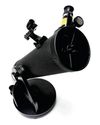
RVO Horizon 102 tabletop Dobsonian
An affordable, easy, carry-anywhere telescope that makes learning the sky a pleasure
4 mins
June 2026
Listen
Translate
Change font size