Poging GOUD - Vrij
TOXIC
The New Yorker
|June 16, 2025
What the pop culture of the two-thousands did to millennial women.
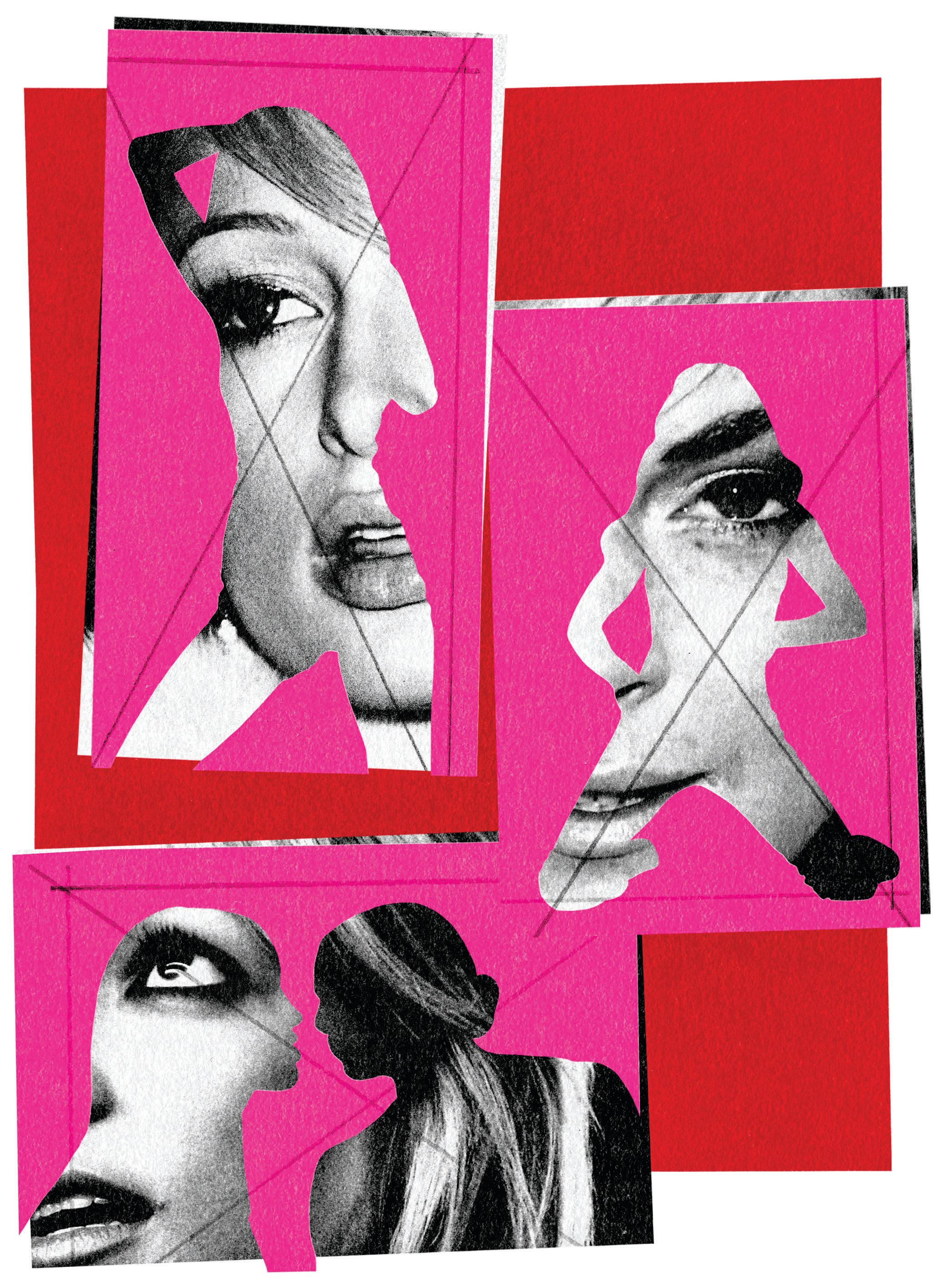
In 1969, Vivian Gornick was assigned by the Village Voice to write about the “women’s libbers” gathering in downtown Manhattan. Gornick set out never having heard of women's liberation. She returned one week later a convert. What happened in the interval was the dawning of what second-wave feminists called feminist consciousness: the growing conviction that how things were for women were not how they had to be. Often, this insight arose in conversation with other women, in consciousness-raising groups. Comparing notes on the parts of their lives once thought too personal to merit political analysis—love, sex, housework, marriage, motherhood—they found their “symptoms of private unhappiness,” in Gornick’s words, “so powerfully and so consistently duplicated among women that perhaps these symptoms could be ascribed to cultural causes as to psychological ones.” Reflecting on one’s life in a consciousness-raising session, Gornick wrote, was “rather like shaking a kaleidoscope and watching all the same pieces rearrange themselves into an altogether other picture.”
Making sense of this new picture involved a kind of reappraisal. What voices, loud or soft, had convinced women of their own inferiority for so long? What myths, scripts, and stories had predisposed them to accept the limitations placed on them from within and without? What alternate ways of living could be gleaned from the past? “Contemporary feminism is bound up with a profound rereading of the culture,” Gornick wrote years later. “We read the novels we grew up on as though for the first time, we sit up late watching the movies of our childhood, we turn again to familiar memoirs and biographies of distinguished men and women.” Adrienne Rich, in 1972, wrote that “re-vision,” the task of “entering an old text from a new critical direction,” was “an act of survival” for women: “Until we can understand the assumptions in which we are drenched we cannot know ourselves.”

Dit verhaal komt uit de June 16, 2025-editie van The New Yorker.
Abonneer u op Magzter GOLD voor toegang tot duizenden zorgvuldig samengestelde premiumverhalen en meer dan 9000 tijdschriften en kranten.
Bent u al abonnee? Aanmelden
MEER VERHALEN VAN The New Yorker

The New Yorker
Amanda Petrusich on Katy Grannan's Photograph of Taylor Swift
There’s something uncanny about this still and stunning portrait of a twenty-one-year-old Taylor Swift, shot by Katy Grannan for Lizzie Widdicombe’s Profile of the singer, in 2011.

1 mins
January 12, 2026

The New Yorker
DEAL-BREAKER
Pam is seeing someone, but she’s not talking about it.
19 mins
January 12, 2026
The New Yorker
THE OTHER BOOMERS
Kathryn Bigelow, the director, and Alexandra Bell, the arms-control expert, are both nuclear-attack-submarine literate. Bigelow—whose new Netflix film, “A House of Dynamite,” imagines the U.S. government’s response to an incoming intercontinental ballistic missile (ICBM) eighteen minutes from impact—shot part of her 2002 submarine film, entitled “K-19:
3 mins
January 12, 2026

The New Yorker
THE MUSICAL LIFE BROADWAY BABY
At Joe’s Pizza on Carmine Street, Marc Shaiman, the celebrated composer and lyricist, dropped his slice on the floor. “Ugh, it’s the Shaiman vortex,” he said. “Everything I come near breaks.”
3 mins
January 12, 2026

The New Yorker
NOTORIOUS M.T.G.
Marjorie Taylor Greene and Donald Trump break up over Epstein.
26 mins
January 12, 2026

The New Yorker
YES, AND?
How consent can—and cannot—help us have better sex.
14 mins
January 12, 2026

The New Yorker
LET IT BLEED
When Helen Frankenthaler remade painting.
5 mins
January 12, 2026

The New Yorker
THE AMERICAN POPE
How the Chicago-born Robert Prevost became Leo XIV.
32 mins
January 12, 2026

The New Yorker
DEPT. OF RECYCLING SWIPE OUT
In 1994, when the MetroCard made Its 22, many straphangers were reluctant to say farewell to the subway token. Across the city, commuters struggled to master \"the swipe.
2 mins
January 12, 2026
The New Yorker
THE TALK OF THE TOWN
Easily missed on the back side of the November ballots that brought Zohran Mamdani to Gracie Mansion was a proposal for a new map of New York City.
4 mins
January 12, 2026
Listen
Translate
Change font size